27 July 2026
A guide to Felixstowe
An honest guide to Felixstowe, Suffolk: the Edwardian seafront gardens, ship spotting at Landguard, and the foot ferry from Felixstowe Ferry to Bawdsey.
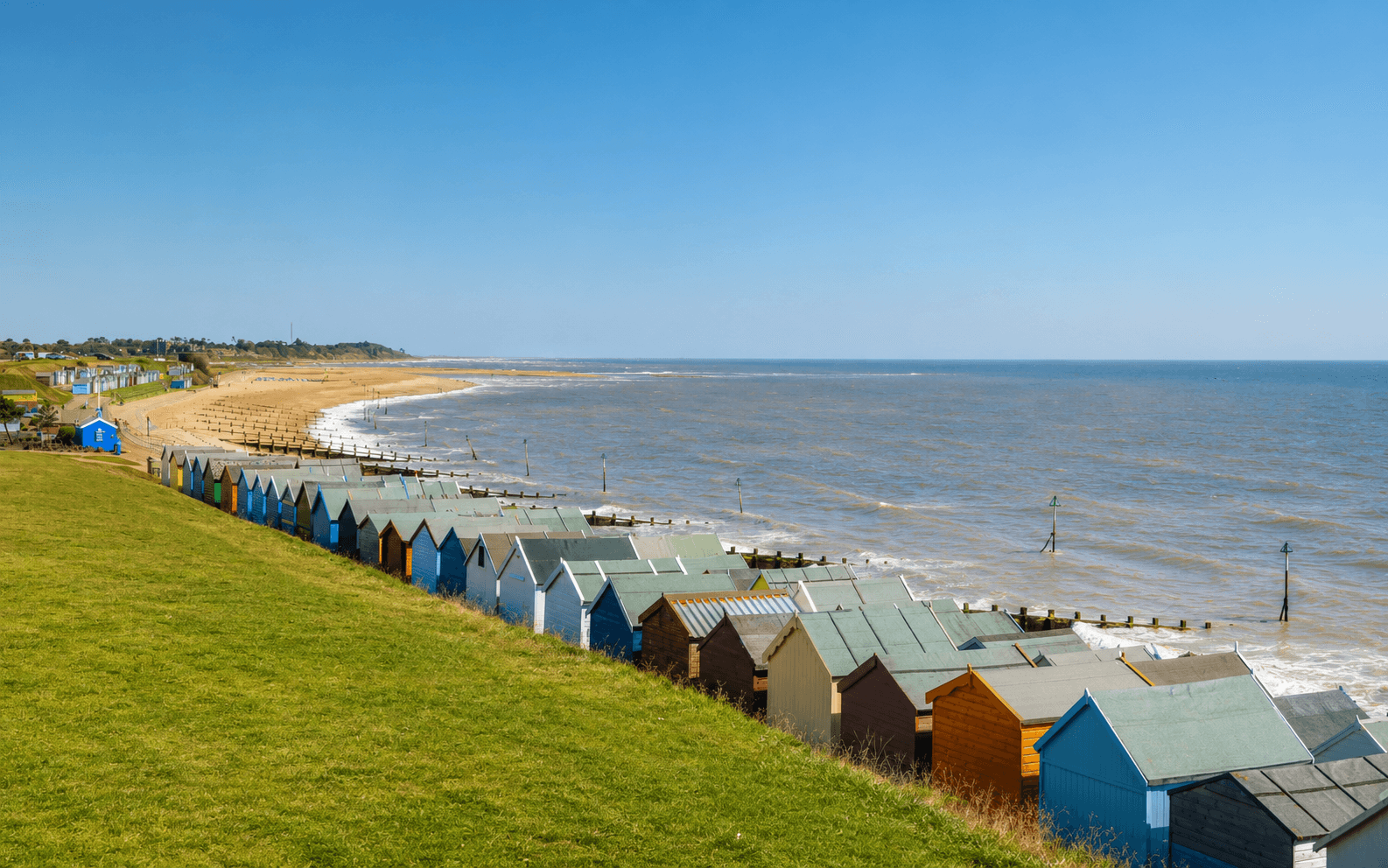
Felixstowe is the town people drive past on the way to the container port, and that is their mistake. What is actually here is a genuinely good Edwardian seaside resort with eight listed gardens cascading down the cliff, a working pier, a long quiet beach, a Georgian fort at one end and a boatyard hamlet at the other. The port is right next door, enormous and impossible to ignore, and standing and watching it is one of the better free things to do in Suffolk. The contrast is the point of the place, not a flaw in it.
Key takeaways
- The Seafront Gardens are eight Grade II listed Edwardian gardens, restored in a £4.8 million project, and free.
- The John Bradfield Viewing Area at Landguard is the closest public spot to watch the biggest container ships in the world come in.
- Landguard Fort is English Heritage, seasonal, and the site of the last opposed invasion of England in 1667.
- Felixstowe Ferry at the north end is a separate hamlet entirely, with a seasonal foot ferry across the Deben to Bawdsey.
- The branch line from Ipswich takes about 25 minutes and drops you a short walk from the sea.
What Felixstowe actually is
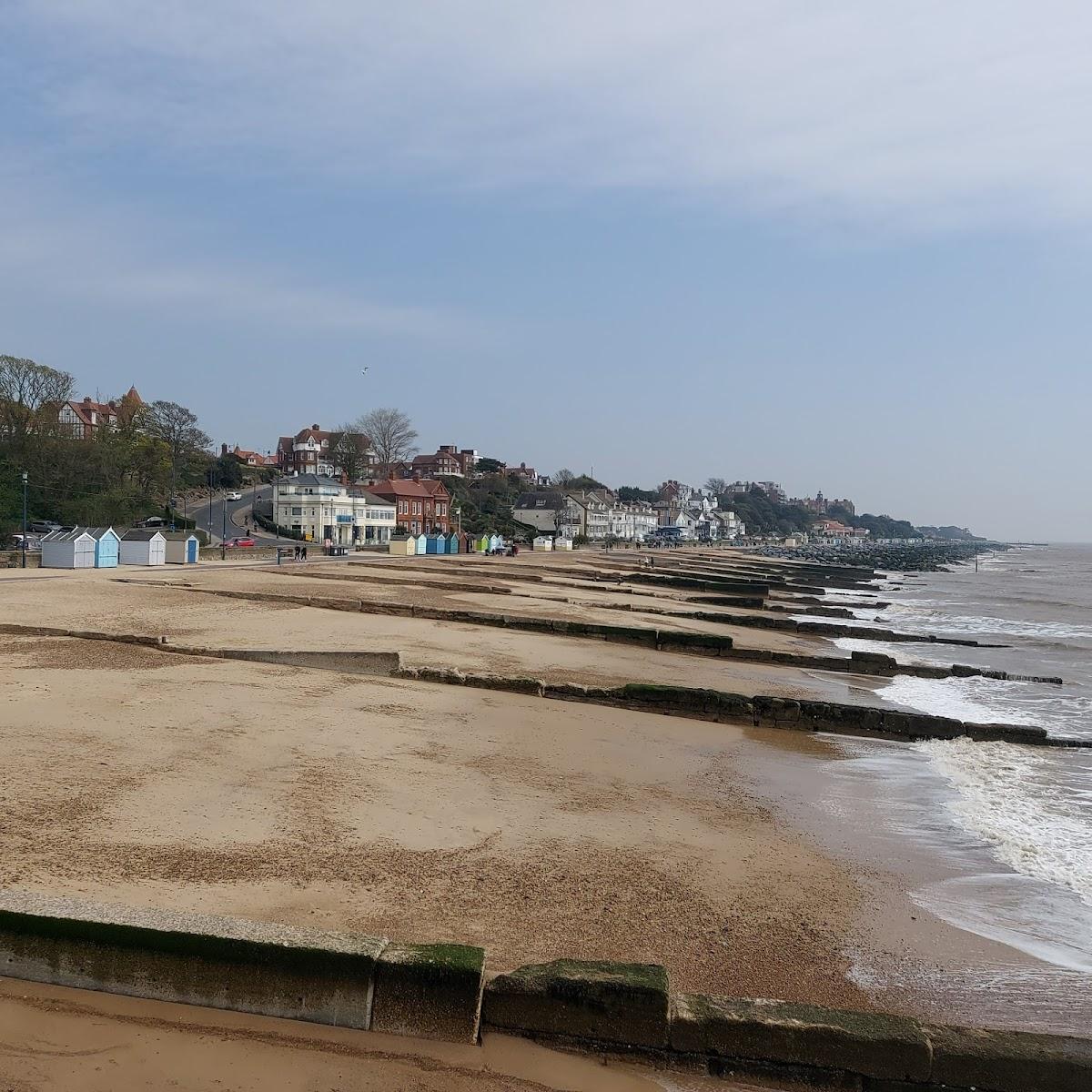
Felixstowe is a late Victorian and Edwardian resort built on a low cliff facing south east, which is unusual on this coast and means the seafront gets sun for most of the day. It grew when the railway arrived and the fashion for sea bathing took hold, and the town still carries that shape: a promenade, gardens laid out down the cliff, a pier, and terraces and hotels above.
It calls itself the Garden Resort of East Anglia, which sounds like marketing until you walk the gardens and find it is simply accurate.
The town has three distinct parts and they are not interchangeable:
- The main seafront, from the pier south, which is the resort: promenade, amusements, cafes and the gardens.
- The Landguard peninsula at the southern tip, which is fort, nature reserve, shingle and port.
- Felixstowe Ferry, three miles north at the mouth of the Deben, which is a working boat hamlet and feels like a different county.
Knowing which of the three you are aiming for is most of planning a day here.
Getting there and parking
By road. Felixstowe is the end of the A14. The road runs from the Midlands across to here and simply stops, which is a consequence of the port and makes the town very easy to find and slightly odd to arrive in. Come off before the port turnings and follow signs for the town centre and seafront rather than the docks.
By train. This is one of the best rail arrivals in Suffolk. The Felixstowe branch line leaves the main line at Westerfield and runs from Ipswich in about 26 to 29 minutes, calling at Westerfield, Derby Road and Trimley St Mary. Greater Anglia operate up to one train an hour on weekdays, around 18 a day, with fares from about £3.80 one way on a return. The run gives you views over the River Orwell and Trimley Marshes on the way in, which is a better introduction to the area than the A14. From Felixstowe station it is a short walk down to the seafront.
Where to park. East Suffolk Council runs them, and the useful ones are Garrison Lane (IP11 7SH), Golf Road (IP11 7NB), Manor Terrace (IP11 2EN), The Grove (IP11 9GA) and Landguard (IP11 3TW), with Arwela Road, Beach Station, Brackenbury Fort and Clifflands also in the list. Charges apply daily 8am to 6pm including bank holidays, and East Suffolk runs a higher seasonal tariff from 1 April to 31 October. Prices have moved more than once in the past year, so check the machine rather than any figure published online.
The seafront spaces are the ones people want and they go first on a hot day, particularly the stretch nearest the pier. If it is busy, park higher up in the town and walk down through the gardens, which is a nicer approach anyway.
At Landguard, be careful about one thing. The fort itself has only three accessible bays for blue badge holders at the entrance. Everyone else uses the East Suffolk pay-and-display car park about 50 metres away, which the fort does not manage, and a fort ticket does not include parking. Landguard is a couple of miles from the main seafront, so drive rather than walk unless you want the shingle route.
When to go
May to September for the full version, when the pier, the ferry and everything on the seafront are running.
The Bawdsey foot ferry is the seasonal constraint at the north end: weekends from Good Friday to the end of April, then daily through May to September, then weekends again in October. Nothing in winter.
Landguard Fort also runs a season, roughly mid February to early November.
The ship watching works all year, in any weather, at any time of day, and is arguably better on a grey day when the cranes and the hulls do not have to compete with a blue sky. The gardens are worth a winter walk too.
Local knowledge
Do the seafront gardens downhill, not uphill. They run down the cliff face between the town and the promenade in a series of linked terraces, and almost everyone parks on the seafront and then climbs up through them, which turns a stroll into a slog. Park in the town instead, walk down through the gardens to the sea, do the promenade, and take the flat route back along Undercliff Road. Same distance, entirely different afternoon.
The seafront gardens and the pier
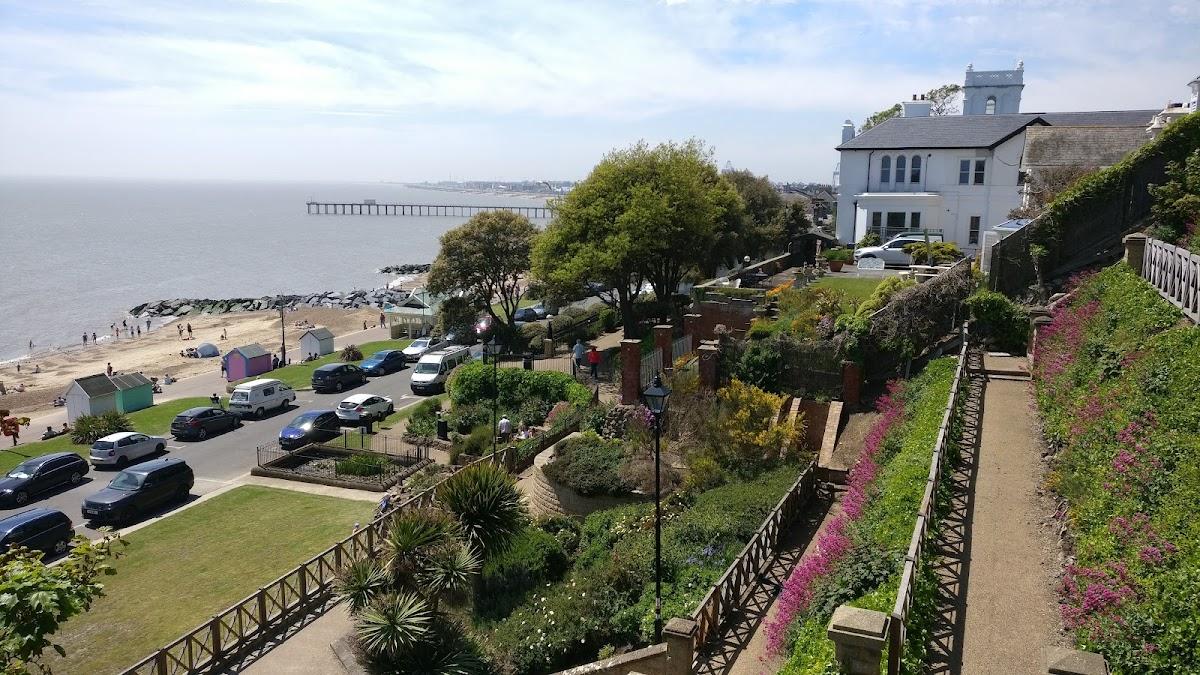
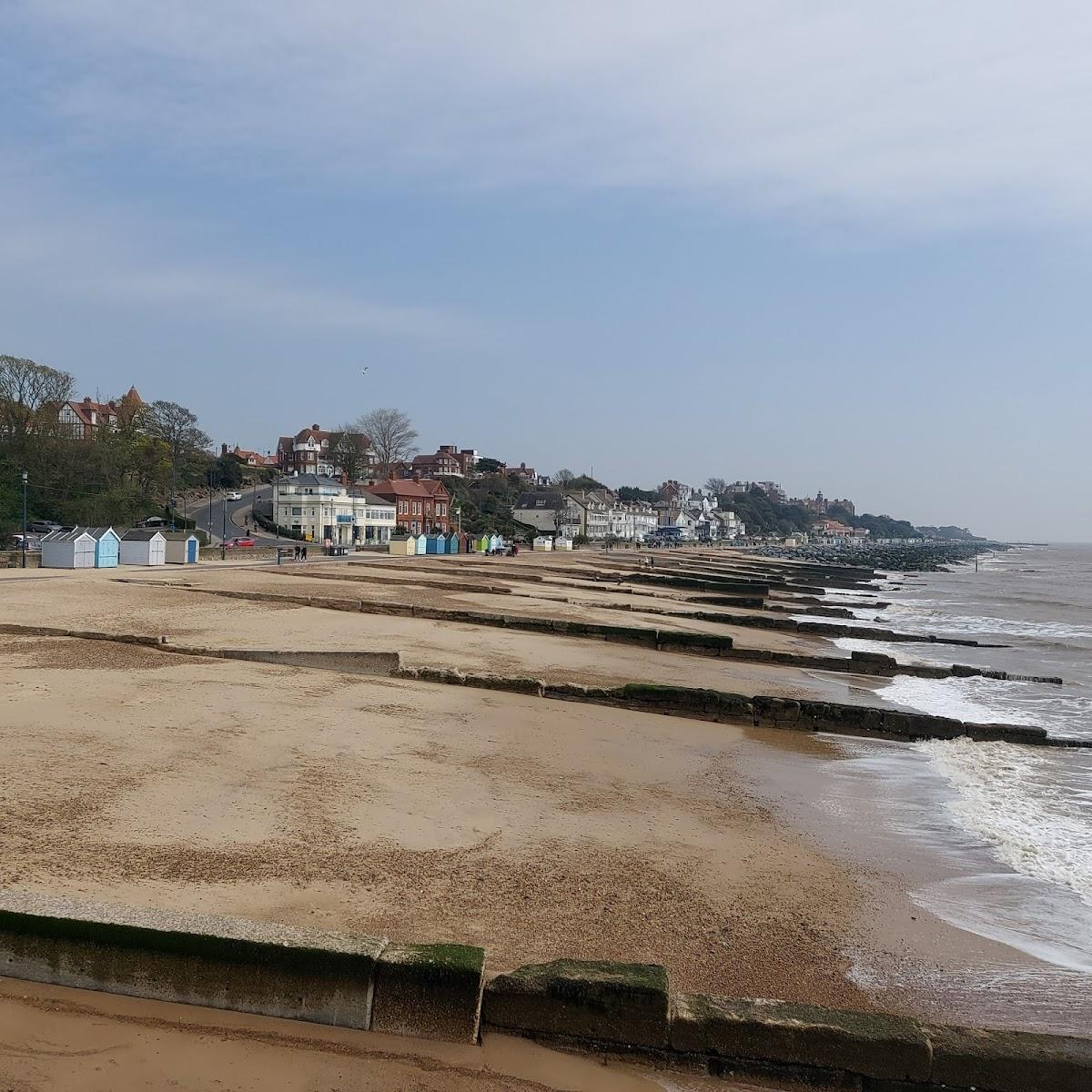
The Seafront Gardens are the reason the town has its nickname, and they are the best thing here. There are eight Grade II listed gardens running down the cliff between the town centre and the beach. They were laid out from 1897, when the Felixstowe Spa and Winter Garden Company set out to build a public garden around a natural spa well that visitors were already coming for. The Spa Pavilion followed in 1909, and the Woodbridge nursery firm Notcutts laid out the accompanying Spa Gardens.
They then declined for most of a century. In 2011 a four-year, £4.8 million restoration began, funded by East Suffolk Council and the Heritage Lottery Fund, bringing back two historic pavilions and the water features, repairing the rockwork walls, recreating period seating and replanting throughout. The gardens reopened in 2015.
It worked. They took the Green Flag Award for the tenth consecutive year in July 2025, so every year since 2016 without a break.
The beach has its own run going: Felixstowe took the Blue Flag and Seaside Award in 2025 for the sixth consecutive year, which for a town most people associate with container cranes is worth saying out loud.
They are free, open, and the single most underrated public space on the Suffolk coast.
Felixstowe Pier sits at the northern end of the promenade. The original 1905 pier ran an extraordinary 2,640 feet out to sea with its own electric tramway, and was cut back to around 450 feet after the Second World War. The shore end was rebuilt in a £3 million project that opened in August 2017, giving it a modern family entertainment centre with arcade and bowling, a bar and restaurant, and a boardwalk wrapping the building. Hours shift with the season and are not reliably published, so check on the day.
Felixstowe beach below is shingle over sand, with the sand showing at lower tides, and it runs a long way in both directions. The promenade is flat, wide and continuous, which makes this one of the more accessible seafronts on the coast.
Insider pick · Felixstowe
Felixstowe Sea Front Gardens
Felixstowe Sea Front Gardens is a Grade II listed coastal garden in Felixstowe, Suffolk, stretching almost a kilometre between the town and the beach.
View listingWhere to eat and shop
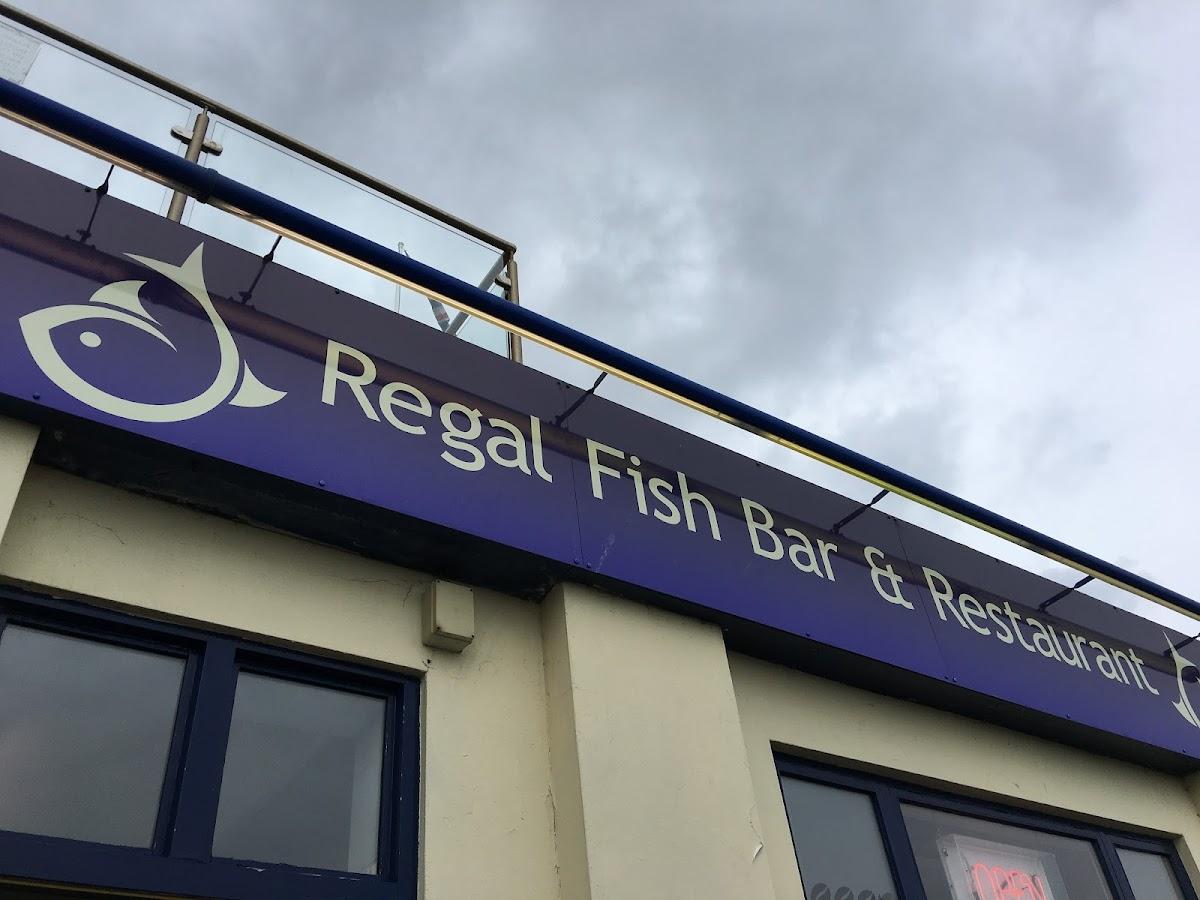
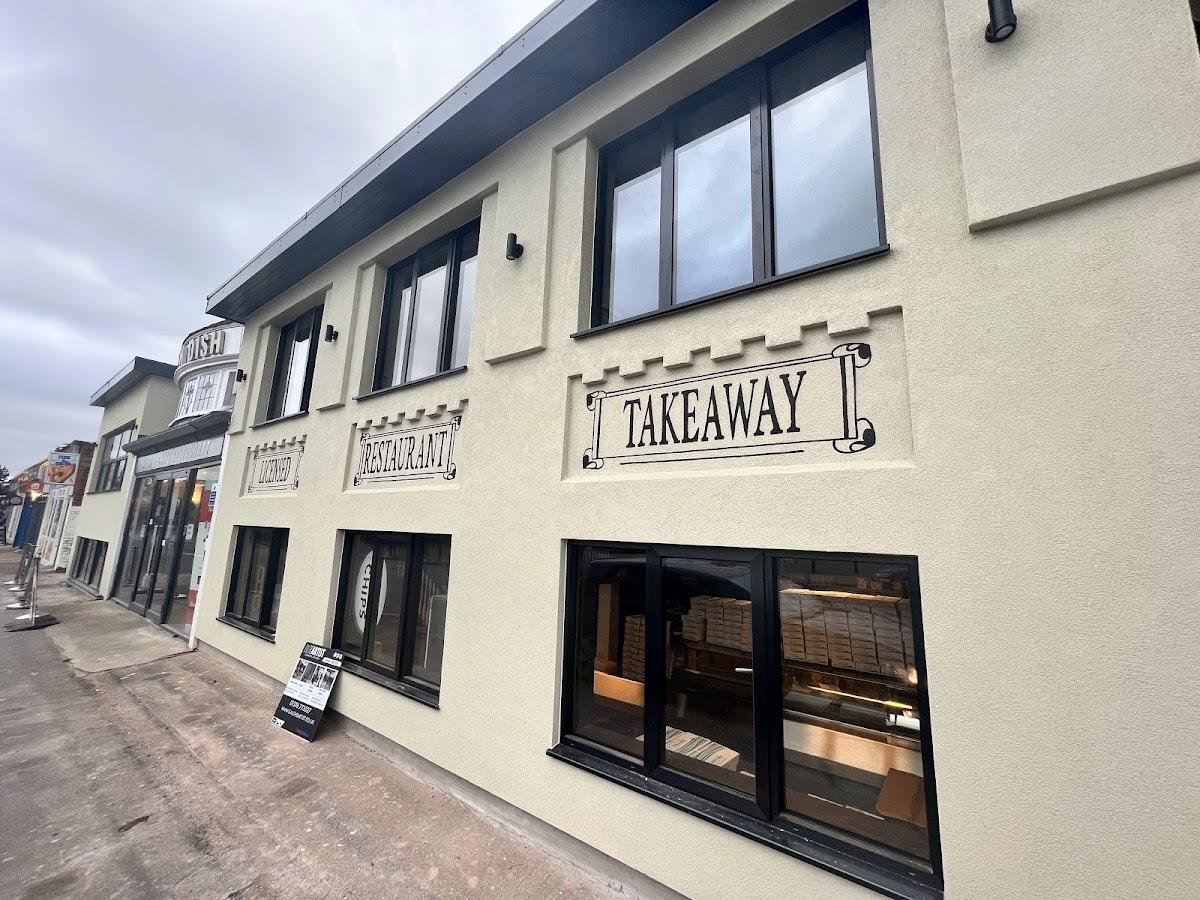
The seafront covers the obvious. Regal on Sea Road and Fish Dish on Undercliff Road West are the seafront chip shops, and Orwell Fish and Chips sits up in the town on Orwell Road. Loca Bar and Restaurant is at Mannings on Sea Road.
Up the hill, Ruby's on Bent Hill is the cafe worth the climb, and Stillwater Books on Hamilton Road is the independent bookshop on the main shopping street. The Grosvenor on Ranelagh Road is the town pub, and Benny's Yard is the creative space out on Micklegate Road.
On the seafront
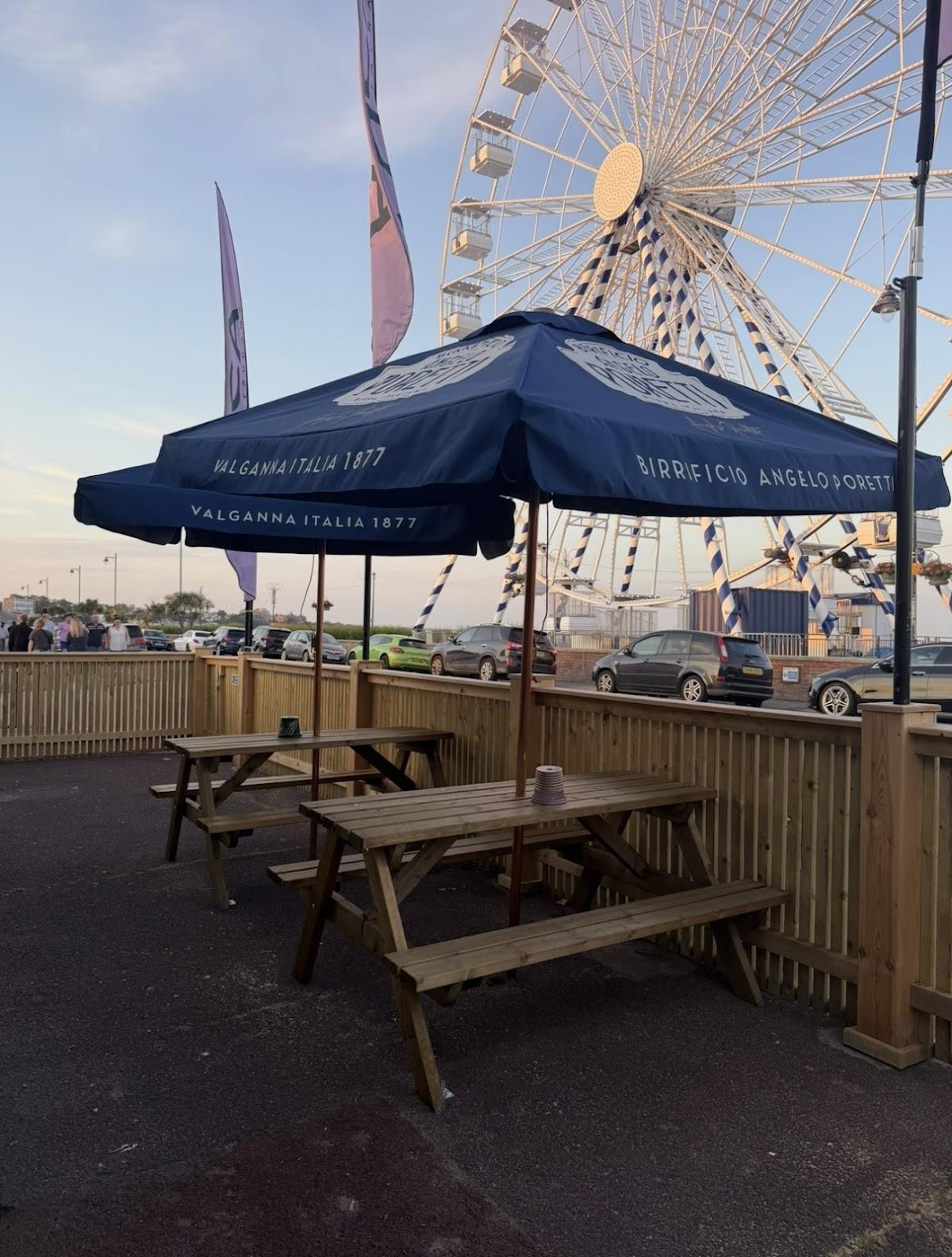
Felixstowe Ferry and the foot ferry to Bawdsey
This is the part most visitors never reach, and it is the best reason to give Felixstowe a full day rather than an afternoon.
Felixstowe Ferry is a hamlet about three miles north of the pier, at the mouth of the River Deben, and it is a genuinely separate place. There are black weatherboarded huts, a boatyard, a sailing club, a golf course behind and boats pulled up on the shingle. There is no promenade and no amusements. If you have spent the morning on the main seafront, arriving here is a jolt, in a good way.
From the quay, a foot ferry crosses the Deben to Bawdsey Quay, and it is one of only a handful of small foot ferries left on the Suffolk coast. The 2026 season runs:
- Good Friday to 30 April, weekends only, 10am to 5pm
- 1 May to 30 September, daily, 10am to 5pm
- 1 to 31 October, weekends only, 10am to 5pm
It is weather dependent and cash only, and it does not run at all in winter. Fares as of 2025 were £3 adult single and £5 return, £2 for children, £4 and £6 for a cyclist, and £3 to £5 each way for the river taxi out to moored boats.
Two practical notes. One published timetable gives the last crossing at 4.30pm rather than 5pm, so do not leave the return to the wire. And if the boat is sitting on the far bank when you arrive, wave the baton on the quay and the ferryman will come across for you.
On the far bank, Bawdsey Beach and Bawdsey Quay are quiet shingle with a very different feel again, and it is the start of the walk up towards Shingle Street.
The Ferry Boat Inn and the ferry cafe are the two places to eat at the Felixstowe Ferry end. The Ferryboat, IP11 9RZ, was built in the fifteenth century as the ferry master's house and became a hostelry in the sixteenth. Its bar is unusually tall, possibly built that way to cope with flooding, and there is a mark on the wall showing how high the water reached in the Great Flood of 1953.
Landguard Fort and the point
At the southern tip of the town, the Landguard peninsula is a spit of shingle that has been fortified in some form since the 1540s because of what it guards: the entrance to Harwich harbour and the Orwell and Stour estuaries.
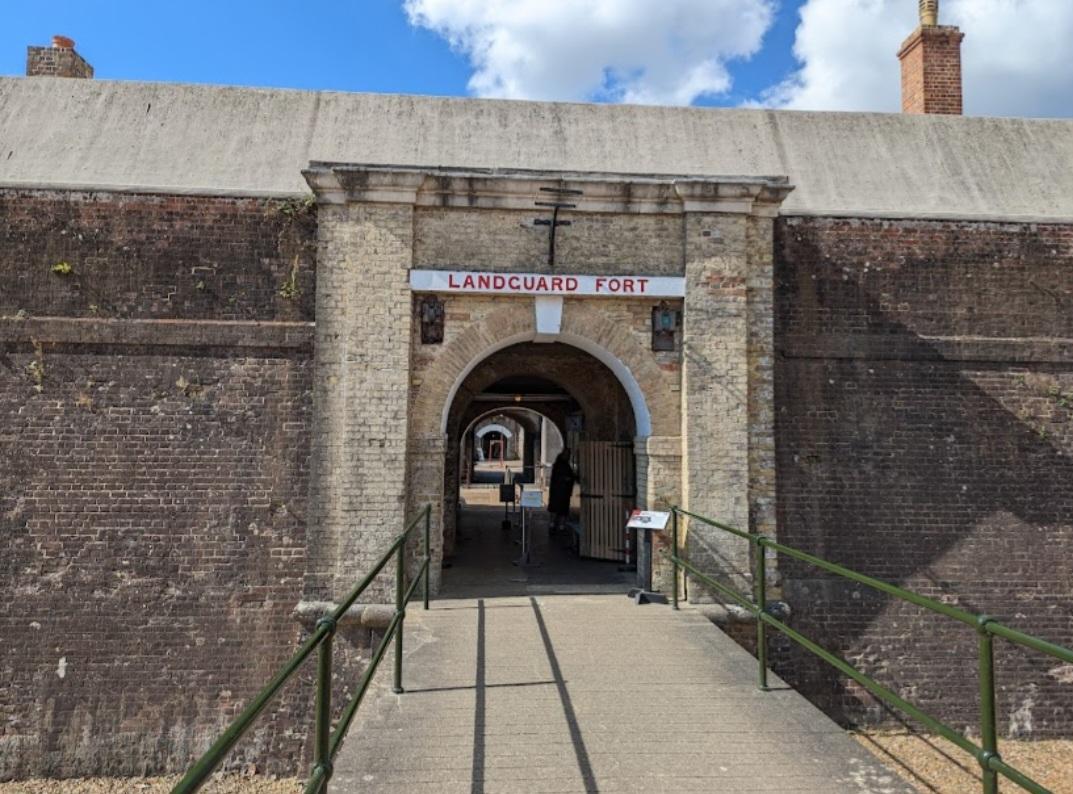
Landguard Fort is the survivor. The present buildings date from 1745, with substantial Victorian additions in 1875, on the site of earlier forts. It is Grade I listed, owned by English Heritage and run by the Landguard Fort Trust, a registered charity. In 2026 it opens from 14 February to 2 November, Thursday to Sunday plus bank holiday Mondays, and daily during school holidays, 10am to 5pm. Admission is £8.50 adult, £7.80 for over-65s and students, £5.00 for children aged 5 to 17, with under-5s and carers free and the audio tour included. Last admission is two hours before closing.
One thing to check on the day rather than assume: Landguard's own site says English Heritage, CADW, Historic Scotland and Manx National Heritage members go free except at special events, while English Heritage's site says its members get 20% off. The two operators do not agree, so expect a concession rather than free entry and be pleasantly surprised.
Felixstowe Museum sits on the same site, in the 1878 Submarine Mining Establishment next to the fort, and a joint ticket is available. If you are giving Landguard a morning, that is the way to do it.
Its claim to fame is real and rarely believed: this is the site of the last opposed invasion of England, in 1667, when a Dutch landing force was repelled here during the Second Anglo-Dutch War.
Landguard Nature Reserve surrounds it, a rare vegetated shingle habitat that is a serious site for migrating birds, and Landguard Point itself is the viewpoint at the end. It is bleak, flat, windswept and quite unlike the manicured end of town.
Woodbridge, Bawdsey, Orford and Ipswich
Woodbridge is about twenty minutes north, a working river town on the Deben with the Tide Mill, the Thoroughfare and Sutton Hoo. It is the natural pairing if you want a second day that is nothing like this one. Read our guide to Woodbridge.
Bawdsey is directly across the Deben, reached by the foot ferry in a few minutes or by a long drive round through Woodbridge. Quay, shingle beach and the radar site where airborne radar was developed before the war.
Orford is further up the coast, with the twelfth-century castle keep, Pump Street Bakery and the boat across to Orford Ness. See things to do in Orford.
Ipswich is fifteen miles inland at the head of the Orwell, and it is where the branch line comes from. The waterfront, Christchurch Park and The Hold are the reasons to stop. Browse everything we list in Ipswich.
Closer in, Orwell Country Park sits under the Orwell Bridge on the way out of town, and Trimley Marshes, reached on foot from Trimley, is the wetland reserve on the estuary behind the port.
Yes you can see the container ships, and yes it is better than it sounds
Here is the thing people get wrong about Felixstowe.
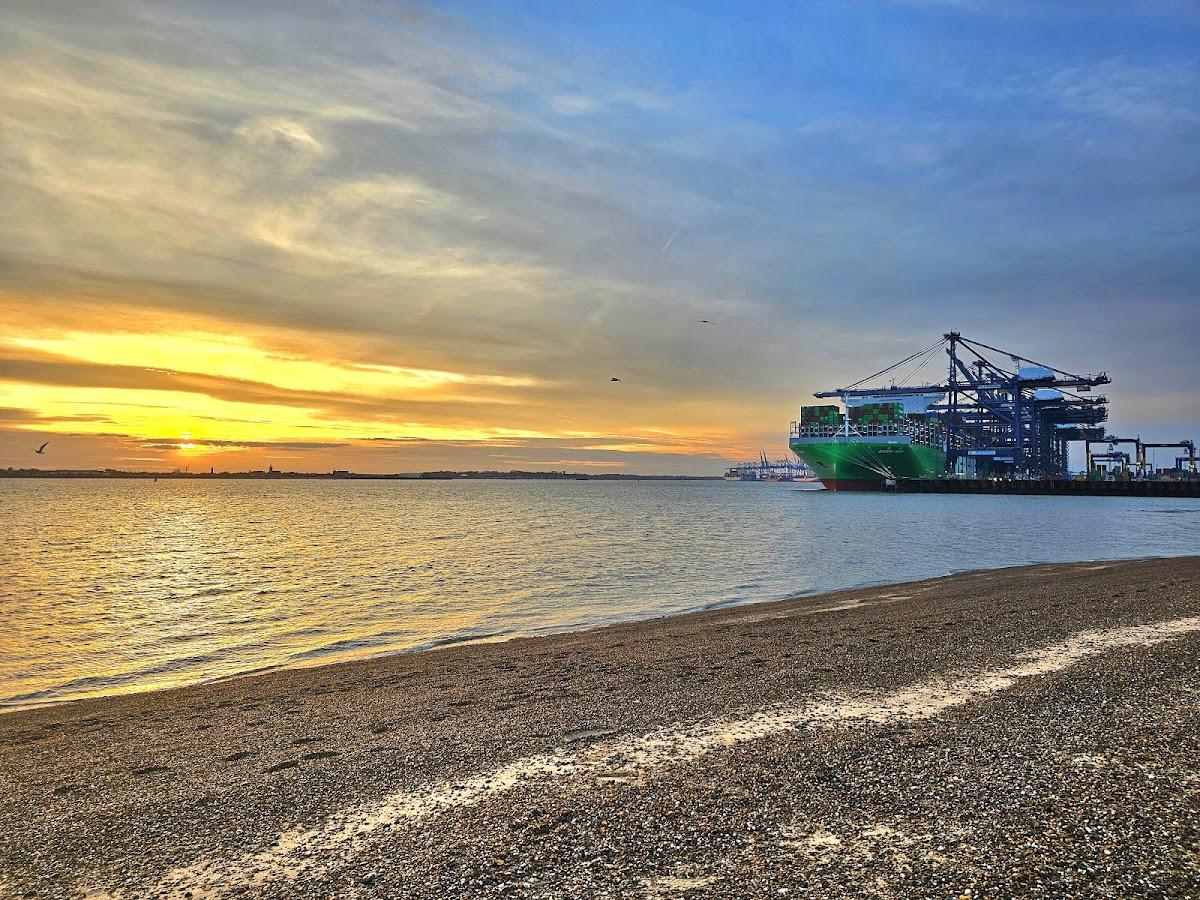
The Port of Felixstowe is Britain's busiest container port and one of the largest in Europe, handling over four million containers and around 3,000 ships a year, including the largest container vessels afloat. Most people assume that ruins the town. It does the opposite, for one specific reason: there is a purpose-built public viewing area right next to it.
The John Bradfield Viewing Area sits on the Landguard peninsula between the fort and the port, named after the man who built the container terminal. From it you are close enough to read the names on the hulls as ships come in and out of Harwich harbour. On a good day you will see a 400-metre vessel manoeuvre past you at walking pace, with the cranes working behind it. There is a visitor centre and cafe alongside, with displays about the peninsula, toilets and indoor and outdoor seating.
Across the water you can see the Shotley peninsula and, in Essex, Harwich and Dovercourt. On a clear day the offshore wind turbines beyond the Naze show up on the horizon.
You do not need to be interested in shipping to enjoy it. The appeal is scale. These are among the largest moving objects human beings build, and you can stand on a bit of shingle with a cup of tea and watch one go past at close range, for nothing. Children who could not care less about a fort or a garden will stand at that railing for an hour.
It also gives the town its real character. Felixstowe is not pretending the port is not there, and it is not apologising for it either. You get Edwardian gardens and a pier at one end and the machinery of global trade at the other, two miles apart, and the walk between them is the most interesting thing about the place.
The honest summary
Felixstowe is the most underrated town on the Suffolk coast, and its reputation problem is entirely down to the port sharing its name.
Go for the gardens, which are genuinely special and free. Walk down through them rather than up. Take the branch line from Ipswich if you can. Give yourself time to drive north to Felixstowe Ferry and, if it is running, take the little boat across to Bawdsey. Then finish at Landguard, look at the fort, and stand at the viewing area while something the length of four football pitches slides past you.
That is a properly varied day out, and almost nobody who drives past on the A14 knows it is there.
Related listings
Nearby picks to explore

Good to know
Frequently asked questions
Yes. The John Bradfield Viewing Area sits between Landguard Fort and the port, and it is the closest public vantage point on some of the largest ships afloat. There is a visitor centre and cafe alongside it, and the whole thing is free to stand and watch.
No. Felixstowe Ferry is a separate hamlet about three miles north of the main seafront, at the mouth of the River Deben. It has boat sheds, a sailing club, a couple of places to eat and a foot ferry, and it feels nothing like the resort end of town.
Weekends from Good Friday to the end of April, daily from 1 May to 30 September, then weekends again through October, running 10am to 5pm. It is weather dependent and cash only, so check before travelling rather than turning up and hoping.
Take the Felixstowe branch line from Ipswich, a 15 mile run of about 25 minutes calling at Westerfield, Derby Road and Trimley St Mary. Greater Anglia operate it, and the views over the Orwell and Trimley Marshes on the way are part of the appeal.
No, it runs a season. In 2026 it opens from 14 February to 2 November, Thursday to Sunday plus bank holiday Mondays, and daily during school holidays, from 10am to 5pm. English Heritage owns it and the Landguard Fort Trust runs it.
Be part of it
Three ways to get involved
Keep reading
More from the Journal
27 July 2026
A guide to Walberswick and Thorpeness
An honest guide to Walberswick and Thorpeness, Suffolk: crabbing off Wally's Bridge, the House in the Clouds, the Meare and the rowing ferry.
27 July 2026
A guide to Aldeburgh
An honest guide to Aldeburgh, Suffolk: shingle not sand, fish straight off the beach huts, the Scallop argument, and Snape Maltings five miles inland.
27 July 2026
A guide to Southwold
An honest guide to Southwold, Suffolk: the pier, beach huts, Adnams tours, where to park before it fills, and the rowing ferry to Walberswick.