27 July 2026
A guide to Aldeburgh
An honest guide to Aldeburgh, Suffolk: shingle not sand, fish straight off the beach huts, the Scallop argument, and Snape Maltings five miles inland.
Aldeburgh is a town that has been offered the chance to become a resort several times and turned it down each time. There is no pier, no arcade, no promenade rides, and the beach is shingle rather than sand. What it has instead is fish sold off the beach where it was landed, one of the best concert halls in Europe five miles inland, and a high street that still functions as a high street. It is the most serious town on the Suffolk coast, in both senses of the word.
Key takeaways
- Aldeburgh beach is steep shingle with no sand. Come for the walk and the swim, not for sandcastles.
- Buy fish straight from the wooden huts on Crag Path, and go in the morning while there is still choice.
- Snape Maltings five miles inland is the real cultural draw, with concerts year round and the Aldeburgh Festival in June.
- The queue at Aldeburgh Fish and Chip Shop is real, and there is a decent alternative down the road.
- Park at Fort Green on Slaughden Road rather than circling the seafront.
What Aldeburgh actually is
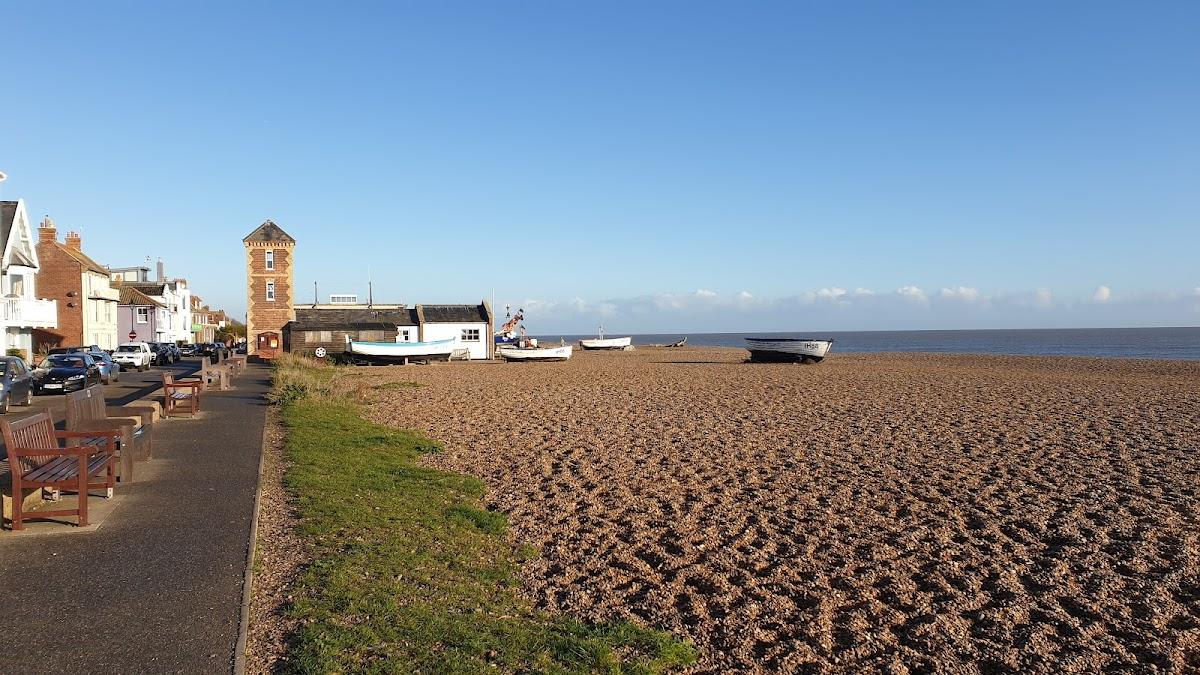
Aldeburgh is a working fishing town that also happens to be a centre of classical music, which is an unusual combination and the reason the place feels different from its neighbours. Boats are still winched up onto the shingle in front of the town and sell what they land from huts a few metres away. In the same week, an internationally known soprano will be rehearsing at Snape.
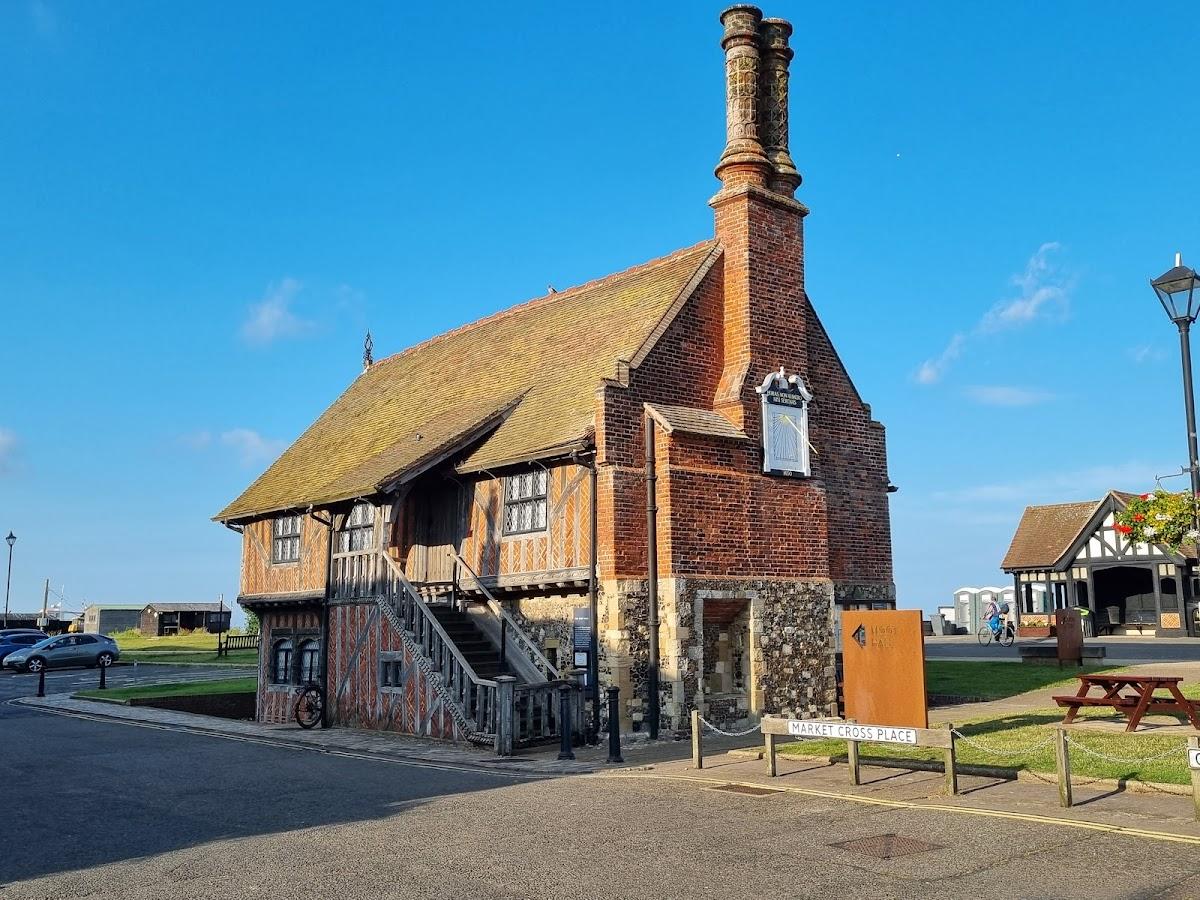
The town is essentially one long high street running parallel to the sea, with Crag Path along the shingle in front of it and the marshes behind. The Moot Hall at Market Cross Place, a timber-framed Tudor building that now houses Aldeburgh Museum, is the clearest illustration of what has happened here. Built around 1520, timber-framed with wattle and daub and brick nog infill, it was altered in 1654 and its gable ends and staircase were restored by R. M. Phipson in 1855. It went up in the middle of the town, and coastal erosion has left it standing almost on the beach.
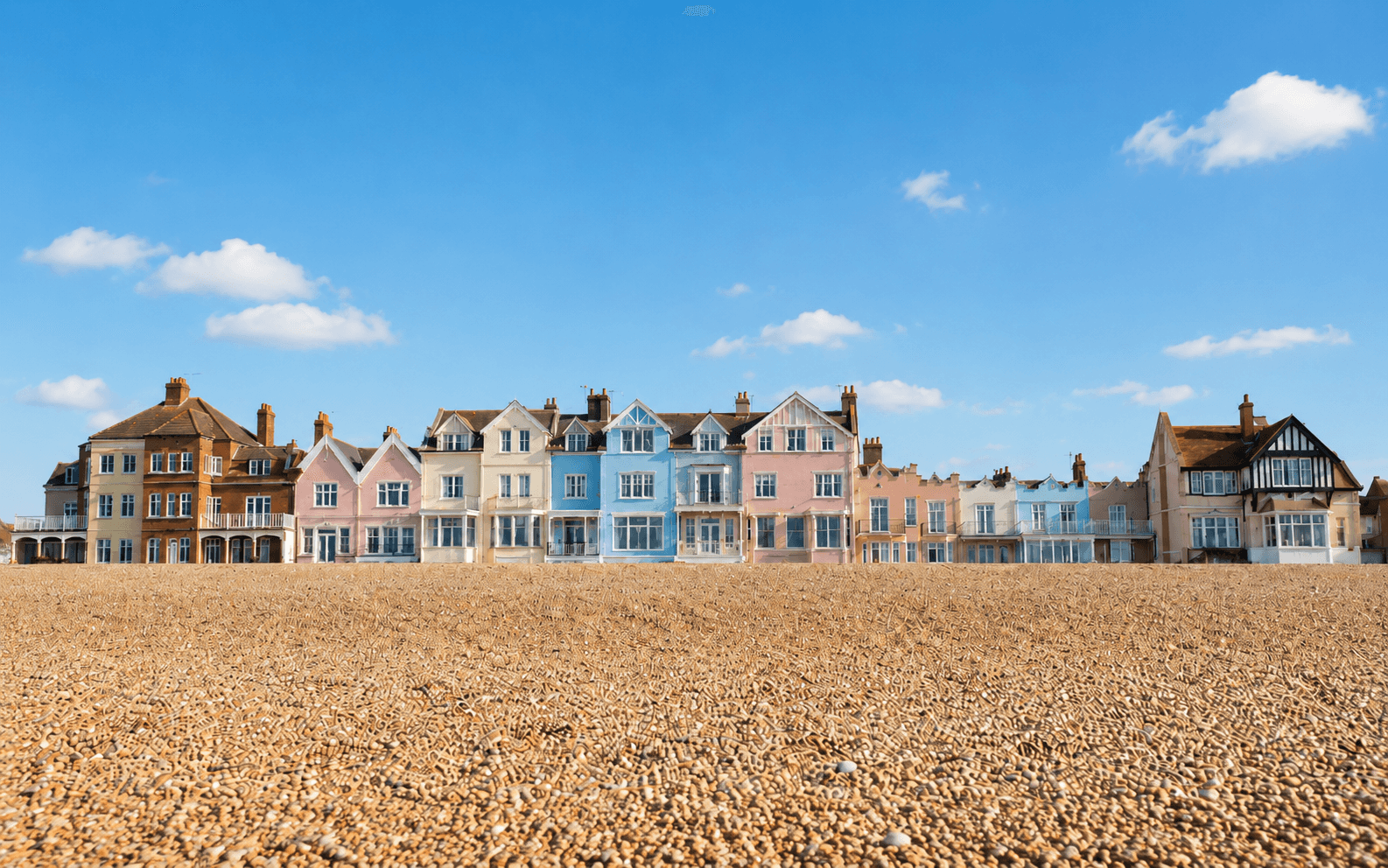
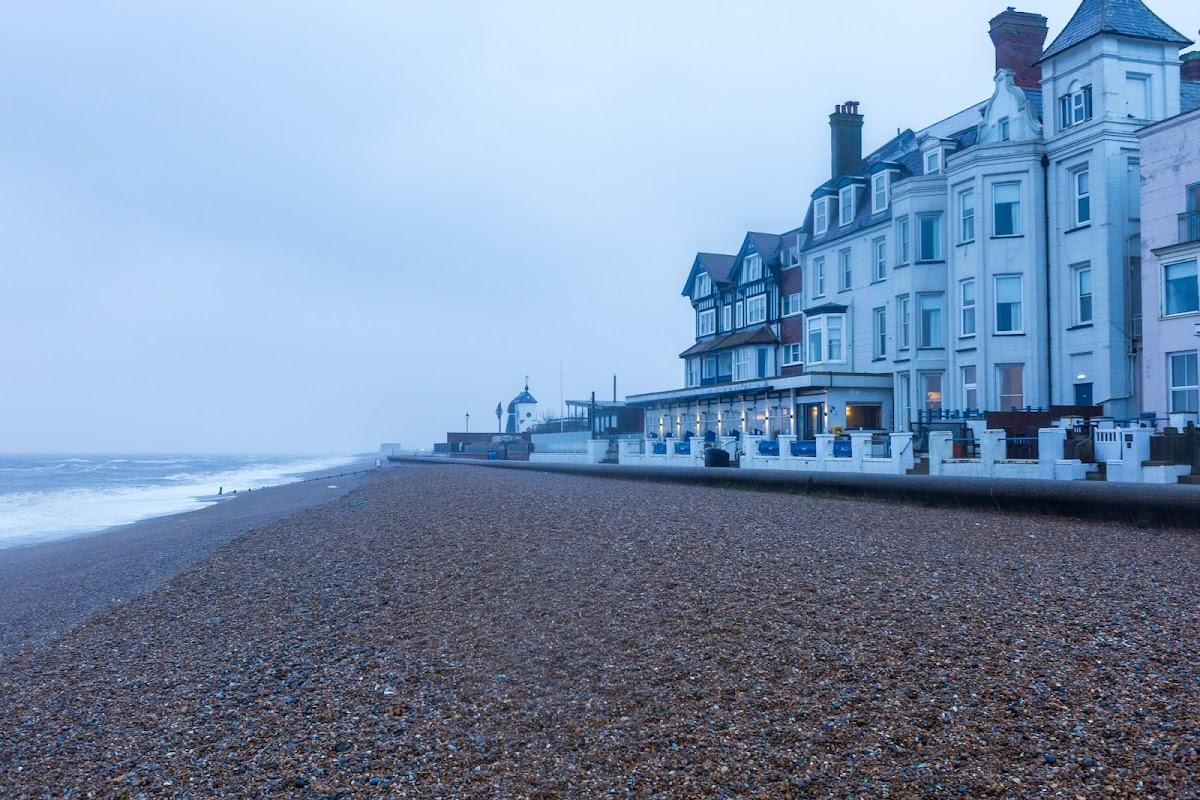
The thing to understand before you come is that the beach is shingle. Not mostly shingle, not shingle at high tide and sand at low. Steep, coarse shingle the whole way, shelving sharply into deep water. That makes it superb for swimming if you can handle a cold entry, and genuinely poor for a bucket-and-spade day with a four-year-old.
Getting there and parking
By road. Aldeburgh is reached on the A1094, which leaves the A12 just south of Farnham and runs east through Snape and Friston into the top of the town. Like most of this coast it is a dead end, so you arrive and leave the same way.
By train. Saxmundham is the nearest station, seven miles away on the East Suffolk Line, with Greater Anglia services connecting at Ipswich for London Liverpool Street and running north to Lowestoft for Norwich. The 522 bus covers the last stretch hourly in about 17 minutes, which is what makes arriving by train a genuine option rather than a technicality.
Where to park. The town car parks are East Suffolk Council sites operated by APCOA, and the seafront ones fill first.
- Fort Green, Slaughden Road, IP15 5DE, about three minutes' walk into the town centre. Pay by coins, contactless or RingGo, or through APCOA Connect using location code 664414.
- Slaughden, further south down Slaughden Road towards the yacht club and the Martello tower.
- Crag Path and the seafront, on-street, and the first thing everyone tries.
Charges apply 8am to 6pm daily including bank holidays. As of 2026 APCOA lists Fort Green at £4.20 for up to two hours, £6.30 for up to four and £8.30 for up to ten, with a monthly ticket at £83 and an annual at £440. Tariffs on this coast change more often than most, so treat any figure you read anywhere, this one included, as needing a check against the sign.
The free option almost nobody uses. Slaughden Parking Place, past Fort Green, is pay-and-display on RingGo. But keep going along it to the ramp, and the area up on the sea wall is free. It is a slightly longer walk back into town, and it is the best parking decision in Aldeburgh.
When to go
June is the obvious answer if you care about the music, because the Aldeburgh Festival runs across the second half of the month and the town fills with people who have come specifically for it. That is either the appeal or the reason to avoid it.
Otherwise, spring and early autumn are the best of it. The sea is at its warmest in September, the fish huts are still going, and the high street is busy without being solid. Winter here is bleak in a way people travel for, and enough of the town stays open that a January walk followed by a pub lunch works properly.
Local knowledge
Go to the fish huts on Crag Path in the morning, not on your way back from the beach. They sell what the boats brought in, so the good stuff goes early and the choice by late afternoon can be down to whatever nobody wanted. If you are cooking that evening, buy first and walk second.
Where to eat and shop
The wooden huts along Crag Path, on the beach side opposite the White Lion, are the reason to come hungry. They sell fish landed off the boats in front of you, raw or smoked, from crab and lobster to seabass, prawns and potted shrimp. Ash Smoked Fishes at Hut 8 is a smokehouse proper, curing over Suffolk oak, and the Aldeburgh Fresh Fish Company at Hut 1 sells it fresh off the boats. Both open from around 8am and trade until they sell out, which on a good day is a long way short of closing time.
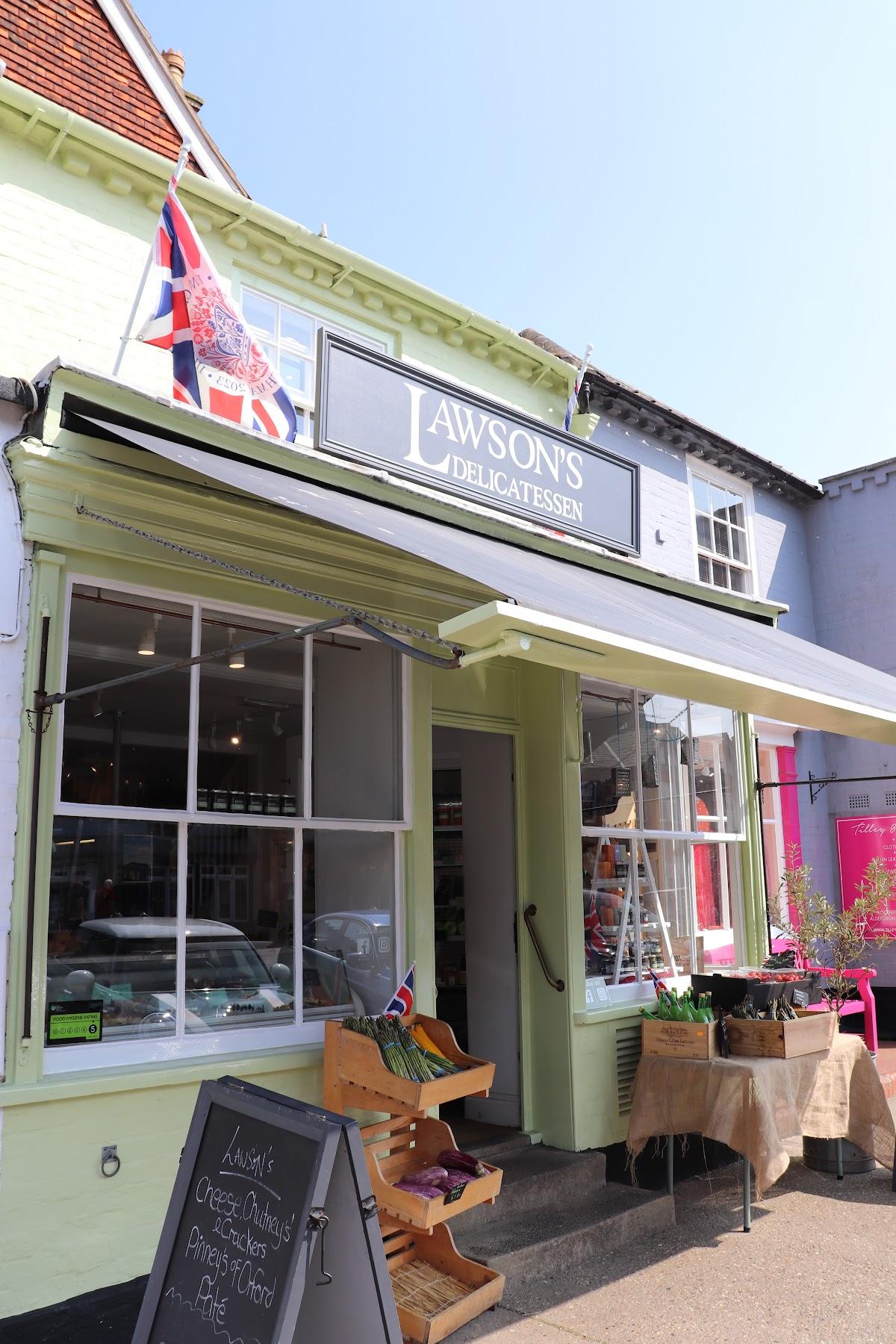
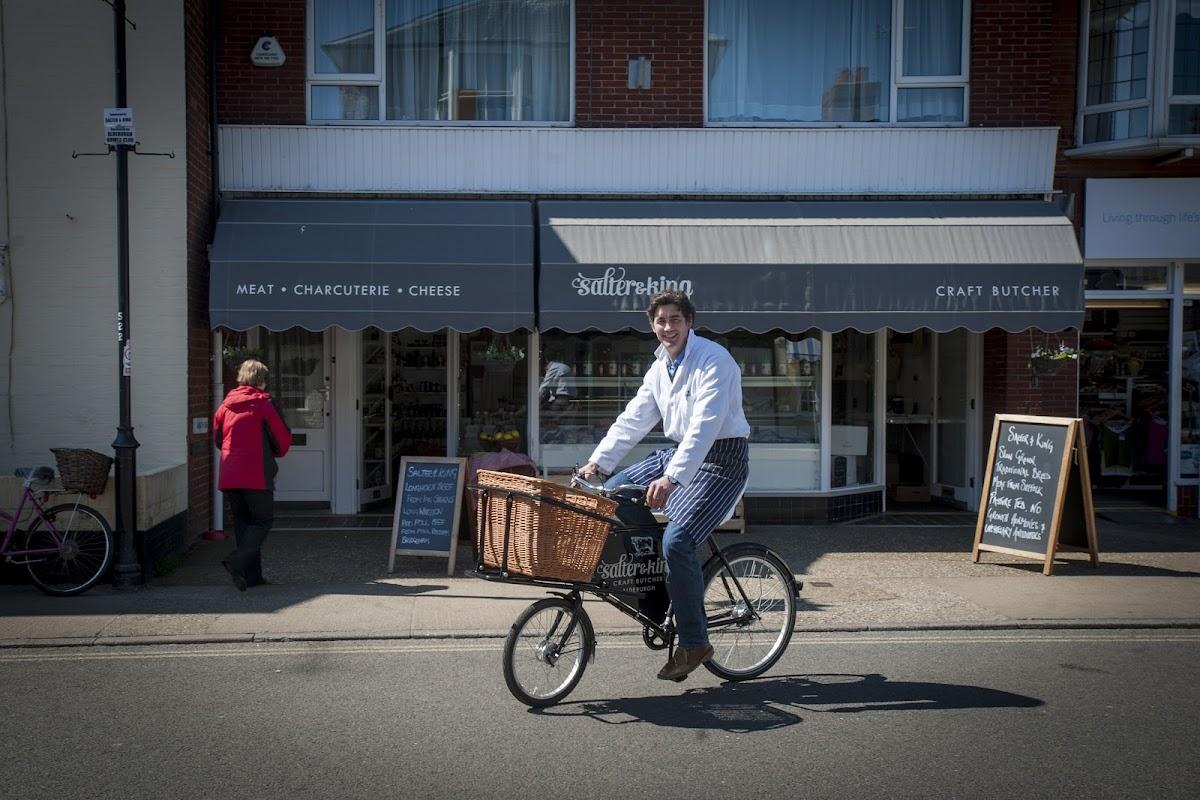
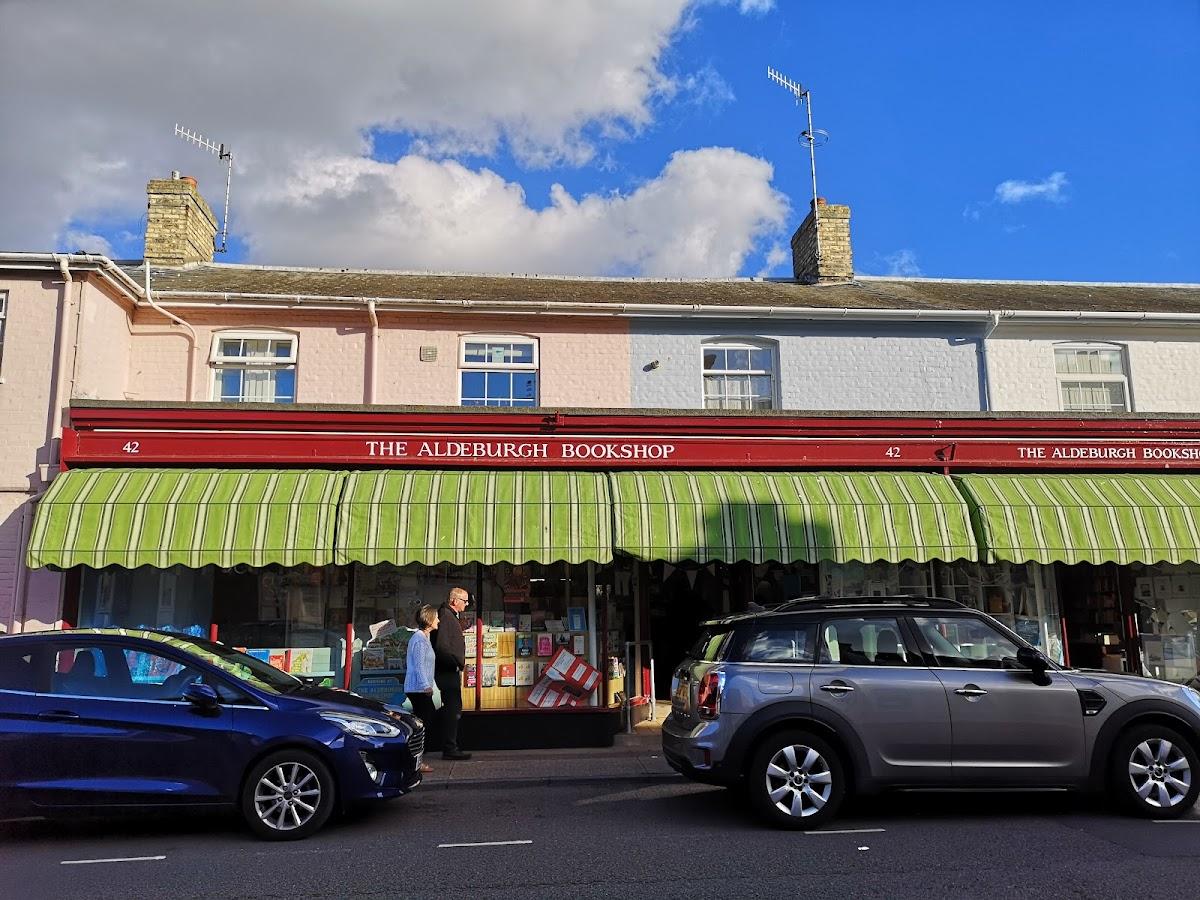
On the High Street, Two Magpies Bakery at 183A handles bread and pastries, Lawson's Delicatessen at 138 does cheese and picnic supplies, and Salter and King at 107 is the butcher, which matters more here than in most seaside towns because a lot of people staying in Aldeburgh are cooking. The Aldeburgh Bookshop at 42 and Reed Books at 115A are both independent, and Thompson's Gallery at 175 is the long-standing commercial gallery.
For a sit-down meal, The Lighthouse at 77 High Street is the established restaurant, and both hotels serve food. On the pub side, Cross Keys on Crabbe Street is the one closest to the sea and the White Hart is the High Street local.
On the High Street
Snape Maltings, Britten, and the Jubilee Hall
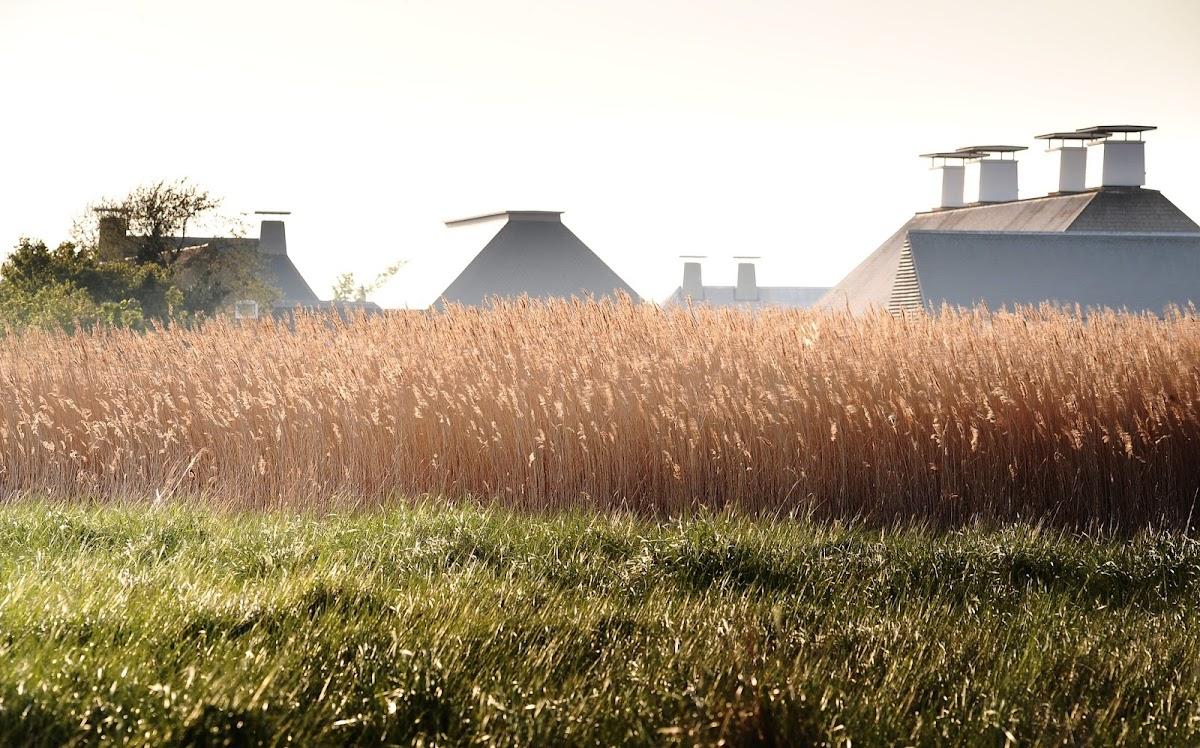
The reason Aldeburgh punches so far above a town of its size is Benjamin Britten. He founded the Aldeburgh Festival here in 1948 with the tenor Peter Pears and the writer Eric Crozier, running it out of the Jubilee Hall on Crabbe Street, which seats 236 and is still in use. That is a remarkably small room to have started something this significant in.
The festival outgrew it. Britten and Pears converted a Victorian malt house at Snape, about five miles inland on the River Alde, into an 832-seat concert hall, and Queen Elizabeth II opened Snape Maltings Concert Hall on 2 June 1967. On the opening night of the 1969 festival it burned down, leaving only the outer walls. It was rebuilt and reopened in time for the 1970 festival, which tells you something about the seriousness of the people involved.
Snape now runs year round rather than just in festival season, with concerts, a campus of rehearsal spaces, and shops and food around the site. The Aldeburgh Festival runs for a fortnight each June. The 2026 edition ran from 12 to 28 June and was the 77th, falling in the year that marked fifty years since Britten's death. The Aldeburgh Food and Drink Festival is at Snape on 26 and 27 September 2026.
Britten's home, the Red House on Golf Lane, is a Grade II seventeenth-century farmhouse that he and Pears moved into in November 1957, and it is open to visitors under the same organisation. General admission is seasonal, Thursday to Sunday, 10.30am to 4.30pm with last entry at 3.30pm, closing over winter and reopening on 2 April 2026. It is normally shut on Wednesdays, though a 90 minute guided tour of the house, studio, library and archive can be booked. There is a no bag policy inside the house.
Snape is not walkable from Aldeburgh. Plan a car or a taxi, and check the finish time before you book anything for afterwards.
Insider pick · Snape
Snape Maltings
Snape Maltings Concert Hall hosts world-class performances in Snape, Suffolk. Explore classical music, opera, and theatrical events at this acclaimed venue.
View listingThe Scallop, and the argument about it
Walk north along the beach from the Moot Hall and you reach a four-metre sculpture of a broken scallop shell standing on the shingle. How long that takes depends entirely on whether you are on the level path or the shingle itself, so allow anything from ten minutes to twenty. If you would rather skip the walk, it sits right beside the Thorpe Road long stay car park, and you can park next to it.
The Scallop is by Maggi Hambling, unveiled in November 2003 as a tribute to Britten. It is stainless steel, 3.7 metres high and weighs three and a half tons, built for Hambling by the local firm J. T. Pegg and Sons and formed as two halves of a fractured shell, with a line from Britten's opera Peter Grimes cut clean through the upright edge so you read it against the sky and the sea behind: I hear those voices that will not be drowned.
It is also the most argued-about object in Suffolk, and the argument is the interesting part. Within weeks of the unveiling a petition to move it had gathered close to a thousand signatures in a town of a few thousand people. Objectors said it did not belong on an undeveloped shingle beach inside an Area of Outstanding Natural Beauty and that it spoiled the view. A campaign group formed to ask the council to relocate it. It was vandalised three times in its first year, and by 2008 the count had reached at least eleven and by some accounts thirteen, with graffiti including "It's an old tin can" and, more to the point, "Move it".
Hambling has never given ground, saying it was made for that particular place in juxtaposition with the sea and that is where it should stay. In 2006 it won the Marsh Award for Excellence in Public Sculpture. It is still there, and the arguing has largely stopped, which is its own kind of verdict.
Go and look at it before you decide. Most people who dislike it in photographs like it in person, because the thing photographs as an object and works as a frame.
Thorpeness, Orford and Southwold
Thorpeness is two miles north along the coast and is genuinely strange: a mock-Tudor holiday village built from scratch in the early twentieth century around a shallow boating lake called the Meare, with a converted water tower known as the House in the Clouds standing over it. Thorpeness beach is quieter shingle than Aldeburgh's and the Dolphin Inn is the village pub. Our guide to Walberswick and Thorpeness has more.
Orford is south, inland up the River Alde, with Orford Castle and its twelfth-century keep, Pump Street Bakery, which is a destination in its own right, and boats out to Orford Ness, the shingle spit used for secret weapons testing until the 1970s. We have covered it in things to do in Orford.
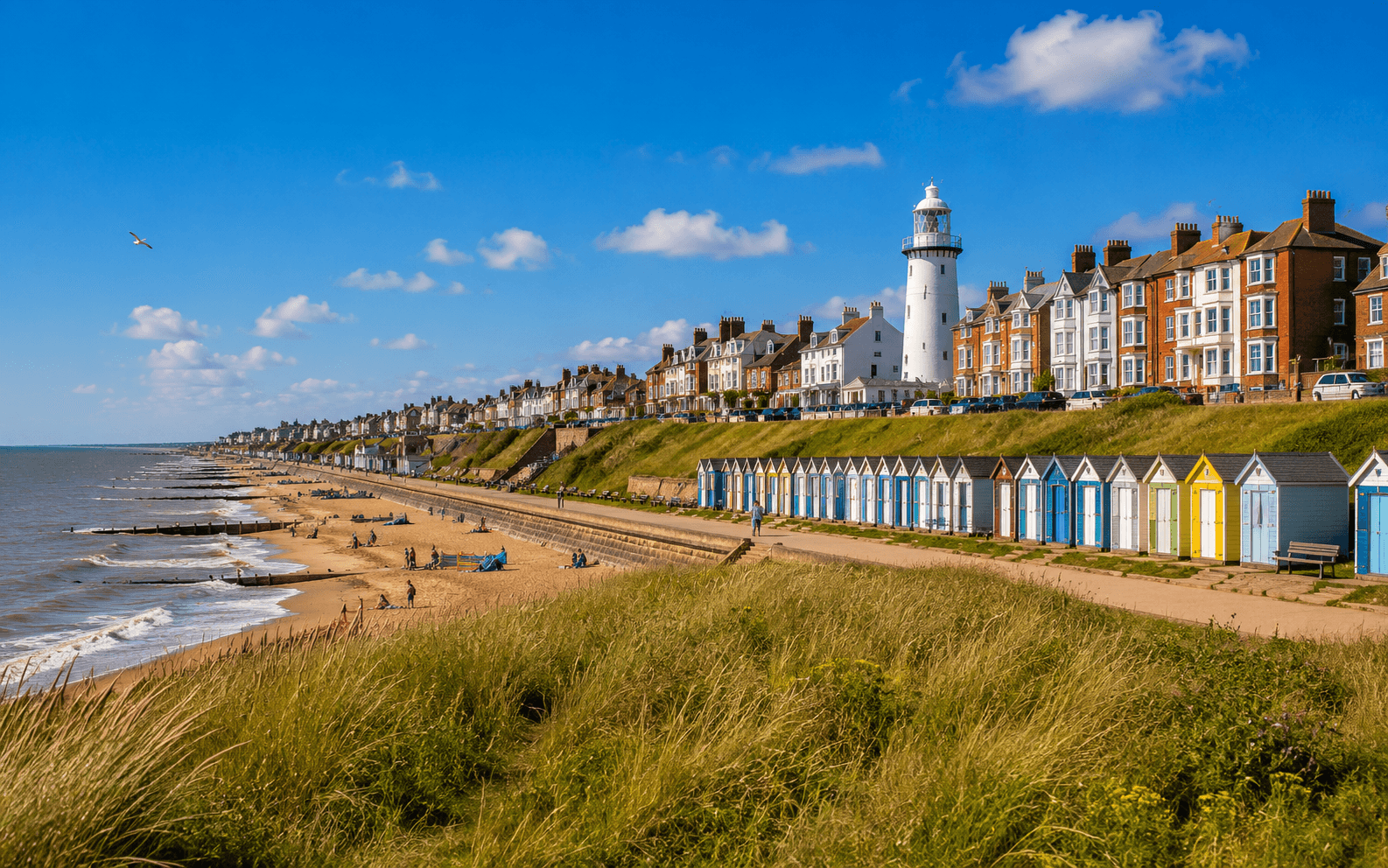
Southwold is further north up the coast and is the obvious comparison: a pier, a brewery, beach huts and considerably more visitors. If you want the version of this coast with more going on, read our guide to Southwold.
The fish and chip queue, and whether to join it
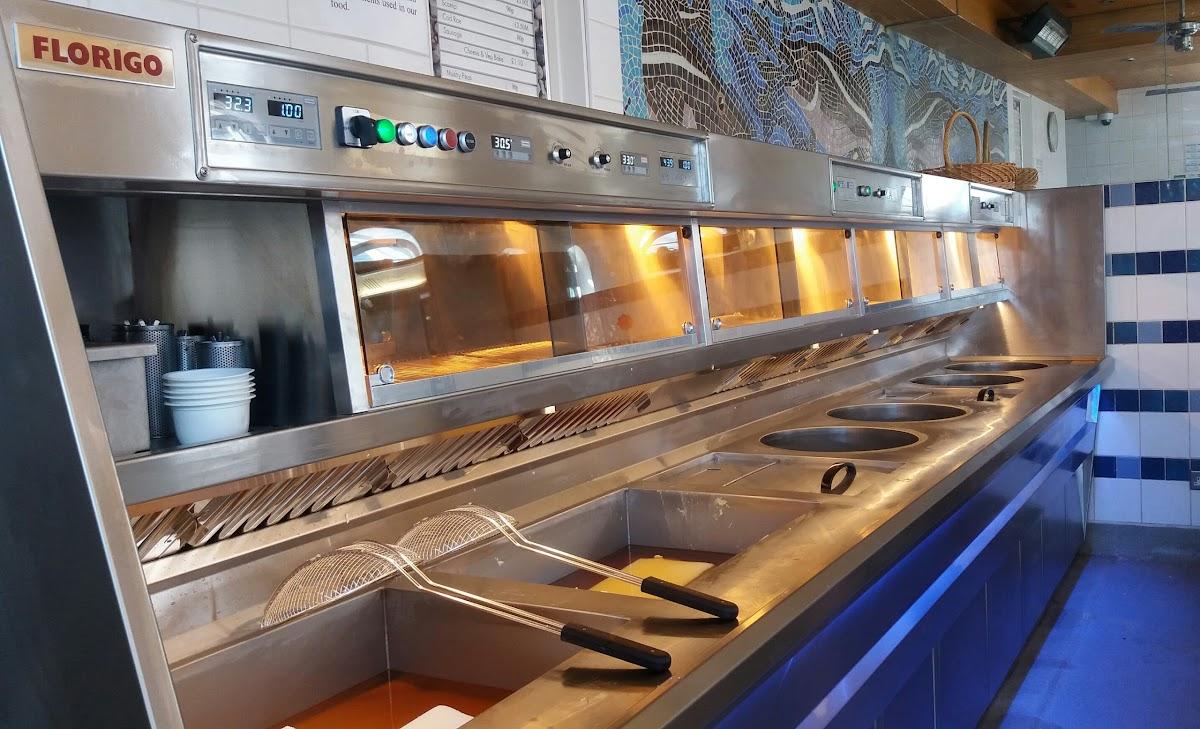
Aldeburgh Fish and Chip Shop at 226 High Street has a national reputation and a queue that forms up the pavement outside it most summer evenings. It does not take phone bookings and it does not take phone orders for takeaway, so there is no way around the line. Opening is split into lunch and evening sittings: 11.45am to 2pm every day, then 6pm to 8.30pm Monday and Tuesday, 6pm to 8pm Wednesday, 5pm to 8pm Thursday, 6pm to 9pm Friday, 5pm to 8pm Saturday, and 12pm to 2.30pm followed by 5pm to 7pm on Sunday.
So, is it worth it? Honestly, yes once. The fish is fresh, the chips are properly done, and eating them sitting on the sea wall on Crag Path looking at the shingle is one of the genuinely good simple experiences on this coast. It is not a life-changing meal. It is a very good chip shop with an unusually beautiful place to eat the result.
But do not queue for forty minutes with tired children because a list told you to. The Golden Galleon at 137 High Street is the same family. Horace and Celia Cooney bought the original shop in 1967, opened the Galleon in 1997 and the Upper Deck above it in 2000, and their son Peter is still frying, with his son Alan alongside him since 2010. The two shops sit less than 200 yards apart.
Here is the part that actually solves the queue. The Galleon runs straight through from 12pm to 8pm on a Saturday, while the main shop shuts between 2pm and 5pm. On a busy summer afternoon it is not simply the shorter queue, it is the only one of the two that is open. One caveat: the Upper Deck does not take bookings either, so sitting down is not the guaranteed escape it sounds like.
The other option nobody mentions: buy fish from the huts on Crag Path in the morning and cook it yourself. If you have a kitchen where you are staying, that is the better version of an Aldeburgh fish dinner, and it costs less than either chip shop.
The honest summary
Aldeburgh is the Suffolk coast town for people who want to eat well, walk a lot and possibly hear some music, and it is the wrong choice for people who want a beach holiday in the ordinary sense. The shingle is the filter. If you need sand, go elsewhere and visit Aldeburgh for a day.
If you do not, this is the best town on the coast. Buy fish off the beach, walk up to the Scallop and make your own mind up about it, get tickets for whatever is on at Snape, and accept that you will queue for chips at some point. It has refused to become a resort for a hundred years, and that refusal is precisely what makes it worth the drive.
Related listings
Nearby picks to explore
Good to know
Frequently asked questions
No. Aldeburgh beach is steep shingle from end to end, with no sand at any state of the tide. It is excellent for walking, swimming off the steep shelf and watching the fishing boats, but it is hard work for small children with buckets. For sand, drive to Southwold or Holkham.
A four-metre stainless steel sculpture by Maggi Hambling, unveiled in 2003 as a tribute to Benjamin Britten. It sits on the shingle north of the town and carries a line from Britten's opera Peter Grimes cut through its edge. It remains genuinely divisive among residents.
On a summer evening you should expect to queue outside on the High Street, sometimes for half an hour or more. They do not take phone bookings or phone orders. If the queue puts you off, the Golden Galleon further down the High Street serves the same trade with an eat-in room upstairs.
About five miles inland, on the River Alde at Snape Bridge. It is the main venue of the Aldeburgh Festival and hosts concerts year round in an 832-seat hall converted from a Victorian malt house. You need a car or a taxi, as it is not walkable from Aldeburgh.
Yes. Wooden huts along Crag Path sell fish landed locally, including crab, lobster, prawns and smoked fish. They open through the day in season but work to the catch rather than fixed hours, so go in the morning rather than late afternoon if you want choice.
Be part of it
Three ways to get involved
Keep reading
More from the Journal
27 July 2026
A guide to Southwold
An honest guide to Southwold, Suffolk: the pier, beach huts, Adnams tours, where to park before it fills, and the rowing ferry to Walberswick.
27 July 2026
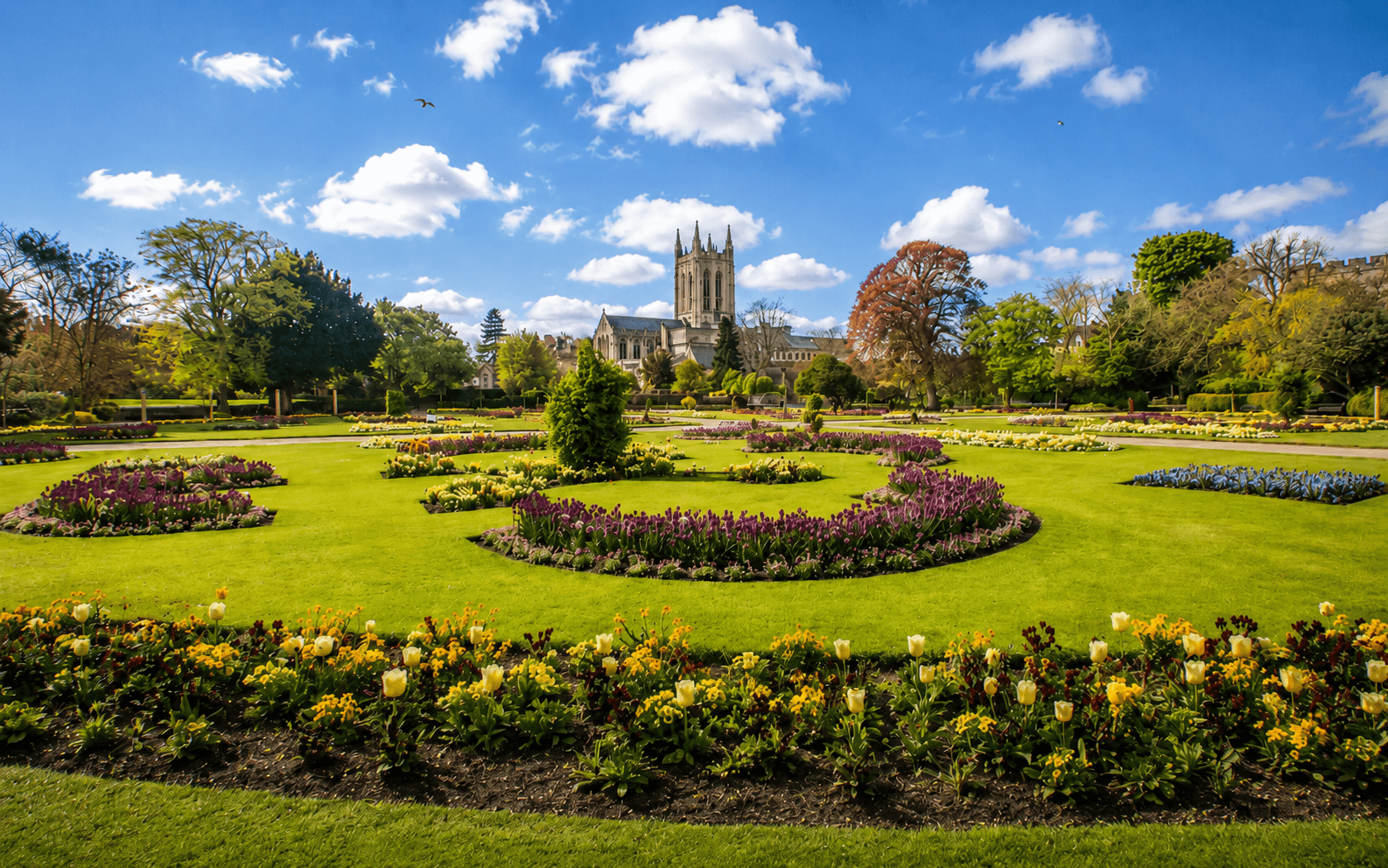
A guide to Bury St Edmunds
A visitor guide to Bury St Edmunds, Suffolk: the free Abbey Gardens and ruins, the cathedral, a Regency playhouse and Britain's smallest pub.
27 July 2026
A guide to Cromer
An honest guide to Cromer, Norfolk: where to buy dressed crab and where to eat it, the last end-of-pier show in the world, and Henry Blogg.