27 July 2026
A guide to Walberswick and Thorpeness
An honest guide to Walberswick and Thorpeness, Suffolk: crabbing off Wally's Bridge, the House in the Clouds, the Meare and the rowing ferry.
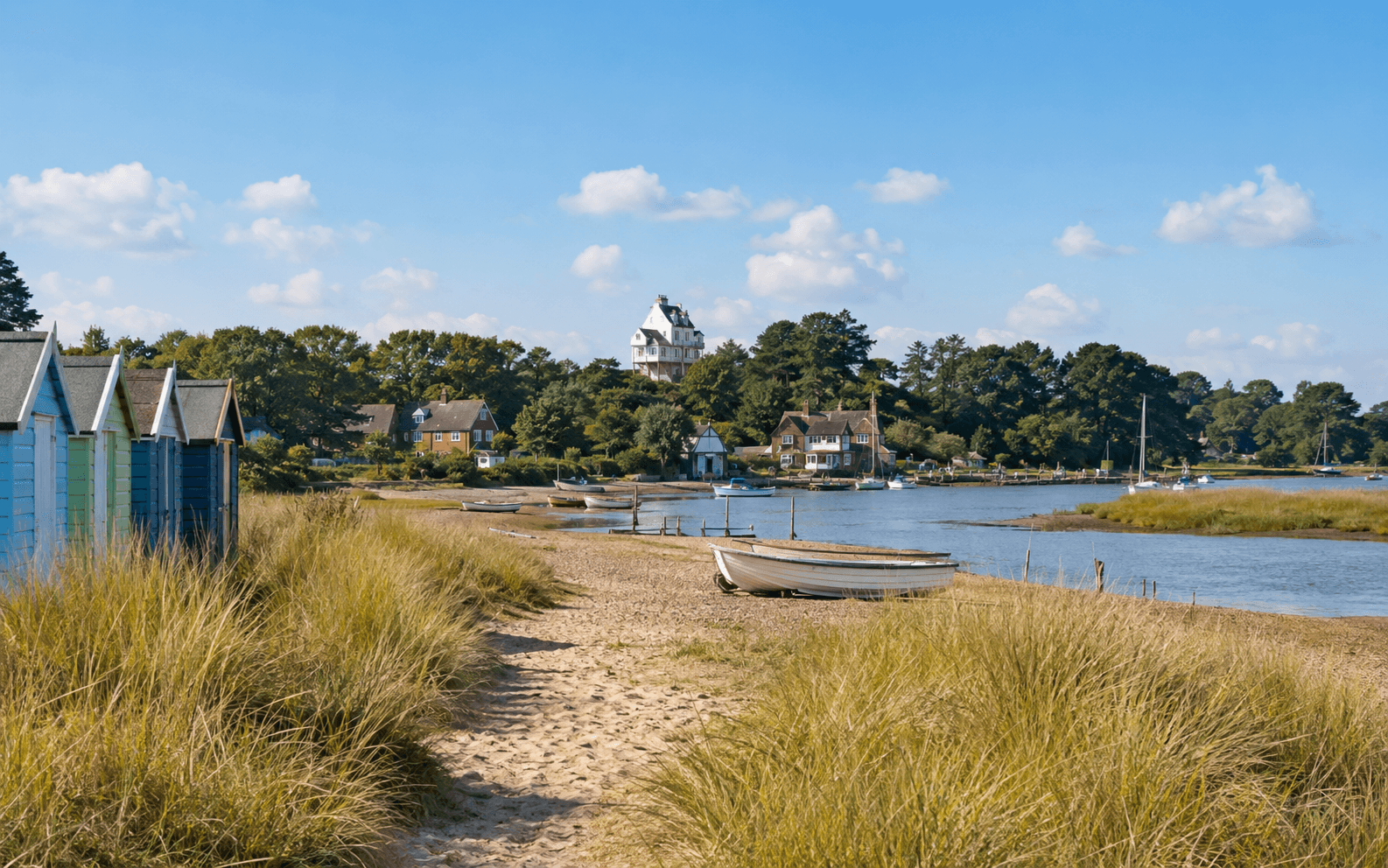
Walberswick and Thorpeness are two of the strangest places on the Suffolk coast, and almost nobody writes about them properly. One is a village of flint and weatherboard at the mouth of the Blyth where the main activity is catching crabs off a bridge and putting them back. The other is a mock-Tudor holiday village invented from scratch by a barrister with a Peter Pan obsession, with a water tower dressed up as a house on stilts standing over it. Neither is big enough to fill a day on its own. Together they make an excellent one.
Key takeaways
- The British Open Crabbing Championship ran 1981 to 2010 and was called off in 2011, but the crabbing it was famous for carries on all year and costs nothing.
- The House in the Clouds at Thorpeness is a 1923 water tower disguised as a house, 67 stairs up, now a holiday let sleeping 10.
- Thorpeness Meare is a hand-dug boating lake, barely three feet deep, with islands J. M. Barrie named himself and boats dating to 1913.
- The rowing ferry from Walberswick to Southwold runs April to October and is cash only.
- Walberswick beach and Thorpeness beach are both wide, quiet and backed by dunes or shingle.
What Walberswick and Thorpeness actually are
They are opposites that happen to sit on the same twenty miles of coast.
Walberswick is old. It was a serious port in the medieval period, exporting wool and cheese and fish, wealthy enough to build a church so large that the village later had to demolish most of it and build a smaller one inside the ruins, which is still what you see today. The harbour silted, the money left, and by the twentieth century it had become an artists' village. It is now flint cottages, a large open green, a creek full of small boats, and a beach behind the dunes.
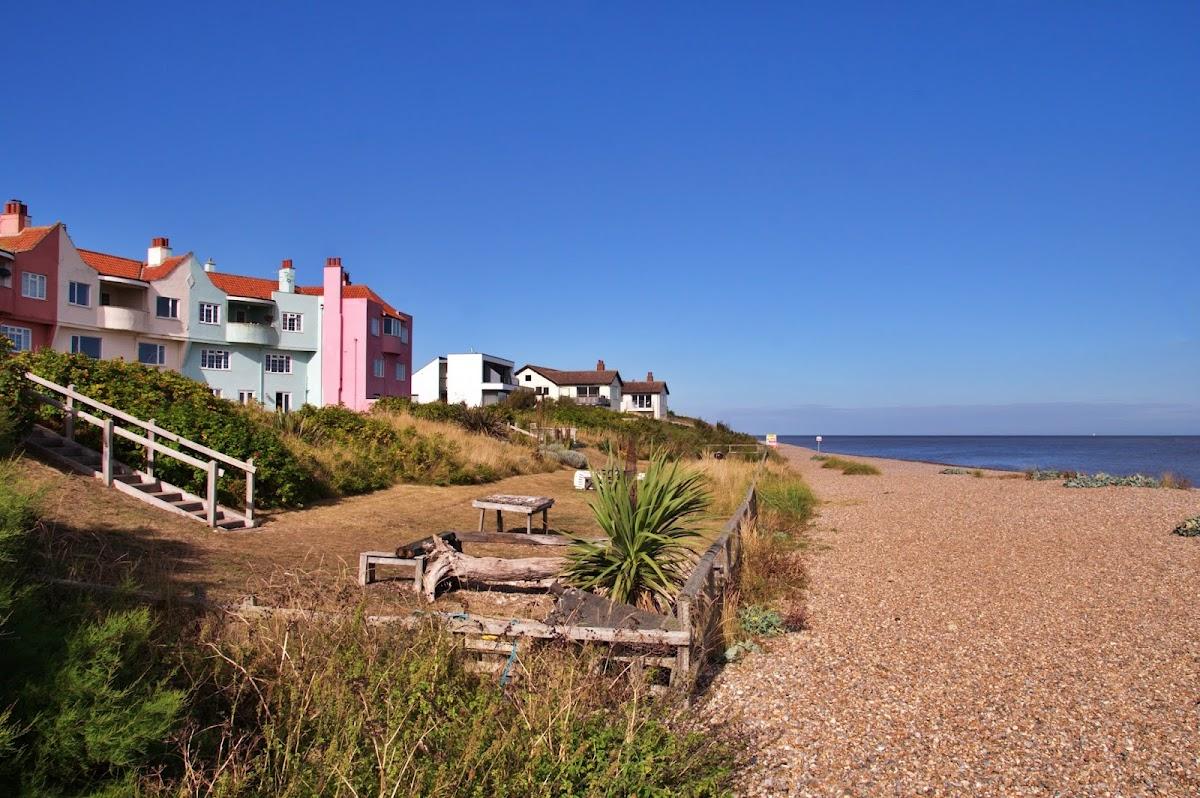
Thorpeness is barely a hundred years old and entirely artificial. Glencairn Stuart Ogilvie, a wealthy barrister and playwright, inherited the estate in 1908 and decided to build a private holiday village on it for his friends. What he produced between roughly 1910 and the 1930s is a planned fantasy: mock-Tudor and weatherboarded houses, a boating lake dug by hand, a relocated windmill and a water tower pretending to be a cottage in the sky. It was designed to look older than it is, and it works.
Both are tiny. Walberswick has a few hundred residents and Thorpeness fewer.
Getting there and parking
Walberswick is reached on the B1387, which leaves the A12 at Blythburgh and runs about two miles east to the village. It is a dead end. The main public car park sits beside the green and, usefully, right next to the crabbing bridge. Charges are seasonal and set locally rather than by the council, so read the sign.
Thorpeness is two miles north of Aldeburgh on the coast road, or reached from Leiston inland. There is free parking on the road that runs around the Meare, which is the one to aim for. The Thorpeness Beach car park a few metres away, IP16 4NW, is East Suffolk Council pay and display on the same tariff structure as Aldeburgh's, so the free road parking is worth a lap to find.
Between the two you have to go inland and back out again, because there is no coast road across the Minsmere marshes and river mouths. Allow half an hour rather than the fifteen minutes the map suggests, more in summer. That inland detour is precisely why doing them on the same day works: you are not doubling back, you are looping.
Neither village has a railway station. Darsham and Saxmundham on the East Suffolk Line are the nearest points and you would need a car from either.
When to go
April to October if the ferry matters, which it should, because it is one of the best short journeys in England. The Meare boats and most of what is open at Thorpeness are also warm-season.
Crabbing works year round but is best in the warmer months when the crabs are active and the children are willing. Summer weekends are the busiest either place gets, and "busiest" here means a full car park rather than a queue.
Winter is when both are at their strangest and best. Walberswick out of season is a marsh village with a wind coming off the sea and a pub fire. Thorpeness in February, with the Meare grey and the House in the Clouds standing over empty streets, is genuinely eerie in a way worth experiencing.
Local knowledge
Bring your own crab lines and bait if you can. A line, a weight, a bucket and some bacon rind from any supermarket costs a couple of pounds and does the whole afternoon. If you forget, the Parish Lantern in the village sells crabbing supplies, so a forgotten bucket is not a wasted trip. The crabs gather under the middle of Wally's Bridge near the big wooden post, so aim there rather than spreading out along the rail. And put them back in the water gently, in the creek rather than off the top of the bridge.
Walberswick: crabbing, the green and the ferry
The crabbing is the thing, and it needs a correction first.
The British Open Crabbing Championship ran here from 1981 until 2010 and was called off in 2011. It was not a lack of interest. It was the opposite: thousands of people were arriving in a village of a few hundred for a single afternoon, and the health and safety and logistics of that became impossible. The 30th championship drew over 900 entries. The format was simple, the heaviest single crab caught inside 90 minutes, and it has not run since.
What did not stop is the crabbing. Go to Wally's Bridge, which crosses the Dunwich River right beside the main car park, drop a baited line, and wait. Bacon rind is the classic bait and bread works. The bridge has no sides, so sit small children down rather than letting them lean. This is free, it takes as long as you want it to, and it is the single best cheap thing to do with children on this coast.
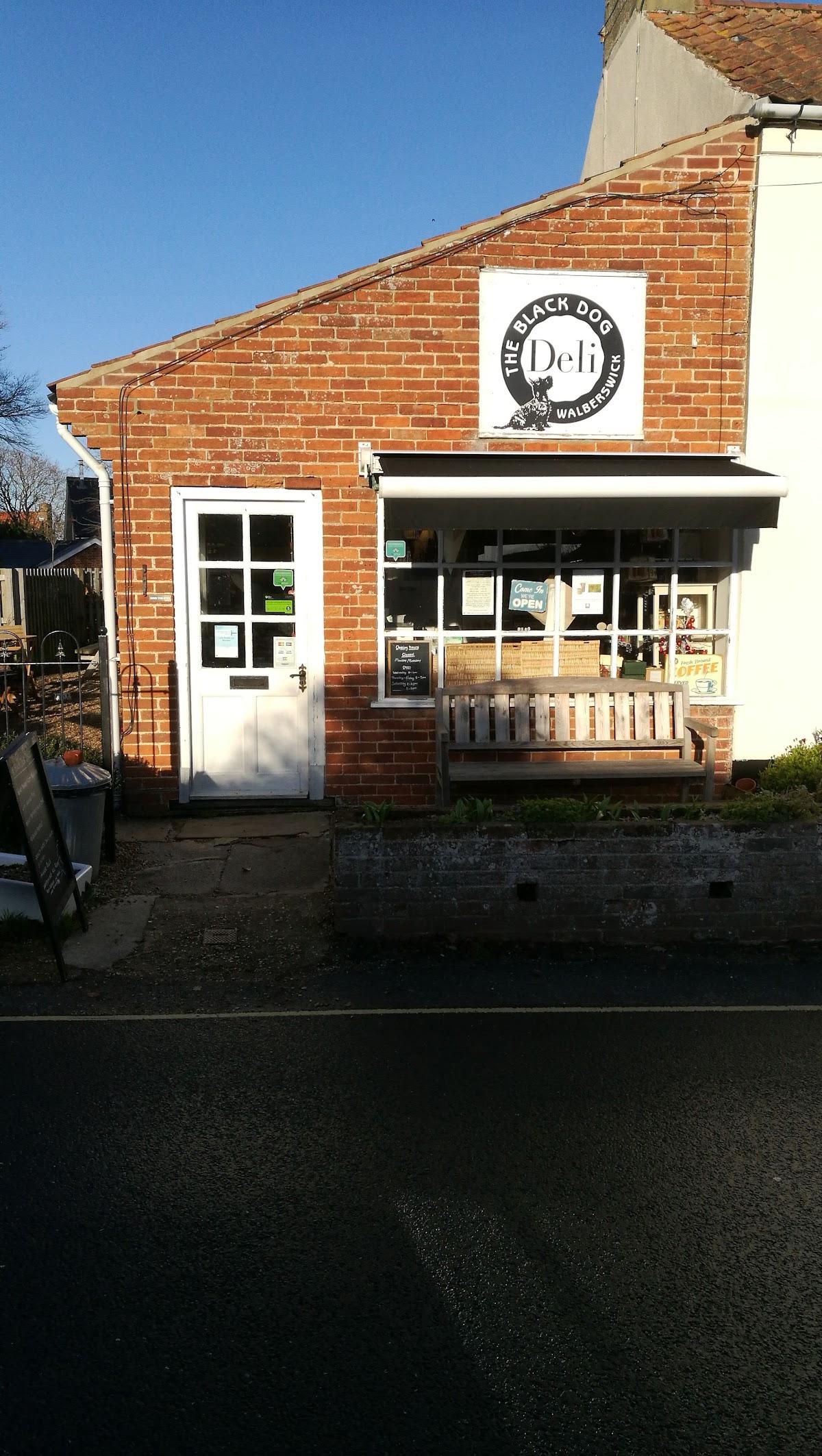
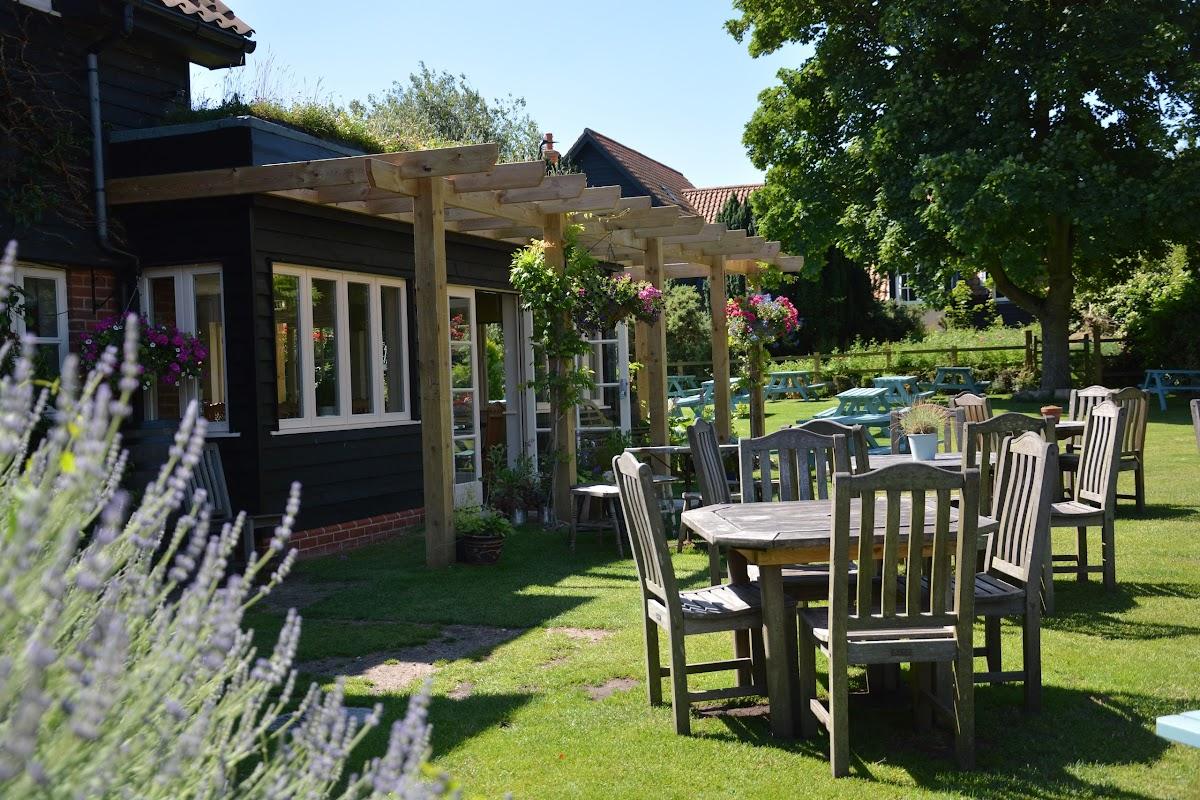
The village green is the open space the village arranges itself around, with a small playground on it. The Black Dog Deli is the shop for lunch and supplies, with the Parish Lantern, the Tea Shed near the green and Rusty Nuts Store covering the rest between them. The Anchor is the pub, with a strong reputation for beer and food and rooms if you are staying, though it does not publish reliable opening days, so ring ahead out of season.
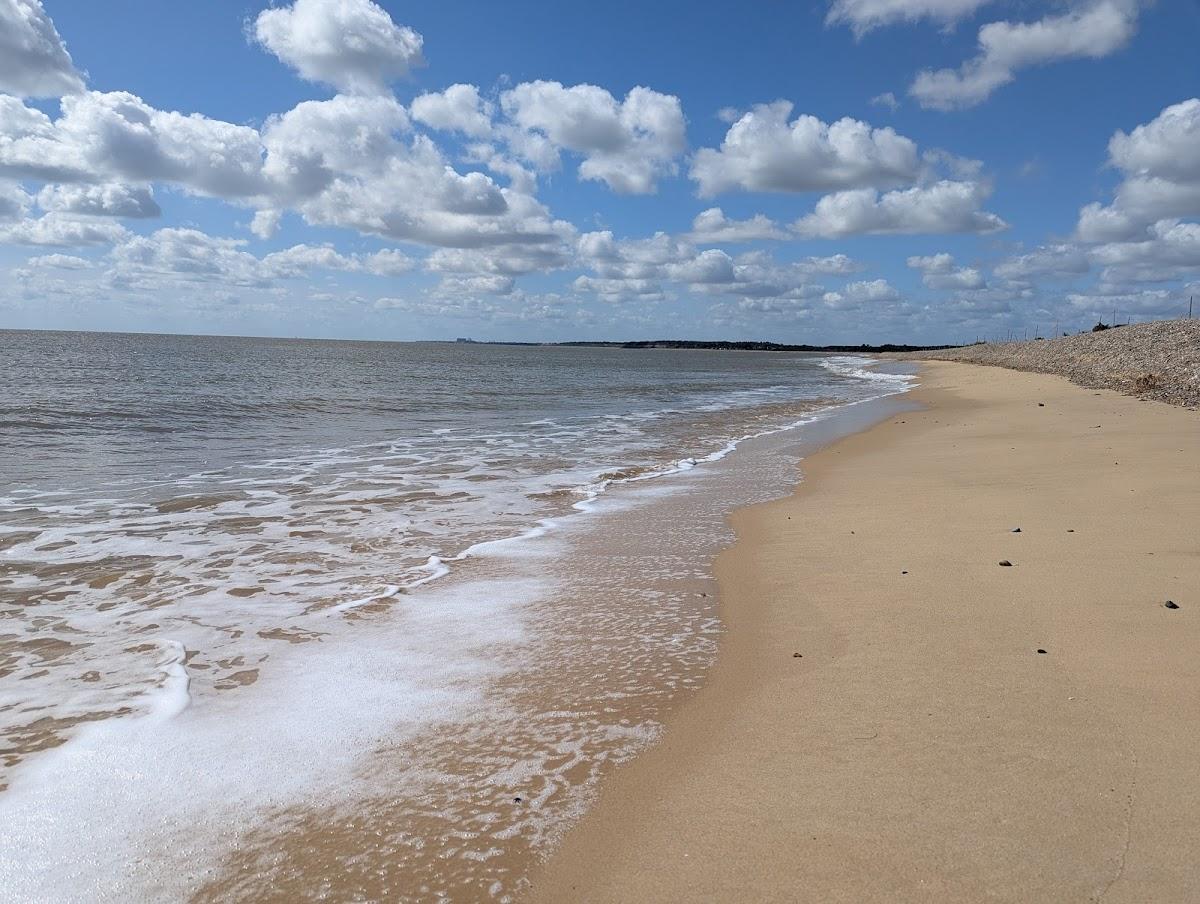
Walberswick beach is a wide stretch of sand and shingle behind unspoilt dunes, reached across the marsh from the village. It is emptier than Southwold's and there are no facilities on it, which is the appeal.
The ferry is the reason to come here rather than only to Southwold. A hand-rowed boat, built on the Suffolk punt design, crosses the River Blyth from the Walberswick side, carrying up to twelve foot passengers plus dogs, bikes and pushchairs. It runs daily April to October and at weekends into early January, tide and weather permitting, on demand rather than to a timetable. Fares are £2.50 an adult, £1 for children aged 5 to 18 and £1.50 a bicycle, and it is cash only, which catches people out constantly. Out of season, you walk round via the footbridge upriver.
Insider pick · Southwold
Walberswick Beach
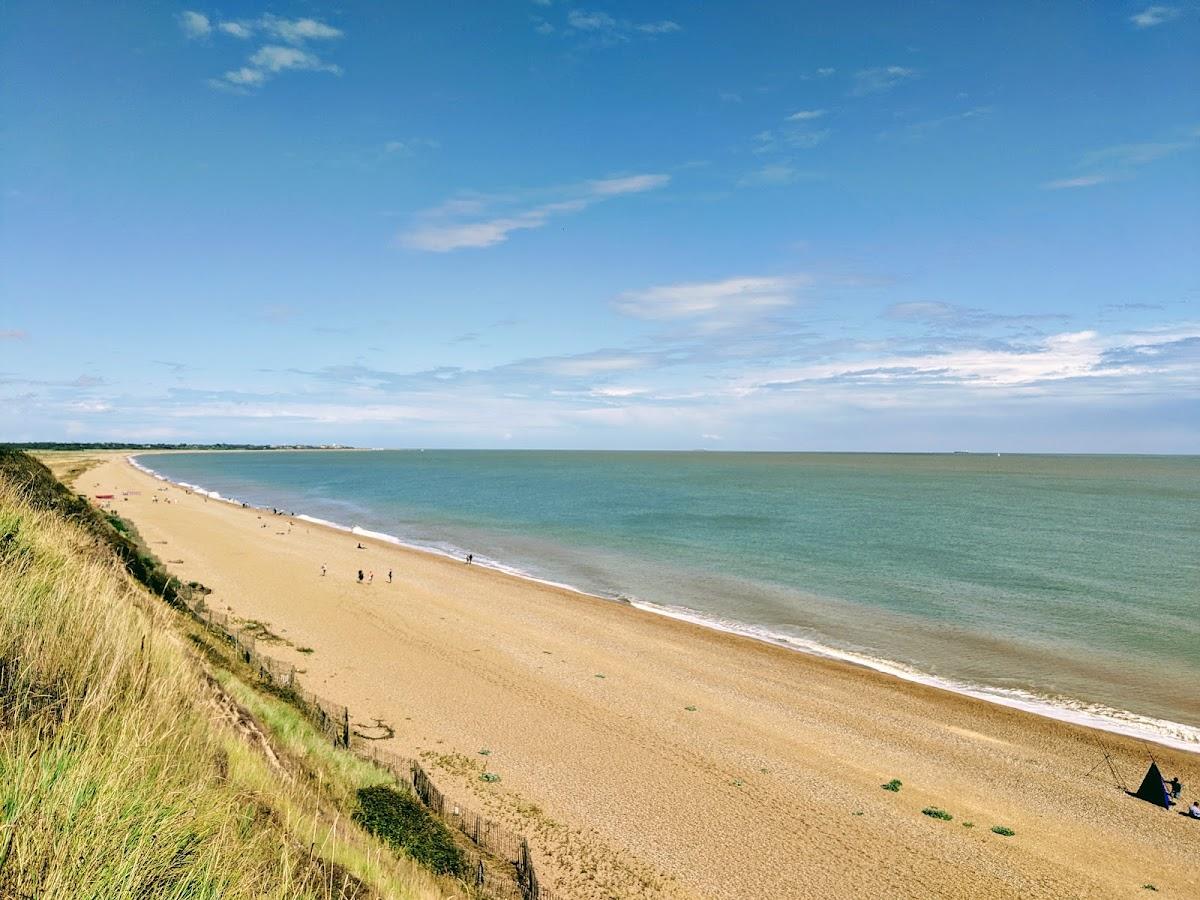
Walberswick Beach, Southwold, Suffolk offers a wide sandy shoreline ideal for swimming, walking, and family seaside activities along the Suffolk coast.
View listingThorpeness: the House in the Clouds and the Meare
The House in the Clouds is the landmark and it is exactly as odd as it looks. It was built in 1923 by the Braithwaite Engineering Company of London, to Ogilvie's design, as a water tower for the village. Rather than leave a tank on a frame, they clad the whole structure so that it reads as a weatherboarded cottage sitting seventy feet up in the air on a tower. Water was pumped up to it by the windmill next door, which had itself been moved here from Aldringham.
People genuinely lived in the tower below the village water supply for decades. The tank came out in 1979 and the whole thing was converted to residential use, and it was Grade II listed in 1995.
It now sleeps 10 as a holiday let: five bedrooms, four bathrooms, a drawing room, a dining room and the "room at the top" where the tank used to sit, set in an acre of grounds looking over the golf course, the Meare and the sea. 67 stairs get you up there, with landings and resting seats on the way, which is the number that actually matters. Booking is through Airbnb.
It is a private let, not an attraction, so do not go up the drive. The footpath opposite Thorpeness windmill gives you the clear view.
Thorpeness Meare is the other half of the invention. When the land here flooded in November 1910, Ogilvie decided to make the flood permanent, and over the winter of 1912 to 1913 a shallow lake was dug out by hand. It opened on 11 June 1913, and the first regatta was held that August, a regatta that has since passed its centenary.
The site runs to about sixty acres, of which just over forty is actual water, and it is nowhere much more than three feet deep, deliberately, so that children could learn to row, punt and sail on it without much risk.
Then he themed it, and this is the part people get slightly wrong. J. M. Barrie was a family friend and named the islands himself. Wendy's House, Crocodile Island, Peter Pan's Island, the Dragon's Lair and the Fort are Barrie's own, not a later tribute. Children were meant to land on them and play, and a century later that is still exactly what happens. It remains one of the few genuinely original ideas in British seaside design.
Over 100 boats are for hire: rowing boats, kayaks, canoes, punts, dinghies and sailing boats. It runs daily from the Easter holidays to the end of October half-term, 8.30am to 5pm with the last hire at 4.30pm. Prices depend on the boat and how many of you there are, under-12s get half price, dogs are welcome aboard and you do not need to book.
Two things make this better than it sounds. Many of the boats are original to the 1913 opening and are restored each winter, including Shamrock and Stephanotis, both still in the water. You can hire a boat that has been on this lake for over a century.
And it is still run by the family that dug it. The Meare's contact is Glen Ogilvie. Glencairn Stuart Ogilvie flooded the land in 1910 and an Ogilvie is still handing out the oars.
The Meare Shop and Tearoom sits right by the Boat House and the clock tower, open daily 9.30am to 4.30pm through spring and summer, with a patio looking over the boats. That is where you go straight after an hour on the water.
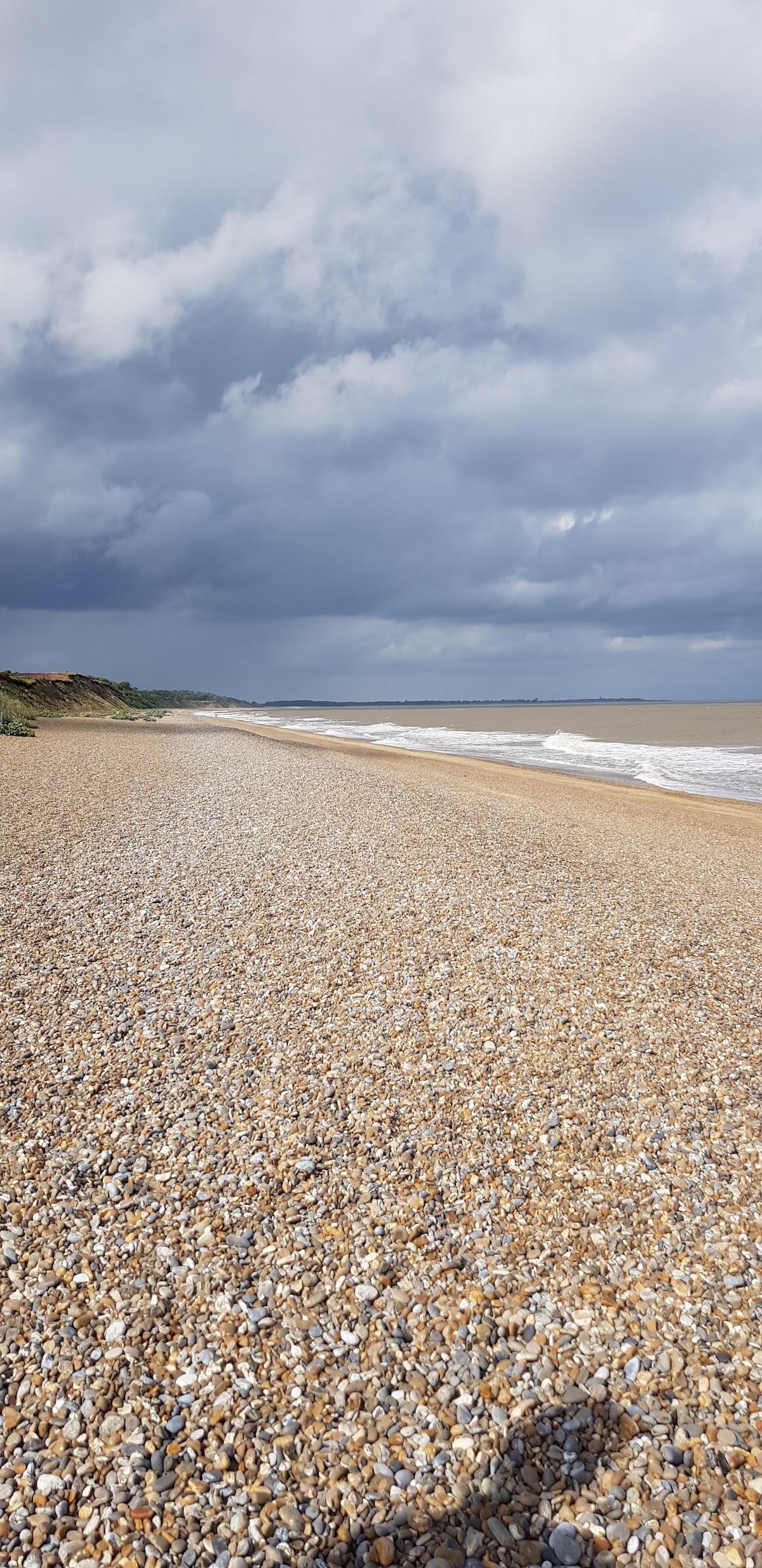
Thorpeness beach is shingle, quieter than Aldeburgh's, and the Dolphin Inn on Peace Place is the village pub.
Nearby
Marsh and heath walks
This is the part that justifies a whole day rather than two quick stops, and it is the least written-about thing here.
Behind Walberswick is one of the largest areas of undeveloped coastal habitat in England: reedbed, tidal creek, saltmarsh, grazing marsh and, further inland, sandy heath. The walk from the village out along the Dunwich River and back across the marsh is flat, open and about as different from a conventional seaside walk as you can get. It is exceptional for birds, and the reeds are the point rather than the sea.
South of Walberswick the coast path runs on towards Dunwich, past Dunwich beach, and up onto Dunwich Heath, which the National Trust looks after. The heath in August, when the heather is out, is purple to the horizon and is one of the best short walks in Suffolk.
From Thorpeness the walking is different again: north along the shingle towards Sizewell, or inland across the common past the windmill and the House in the Clouds. Sizewell beach with the power stations on it is a genuinely strange stretch and worth seeing once.
Nothing here is strenuous. It is all flat. The effort is in the wind.
Southwold, Aldeburgh and Dunwich
Both villages work as satellites of somewhere larger, which is the honest way to plan them.
Southwold is directly across the Blyth from Walberswick, reached by the ferry in five minutes or by a longer walk round. Pier, brewery, beach huts and considerably more going on. See our guide to Southwold.
Aldeburgh is two miles south of Thorpeness, with the shingle beach, the fish huts on Crag Path and Snape Maltings inland. It is where you go for dinner. Read our guide to Aldeburgh.
Dunwich sits between the two, the town that mostly fell into the sea, now a village with a shingle beach, the Ship and the heath behind. Browse everything we list in Dunwich.
Also close: the Westleton Crown inland, Chapel Books at Westleton, and the Long Shop Museum at Leiston, which covers the Garrett engineering works and is much better than it sounds.
Both are tiny, do them as a pair or not at all
Be realistic about the scale.
Walberswick is a green, a creek, a bridge, a pub, a deli and a beach. Thorpeness is a lake, a strange tower, a pub and a shingle beach. Each of them is perhaps two hours, and that is with a leisurely crab and a coffee. Anyone booking a full day for one village will spend the back half of it sitting in a car park.
The mistake in the other direction is to write them off as too small to bother with. That is wrong too. Between them they contain a hand-rowed public ferry, a Peter Pan boating lake, a house in the sky, some of the best undeveloped marsh in England and free crabbing off a bridge. There is nothing else like either of them in this country.
So do them as a pair, with the half-hour inland drive in the middle, and treat that drive as part of the day rather than an inconvenience. Crab at Walberswick in the morning, take the ferry over to Southwold and back if it is running, drive round in the early afternoon, and finish on the Meare at Thorpeness. That is a genuinely excellent day and it costs almost nothing.
Or pick one and pair it with its bigger neighbour: Walberswick with Southwold, Thorpeness with Aldeburgh. That works too. What does not work is driving an hour to Walberswick, spending ninety minutes there and driving home.
The honest summary
These are the two most underwritten places on the Suffolk coast, which is why this guide exists. Neither has a visitor centre, a car park attendant or much interest in being discovered.
Go with the right expectations. Take a crab line, take cash for the ferry, wear something windproof, and accept that the whole point is that there is not very much here. What there is, is odd, beautiful and almost entirely free, and you will remember it longer than a busier day somewhere better known.
Related listings
Nearby picks to explore
Good to know
Frequently asked questions
No. It ran from 1981 to 2010 and was called off in 2011, because thousands of people were coming to a village of a few hundred and it became unmanageable. Crabbing itself carries on year round off Wally's Bridge, free and without any competition attached.
Wally's Bridge, which crosses the Dunwich River alongside the main village car park. The crabs gather under the middle section near the large wooden post. Bring a line, a bucket and bacon rind or bread. The bridge has no sides, so small children are safer sitting down.
A water tower at Thorpeness disguised as a house on stilts, built in 1923 to hold the village water supply. The tank came out in 1979 and it is now a five-bedroom holiday let sleeping 10, including the room at the top where the tank used to sit. It is 67 stairs up.
Yes, over 100 of them, from rowing boats and punts to kayaks and sailing dinghies. It opens daily from Easter to the end of October half-term, 8.30am to 5pm with last hire at 4.30pm. No booking needed, under-12s half price, dogs welcome aboard.
A hand-rowed ferry crosses the River Blyth, running daily from April to October and at weekends into early January, tide and weather permitting. It costs £2.50 per adult and is cash only. Out of season you walk round via the footbridge upriver instead.
Be part of it
Three ways to get involved
Keep reading
More from the Journal
27 July 2026
A guide to Felixstowe
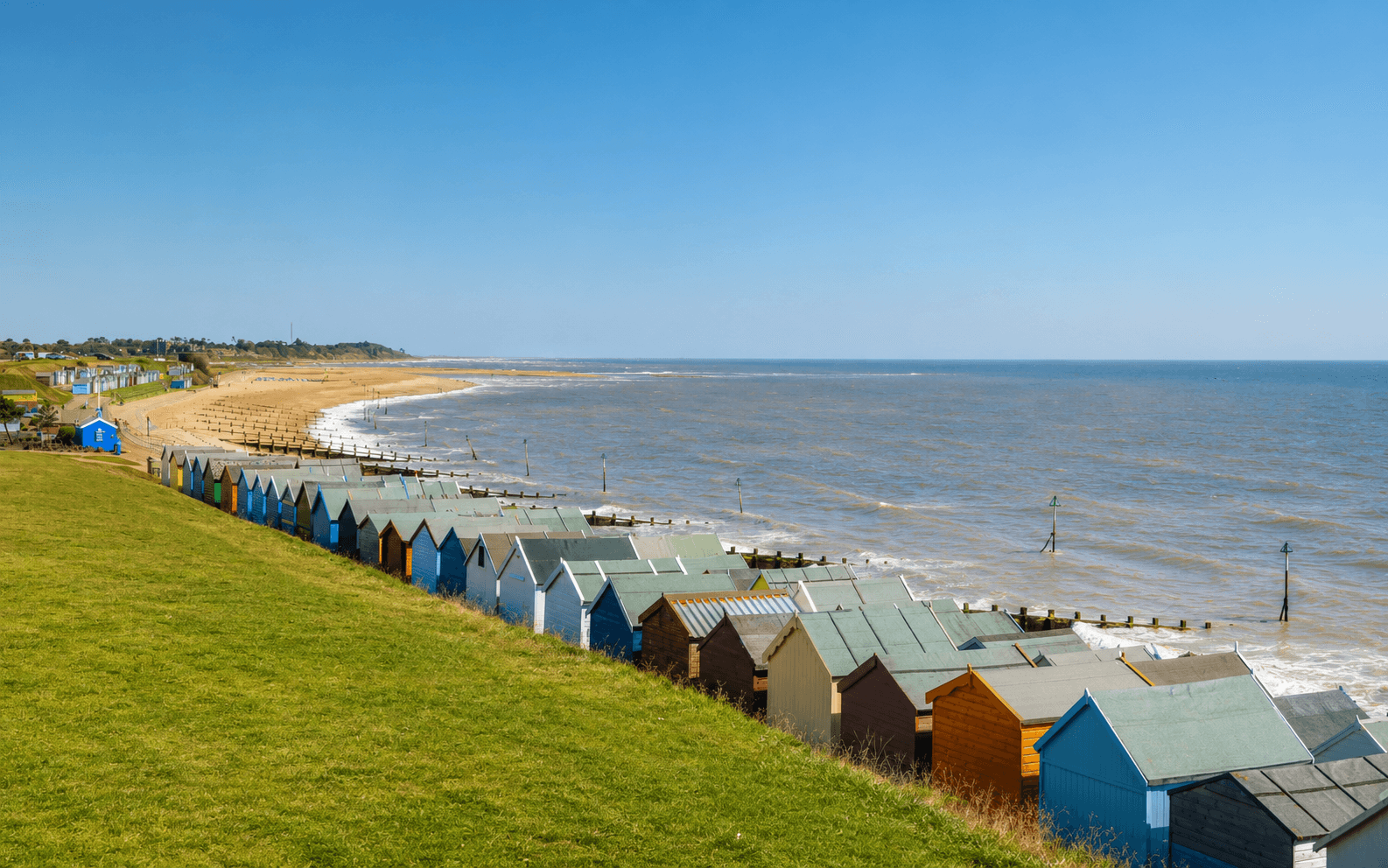
An honest guide to Felixstowe, Suffolk: the Edwardian seafront gardens, ship spotting at Landguard, and the foot ferry from Felixstowe Ferry to Bawdsey.
27 July 2026
A guide to Aldeburgh
An honest guide to Aldeburgh, Suffolk: shingle not sand, fish straight off the beach huts, the Scallop argument, and Snape Maltings five miles inland.
27 July 2026
A guide to Southwold
An honest guide to Southwold, Suffolk: the pier, beach huts, Adnams tours, where to park before it fills, and the rowing ferry to Walberswick.