27 July 2026
A guide to Cromer
An honest guide to Cromer, Norfolk: where to buy dressed crab and where to eat it, the last end-of-pier show in the world, and Henry Blogg.
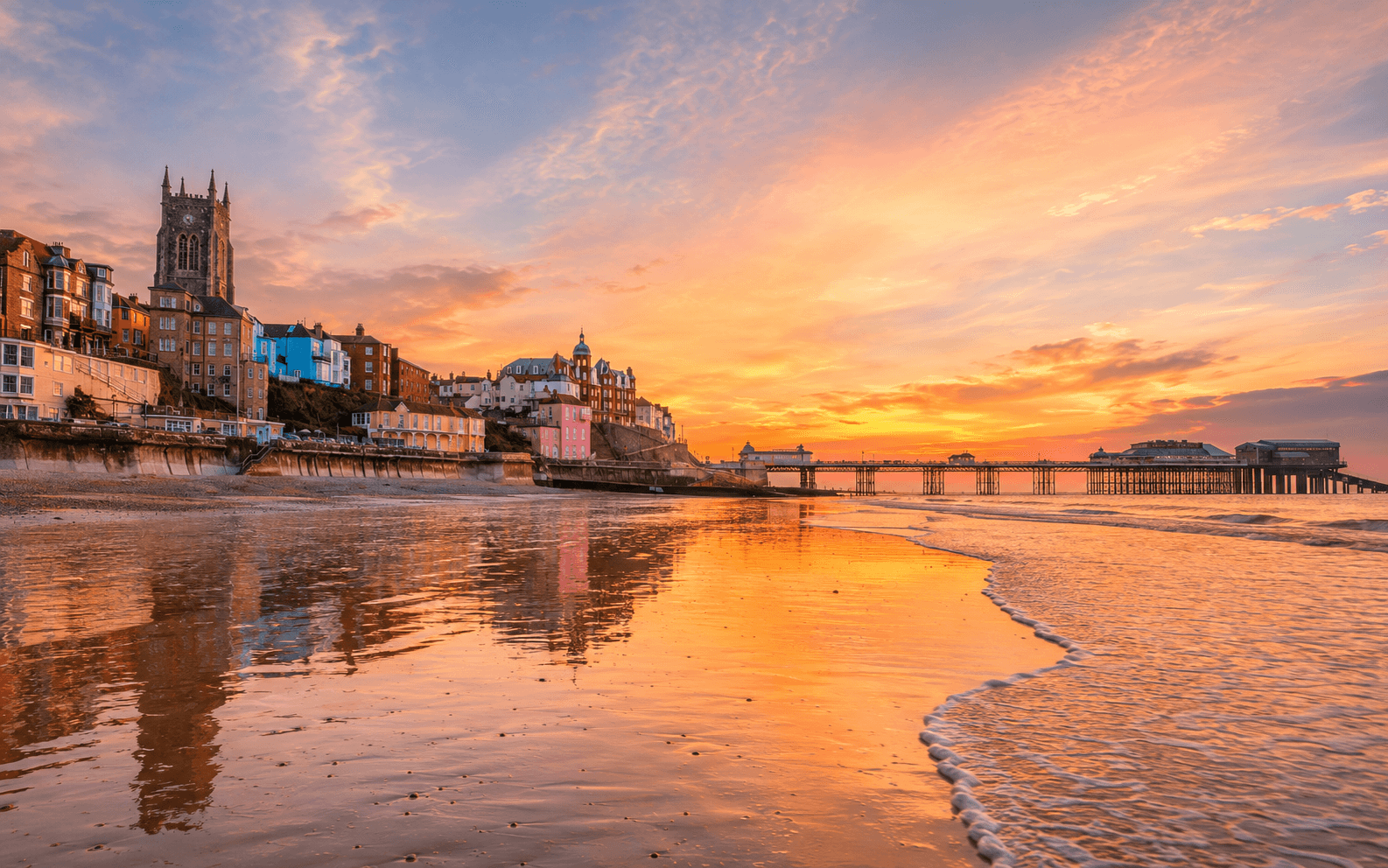
Cromer is the rarest thing on the English coast: a Victorian seaside town that never went tacky and never went boutique either. It still has a working pier with a lifeboat station on the end and a variety show in the middle, a Blue Flag beach it has held since 1988, and a crab fishery that supplies what most people will tell you is the best crab in the country. It is also a proper town with a Poundland and a bus station, and anyone arriving expecting Burnham Market by the sea is going to be confused.
Key takeaways
- Buy dressed crab from a town fishmonger, not a supermarket. Supply is weather dependent, so go early.
- Cromer Pier holds the only full-season end-of-pier show left in the world, running late June to mid September.
- Cromer beach has held Blue Flag status since 1988, among the longest unbroken runs in the UK.
- The RNLI Henry Blogg Museum tells the story of the most decorated lifeboatman in RNLI history.
- Cromer is a working town with real shops, not a village of galleries and delis. Expect that and you will like it.
What Cromer actually is
Cromer sits on top of a cliff on the north east corner of Norfolk, where the coast turns the corner and starts running south. The town is Victorian in its bones: it grew when the railway arrived and the middle classes started sea bathing, and the hotels, the pier and the terraces above the beach all date from that boom.
The visual centre is not the seafront but the church. St Peter and St Paul has the tallest church tower in Norfolk at 48 metres, or 160 feet, a fifteenth-century tower with pinnacles and ornate battlements that was restored by Sir Arthur Blomfield in the 1880s. Before there was a lighthouse here, a light burned on that tower to warn ships off this coastline, which tells you most of what you need to know about the relationship between this town and the sea.
Underneath the Victorian layer, Cromer is a fishing town, and it still is. The crab boats work off the beach, and the crab is the reason a lot of people come.
Getting there and parking
By road. Cromer sits on the A149 coast road, with the A140 running directly north from Norwich and the A148 coming across from Holt and King's Lynn.
By train. Cromer is on the Bittern Line, which runs 30 miles from Norwich to Cromer and Sheringham past the edge of the Broads. Greater Anglia run it hourly and direct, around 18 trains a day, taking about 45 minutes from Norwich and 38 on the fastest services. The station is a short walk from the centre. This is one of the few Norfolk coastal towns you can reach properly by rail, which is a direct legacy of the railway that built it.
If you are doing this without a car, buy a Bittern Line Ranger. It gives unlimited travel for a day between Norwich, Cromer and Sheringham, and it is also valid on the Coasthopper CH4 and CH5 and the Coastliner 36 buses with a £3 adult supplement on the bus. That single ticket covers Cromer, Sheringham and most of the coast road between them, and almost nobody visiting knows it exists.
Where to park. North Norfolk District Council runs four:
- Cadogan Road, NR27 9HT
- Meadow Road, NR27 9EE, which has a limited number of free 30 minute bays
- Runton Road, NR27 9AU
- The Promenade, designated accessible parking only
Deliberately no prices here. A new Off-Street Parking Places Order took effect on 7 April 2026 and the published figures do not currently reconcile with each other, with Cromer sitting in the resort and coastal classes rather than the council's standard band. Check the machine or the council site rather than trusting any ladder you read online, this one included.
The cliff-top and seafront spaces go first on a summer day, and the ones further back in the town are the reliable option.
When to go
Late June to mid September if the pier show is the draw, because that is the summer season. There is a separate Christmas production, which is a genuinely good reason to come in December when the rest of the coast has shut.
Crab season runs through the warmer months and supply is best when the weather has let the boats out. That is the honest caveat: after a run of rough days there may be no crab at all, because it comes off local boats rather than a lorry.
Out of season Cromer stays open in a way the north Norfolk villages do not, because it is a town with a resident population rather than a holiday let economy. February here is bleak and quite good.
Local knowledge
Buy your crab in the morning. The fishmongers dress what came in on that day's boats, and on a good summer day they will be picked clean by early afternoon. If you have driven over specially, ring ahead rather than arriving at three and finding out the boats did not go out. This is the one thing about Cromer that genuinely rewards planning.
Cromer crab: where to buy it, and where to eat it
These are two different decisions and most guides run them together.
To buy it dressed and take it away, go to a town fishmonger. Davies Fish Shop on Garden Street is the one to know. It opened on West Street in 1974 and passed fifty years in 2024 before moving to its current site. Richard Davies, who ran it, was a seventh-generation fisherman and a former Cromer lifeboat coxswain; he died in 2010, his wife Julie dressed the crabs, and their son John runs it now and supplies the shop from his own boat. Everything is boiled in traditional copper pans and dressed by hand in the back.
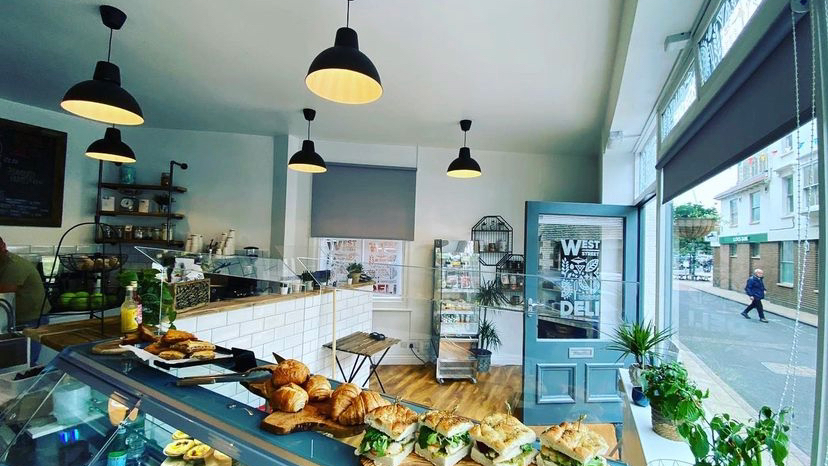
The Butchers Joint on Church Street and West Street Deli on West Street cover the rest of a picnic.
The reason usually given for Cromer crab being different is the chalk reef offshore. The Cromer Shoal chalk bed runs 20 miles from Weybourne to Happisburgh across roughly 125 square miles, is thought to be the largest chalk reef in Europe, and has been a Marine Conservation Zone since January 2016. The local explanation is that larvae settle on the chalk and grow more slowly than stocks elsewhere, producing a smaller crab packed with denser, sweeter meat.
Worth being straight about it, though: this is the standard account rather than settled fact. Cromer crabs are the same species as every other British brown crab, and the slow-growth theory is what is believed to cause the difference rather than what has been demonstrated. Ask a fisherman why they are better and a fair few will tell you it is hard to say.
The fishery is also under active restriction. Three no-fishing zones off Sheringham, West Runton and East Runton were closed after Natural England found crab potting was damaging the chalk, and they remain closed until November 2026.
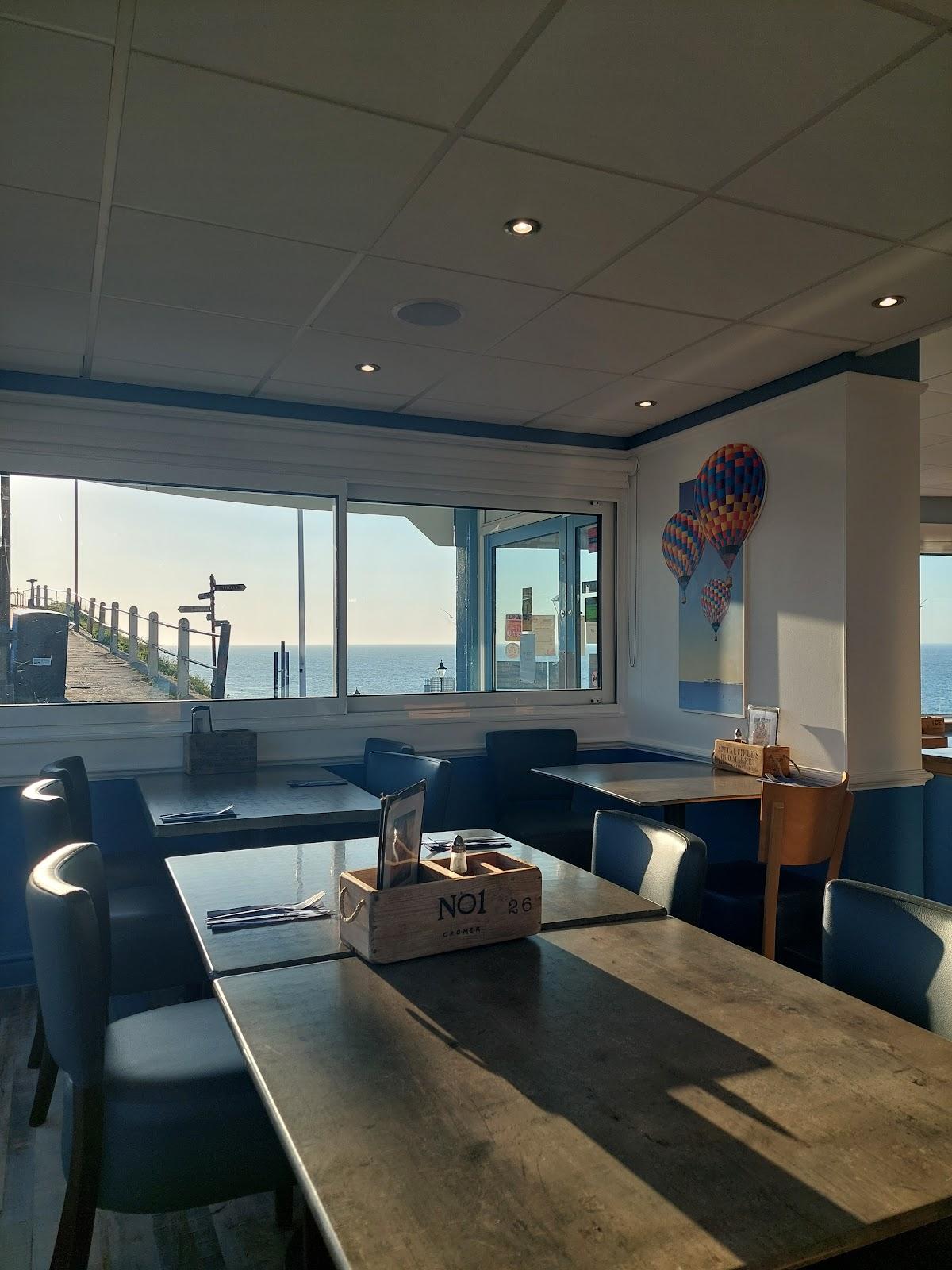
To sit down and eat it, the options are different. No1 Cromer on New Street is owned by Galton Blackiston, the Michelin-starred chef behind Morston Hall, with a walk-in fish and chip restaurant downstairs and a more refined room upstairs. That is an unusual thing to find attached to a seaside chippy and it is the best answer to anyone who assumes Cromer cannot cook.
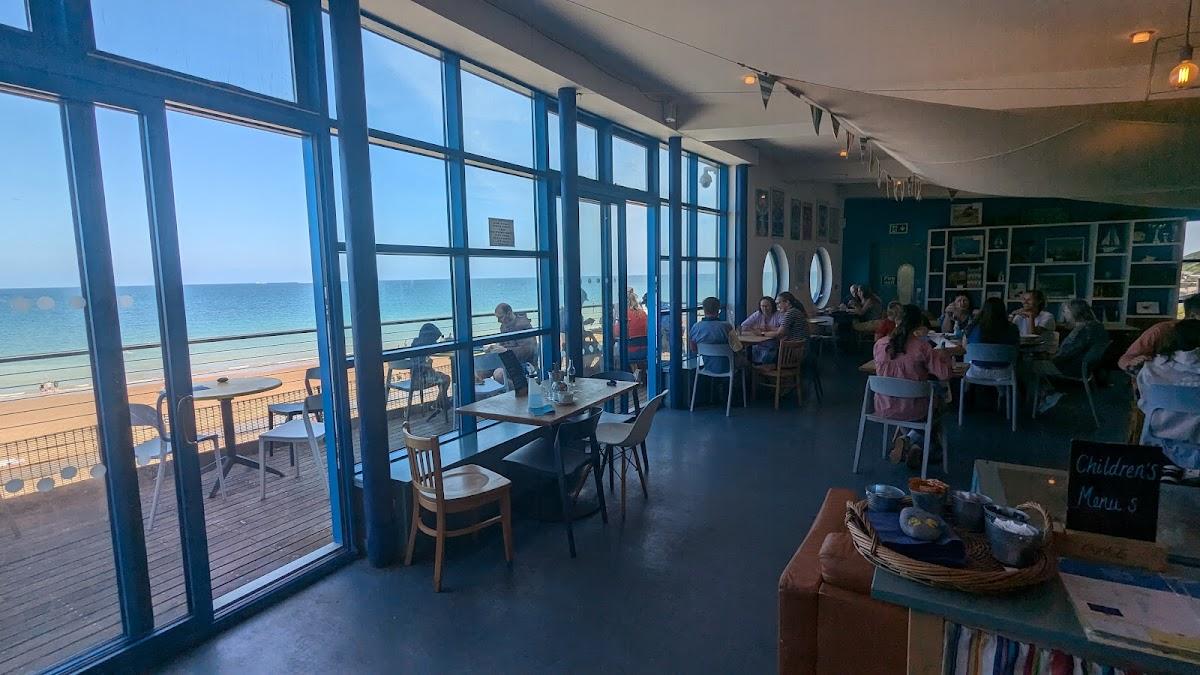
The Rocket House Cafe on the Gangway has the best position in town, looking straight down the beach and the pier, and Mary Jane's Fish Bar on Garden Street is the straightforward chippy.
Jonas Seafoods on Stonehill Way is the other name locals give you, and it ties this whole town together. It was started by Kevin Jonas, whose father Tom was a crab fisherman who served on the Cromer lifeboat alongside Henry Blogg. The crab, the boats and the lifeboat are not three separate stories here, they are one.
Elsewhere in town, Dudley's Bakery on Tucker Street handles bread and cakes, Bookworms of Cromer on New Street is the bookshop, and Cromer Gift Shop on Garden Street is what it says.
Eating in Cromer
The pier and the end-of-pier show
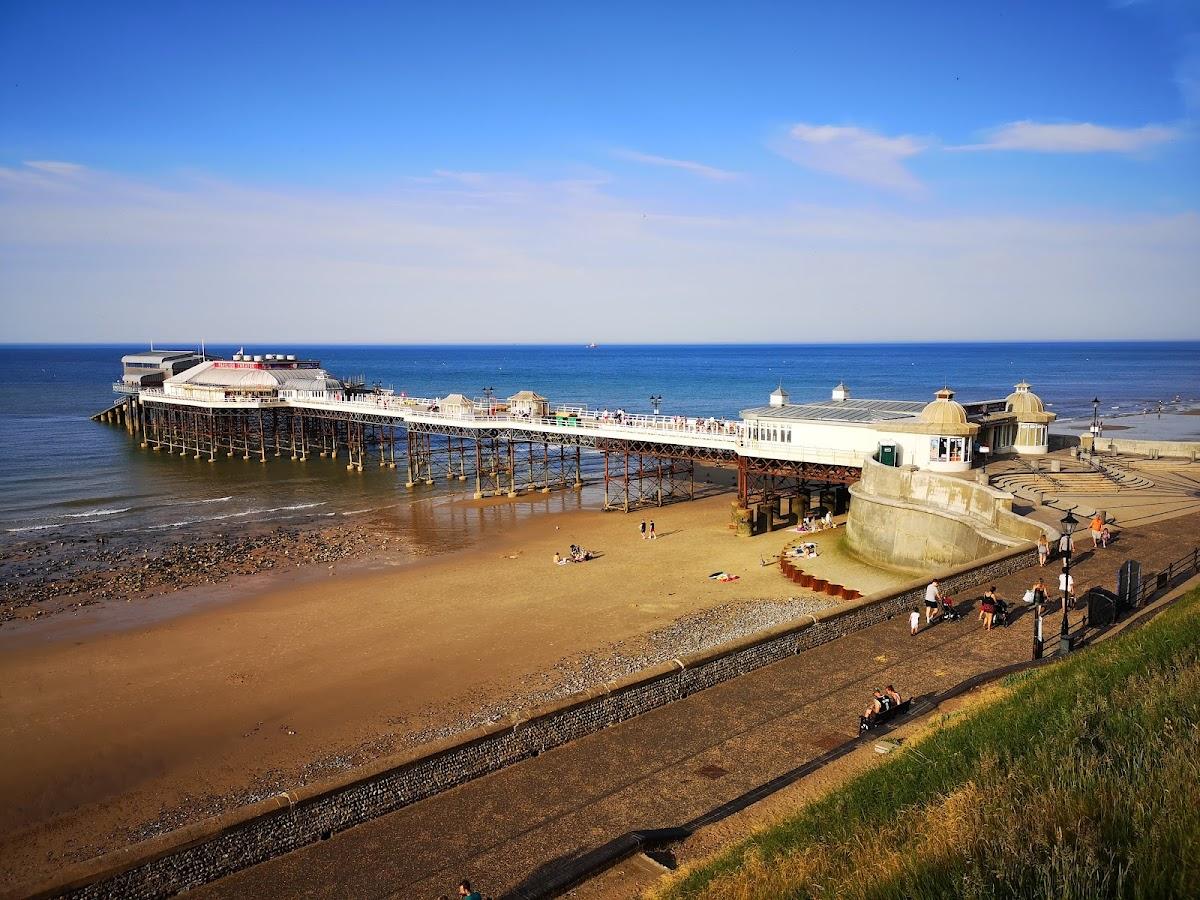
Cromer Pier is the landmark, and unusually for a British pleasure pier it is still doing all of its original jobs. There is an RNLI lifeboat station at the seaward end, the Pavilion Bar partway along, and the theatre in the middle. 2026 marks the pier's 125th anniversary.
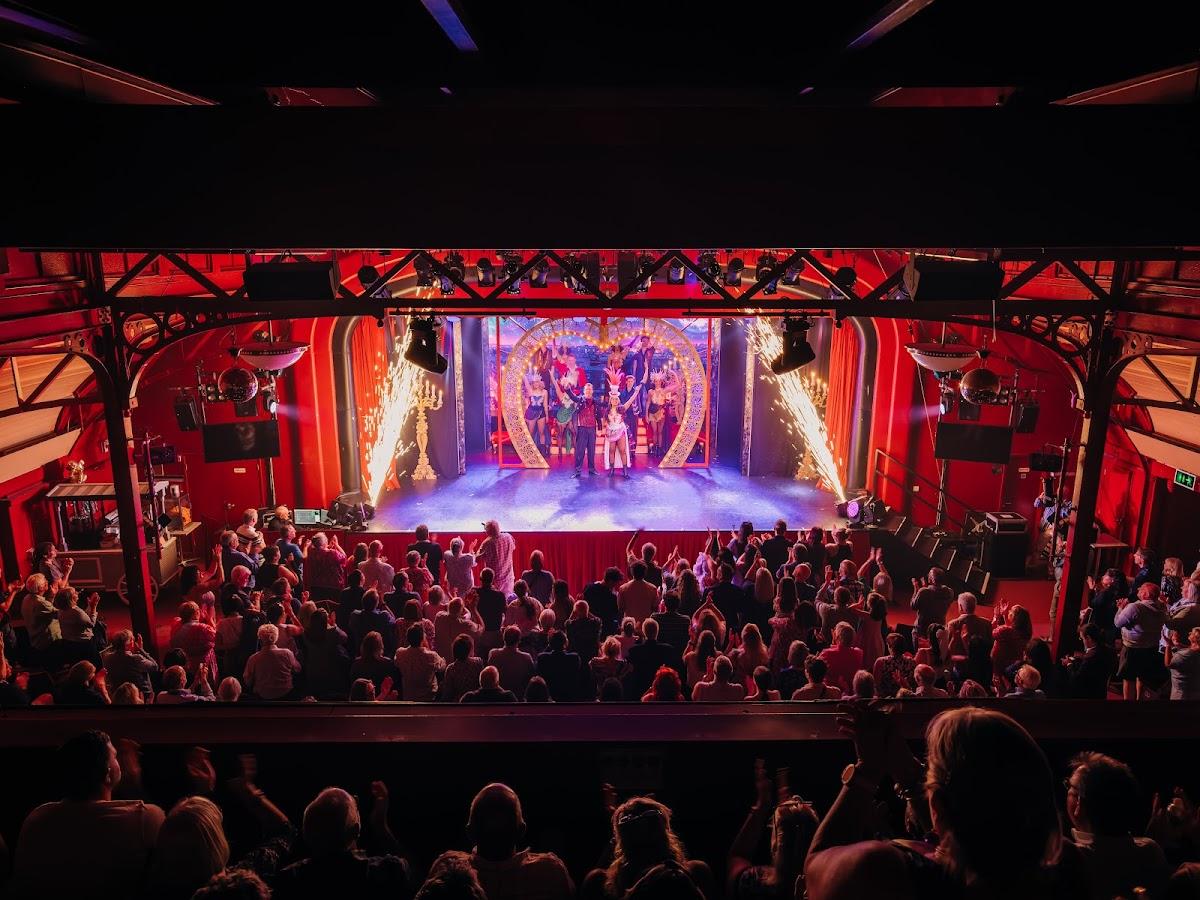
The Pavilion Theatre holds the Cromer Pier Show, and this is the genuinely remarkable thing about the town. It is the only full-season end-of-pier variety show left anywhere in the world. Not the last in Britain, the last anywhere. Everywhere else that had one has either closed the theatre, converted it or reduced it to occasional bookings.
The 2026 summer season runs 27 June to 19 September, with a matinee and an evening performance through the week and a running time of about two and a half hours including a 20 to 30 minute interval. Jack Gleadow hosts, with guest acts rotating through the season. The Christmas show runs 14 November to 28 December 2026, hosted by Olly Day, and it sold out in 2025, so book early. Both are produced by Openwide Coastal in the Grade II listed Pavilion Theatre. Tickets run from £28 for the front rows, where you are close enough to be pulled into the act, to £37.50 for a centre or balcony seat, with under-16s at £25.50 and a family ticket for two adults and two children at £114.50. Restricted side views are cheaper at £31.50 adult and £22 child. A £4 booking fee applies per order, not per ticket.
One caveat the venue itself is upfront about and most guides leave out: traditional seaside innuendo shapes a lot of the comedy. There is a family ticket, but do not assume it is pitched at children throughout.
Be clear-eyed about what it is. This is traditional variety, not an ironic revival of it, and the audience is largely people who have been coming for years. That is exactly why it is worth seeing. It is a living example of a form of British entertainment that has otherwise completely disappeared, performed in the building it was invented for, over the sea.
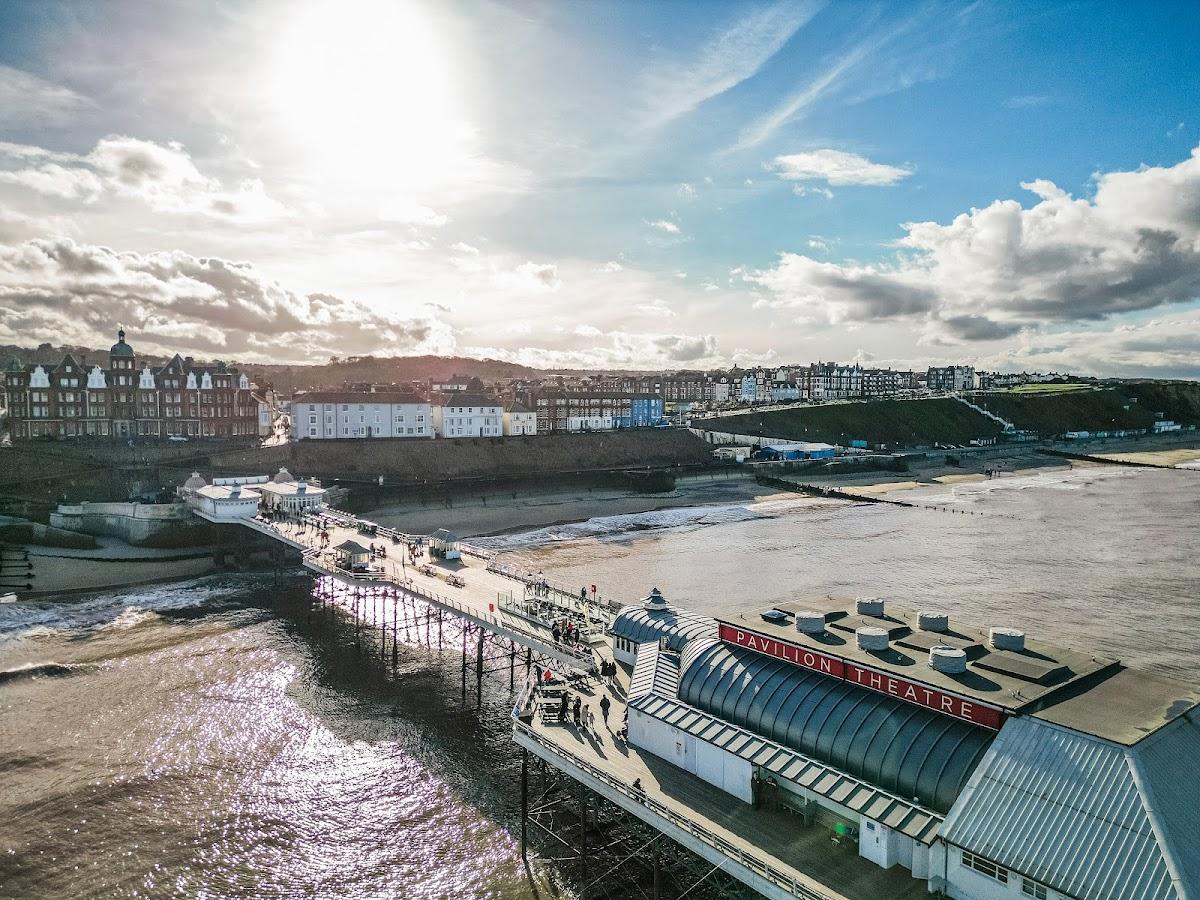
Insider pick · Cromer
Cromer Pier
Cromer Pier in Cromer, Norfolk hosts live theatre shows and entertainment performances throughout the year on its historic seaside stage.
View listingHenry Blogg, and the lifeboat story
If you do one indoor thing in Cromer, make it the RNLI Henry Blogg Museum, in the Rocket House on the Gangway below the cliff, underneath the cafe.
Henry Blogg was a Cromer fisherman who joined the lifeboat crew in 1894 and was elected coxswain fifteen years later. He held the post for 38 years until he retired in 1947. In that time he took part in 387 rescues and helped save 873 lives.
He remains the most decorated person in RNLI history: three gold medals and four silver medals from the RNLI, the George Cross and the British Empire Medal. Accounts of the wartime record differ slightly, with the Cromer boat credited with somewhere around 139 to 150 launches between 1939 and 1945 and roughly 450 lives saved, more than any other lifeboat in the country.
The museum is small, free to enter with donations appreciated, and built around the lifeboat H F Bailey, which Blogg served on. It works because it does not oversell. The story does not need it. Blogg's dog Monte, himself pulled out of the sea, is part of it too, and does more work on most visitors than any medal count.
Check the day before you go: it is closed on Mondays. Opening is Tuesday to Sunday, 10am to 4pm from February to November, extending to 5pm from April to September, and weekends only in December.
While you are down there, Cromer Lifeboat Station at the end of the pier is open most days with a public gallery and a shop, and volunteer guides run free hour-long tours that have to be booked ahead by email. That is a free, bookable thing almost nobody writes about.
Above it, the Rocket House Cafe is the natural stop afterwards.
Cromer Lighthouse stands on the cliff on the Overstrand road about half a mile back from the edge, a white octagonal tower built in 1833. It replaced an earlier light of 1719 which eventually went over the cliff into the sea in 1866, which is the local geology making its point. It was electrified in 1958, automated in June 1990, and is now monitored remotely from Trinity House at Harwich. It is not open to visitors but the clifftop walk out to it is one of the better short walks here.
Sheringham, Overstrand and Holt
Sheringham is four miles west along the coast and is Cromer's near twin: another Victorian resort with a beach, a Little Theatre, a town museum at Lifeboat Plain and Sheringham Park behind it. It is also the terminus of the Poppy Line steam railway. See everything we list in Sheringham.
Overstrand is two miles east, a smaller and much quieter village with its own beach below the cliff, reached on a clifftop walk past the lighthouse. It is the antidote if Cromer feels busy.
Holt is inland, about eleven miles, and is the shopping and eating town of this corner: Georgian, expensive and full of independents. It is the obvious wet-afternoon answer. Read our guide to Holt.
Also nearby, East Runton and Mundesley are the quieter beaches either side. We have ranked the whole coastline in the best beaches in Norfolk, so rather than repeat the argument here, that is the place to compare them properly.
Cromer is a working town, not a boutique village
This is the expectation to set before you come, especially if you are arriving from Burnham Market or Blakeney.
Cromer has a population of around eight thousand people who live here all year. It has a high street with the shops a normal town has: banks, a chemist, charity shops, a supermarket. The seafront has amusement arcades. The pier show is variety, not theatre. Some of the Victorian buildings are magnificent and some of them need paint.
If your reference point for north Norfolk is a village where every shop sells candles and sourdough, Cromer will read as scruffy. Several visitors a year say exactly that.
They are missing the point. What Cromer has that those villages do not is a functioning economy that is not entirely dependent on visitors. The crab boats are working boats. The lifeboat is an operational lifeboat, not a heritage exhibit. The theatre runs a full season because enough people buy tickets. That is why it still feels like somewhere rather than a set, and it is why the crab is better here than anywhere selling it at twice the price forty minutes west.
Come for the town it is, not the village it is not.
The honest summary
Cromer is the best value seaside town in Norfolk and probably the most complete. The pier still works, the beach has held its Blue Flag for nearly forty years, the lifeboat story is genuinely extraordinary, and the crab is worth the drive on its own.
Buy it dressed in the morning from a fishmonger on Garden Street, eat it on the clifftop looking at the pier, go to the Henry Blogg Museum, and book the show if you are here between late June and September. Do not expect boutique. Expect a real town that happens to be by the sea and has been doing this properly for a hundred and fifty years.
Related listings
Nearby picks to explore
Good to know
Frequently asked questions
From the fishmongers in town rather than a supermarket. Davies Fish Shop on Garden Street has traded since 1974 and is supplied from the family's own boat, with the crab boiled in copper pans and dressed by hand on the premises. Go in the morning, because supply depends on the weather and the good stuff sells out.
A traditional variety show at the Pavilion Theatre at the end of Cromer Pier, and the only full-season end-of-pier show left anywhere in the world. The summer season runs from late June to mid September, with a separate Christmas show. Performances run about two and a half hours.
Cromer's lifeboat coxswain and the most decorated person in RNLI history. Over 38 years as coxswain he took part in 387 rescues and helped save 873 lives, winning three gold and four silver RNLI medals, the George Cross and the British Empire Medal. The free museum named after him is closed on Mondays.
Yes. Cromer has held Blue Flag status since 1988, which makes it one of the longest continuously held Blue Flags in the country. The award covers water quality, lifeguarding, cleanliness and facilities, and it is reassessed every year rather than granted permanently.
Yes, if you want a real Victorian seaside town rather than a polished village. Cromer has a working pier, a Blue Flag beach, the best crab in England and a genuine town behind the seafront. It is not boutique and does not try to be, which is the appeal.
Be part of it
Three ways to get involved
Keep reading
More from the Journal
27 July 2026
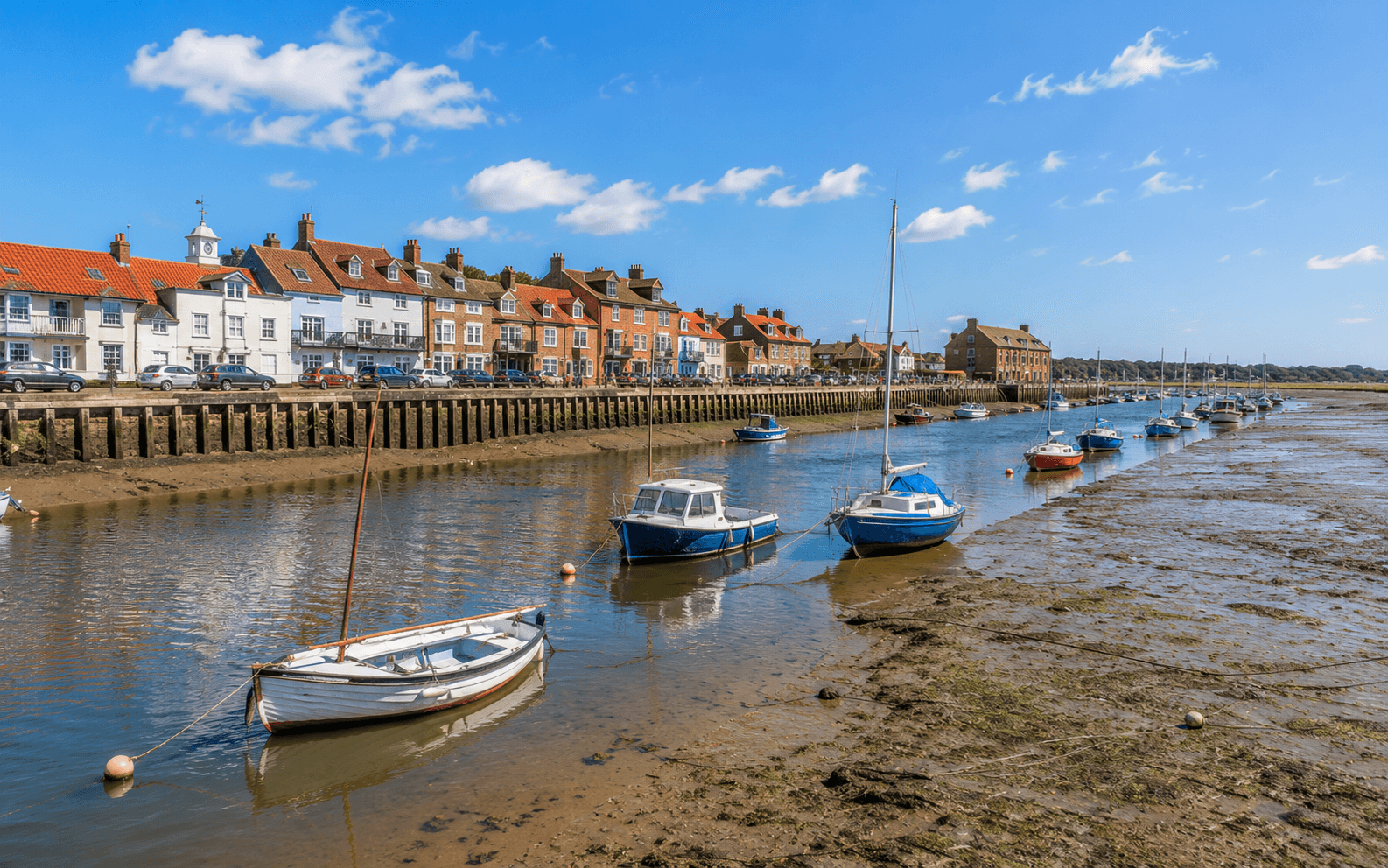
A guide to Wells-next-the-Sea
An honest guide to Wells-next-the-Sea, Norfolk: crabbing off the quay, the mile to the beach huts, why tide times matter, and Holkham next door.
27 July 2026
A guide to Aldeburgh
An honest guide to Aldeburgh, Suffolk: shingle not sand, fish straight off the beach huts, the Scallop argument, and Snape Maltings five miles inland.
27 July 2026
A guide to Blakeney and Cley-next-the-Sea
An honest guide to Blakeney and Cley-next-the-Sea, Norfolk: seal trips leave from Morston not Blakeney, plus Cley Marshes and the windmill.