27 July 2026
A guide to Lavenham
An honest guide to Lavenham, Suffolk: the medieval wool town that got rich, built crooked and stayed that way, plus the Harry Potter house.
Lavenham is the best preserved medieval wool town in England, and unlike most places that make that sort of claim, it genuinely looks it. Around 340 of its buildings are listed, the timber frames lean at angles that look like a mistake in a drawing, and almost nothing has been built over the top of them. The reason is not careful conservation. It is that the town made an enormous amount of money very quickly, spent it on buildings, and then lost the lot. What you are walking round is a fifteenth-century boom town that could never afford to update itself.
Key takeaways
- Lavenham was the 14th richest town in England by 1524, paying more tax than Lincoln or York.
- The houses lean because they were built fast from green oak that twisted as it dried.
- The Guildhall and Little Hall on Market Place are the two paid attractions, and an hour covers both.
- De Vere House on Water Street was Harry Potter's birthplace in Deathly Hallows Part 1. It is a private home.
- Park free on Church Street and plan Lavenham as a half day, paired with Long Melford.
What Lavenham actually is
Lavenham is a village of a few hundred houses in south Suffolk that was, briefly, one of the wealthiest places in the country. Its money came from cloth, specifically a heavy woad-dyed broadcloth known as Lavenham Blue, or Lavenham Blew in the old spelling, made from local wool and coloured with woad grown in East Anglia. By the 1524 Lay Subsidy it ranked as the 14th richest town in England, paying more tax than Lincoln or York despite being a fraction of their size. Thomas Spring of Lavenham, the clothier who dominated the trade, was reckoned the richest commoner in England when he died in 1523.
Then it collapsed. Dutch refugees who had settled in Colchester began making cloth that was lighter, cheaper and more fashionable, and Lavenham's product stopped selling. The industry went, the money went, and the town spent the next four hundred years too poor to knock anything down. That is the whole explanation for what you see. Around 340 buildings are now listed and the street plan is essentially medieval.
It is worth being clear about scale. This is a village, not a town in any modern sense. You can walk from one end to the other in about twenty minutes.
Getting there and parking
By road. Lavenham sits on the A1141 between Hadleigh and Bury St Edmunds. From the north, take the A134 from Bury St Edmunds and then the A1141. From the south, the A134 runs up from Colchester through Sudbury and you cut across on the B1071.
By train and bus. Lavenham had its own station once, but the line closed. The nearest is Sudbury, about seven miles away, at the end of the Gainsborough Line branch from Marks Tey on the London Liverpool Street route.
From there the 753, run by KonectBuses, takes about 30 minutes into Lavenham, roughly hourly Monday to Saturday with no booking needed. A Bus Service Improvement Plan grant has since added Sunday, bank holiday and later evening journeys to villages that had gone years without them, though the Sunday frequency is thinner than the weekday one.
That single route is the reason Lavenham is one of the few genuinely car-free options in rural Suffolk. The 753 runs Bury St Edmunds to Sudbury via Long Melford and Lavenham, calling at Acton, Great Waldingfield, Cross Green, Stanningfield, Sicklesmere and West Suffolk Hospital on the way.
Where to park. Babergh District Council runs the car parks and, unusually, the main one is free:
- Church Street car park, CO10 9SA, next to the Cock Horse Inn at the southern end of the village. It runs on a donation basis rather than a tariff, and has public toilets.
- Prentice Street car park, the second option, off the top of the village.
On-street parking on the High Street and around Market Place exists but is limited and awkward, and the streets are narrow enough that a coach coming the other way will ruin your afternoon.
When to go
Lavenham is an all-weather destination in the sense that its appeal is the buildings, and the buildings are outside. That cuts both ways: there is very little indoor refuge if it rains beyond the two museums and the tea rooms.
Weekdays out of season are the version worth having, when you can photograph Water Street without waiting for people to move and the pubs have space. Summer weekends bring coach parties, and because the village is so small a single coach makes a noticeable difference. Spring and autumn weekdays are the sweet spot.
Local knowledge
Walk Water Street and Shilling Street first, before Market Place. Almost everyone arrives, heads straight for the Guildhall and the Market Place, and does the side streets afterwards if at all. Water Street has the best run of leaning frontages in the village, including De Vere House, and Shilling Street behind it is quieter still. Do them in the first twenty minutes and you get them to yourself.
Where to eat and shop
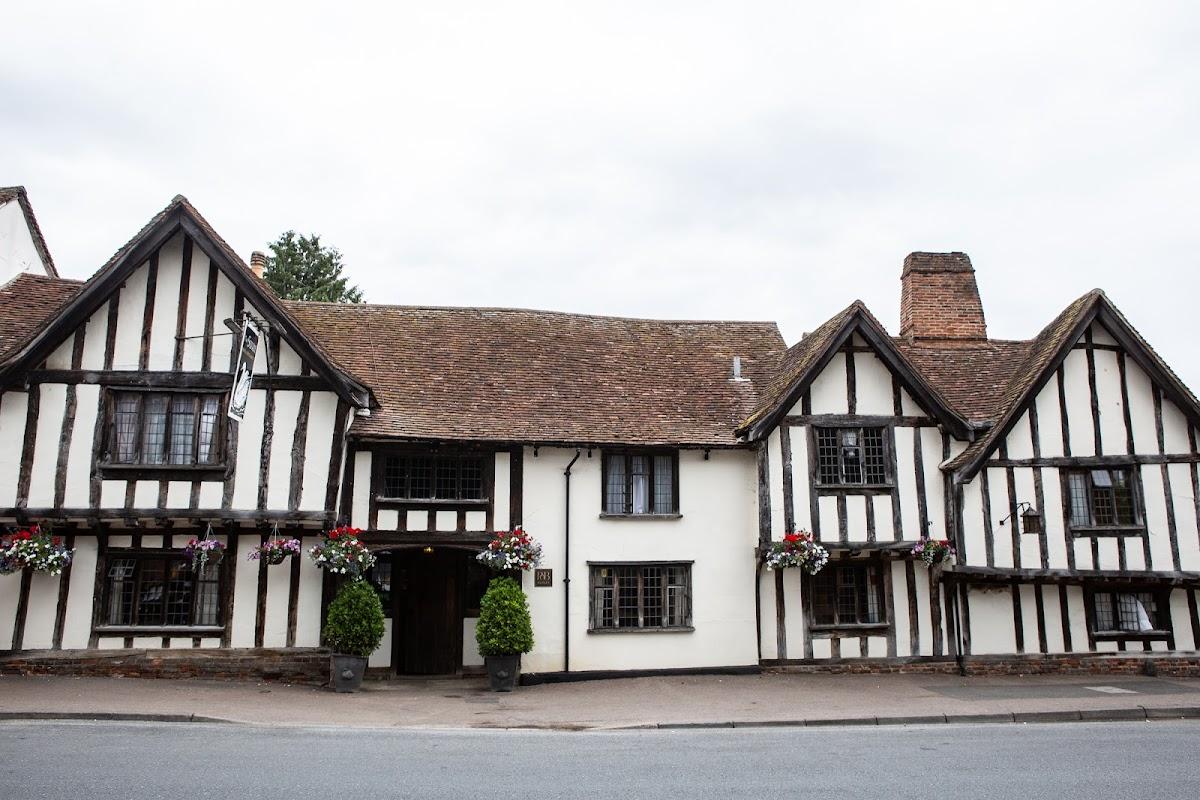
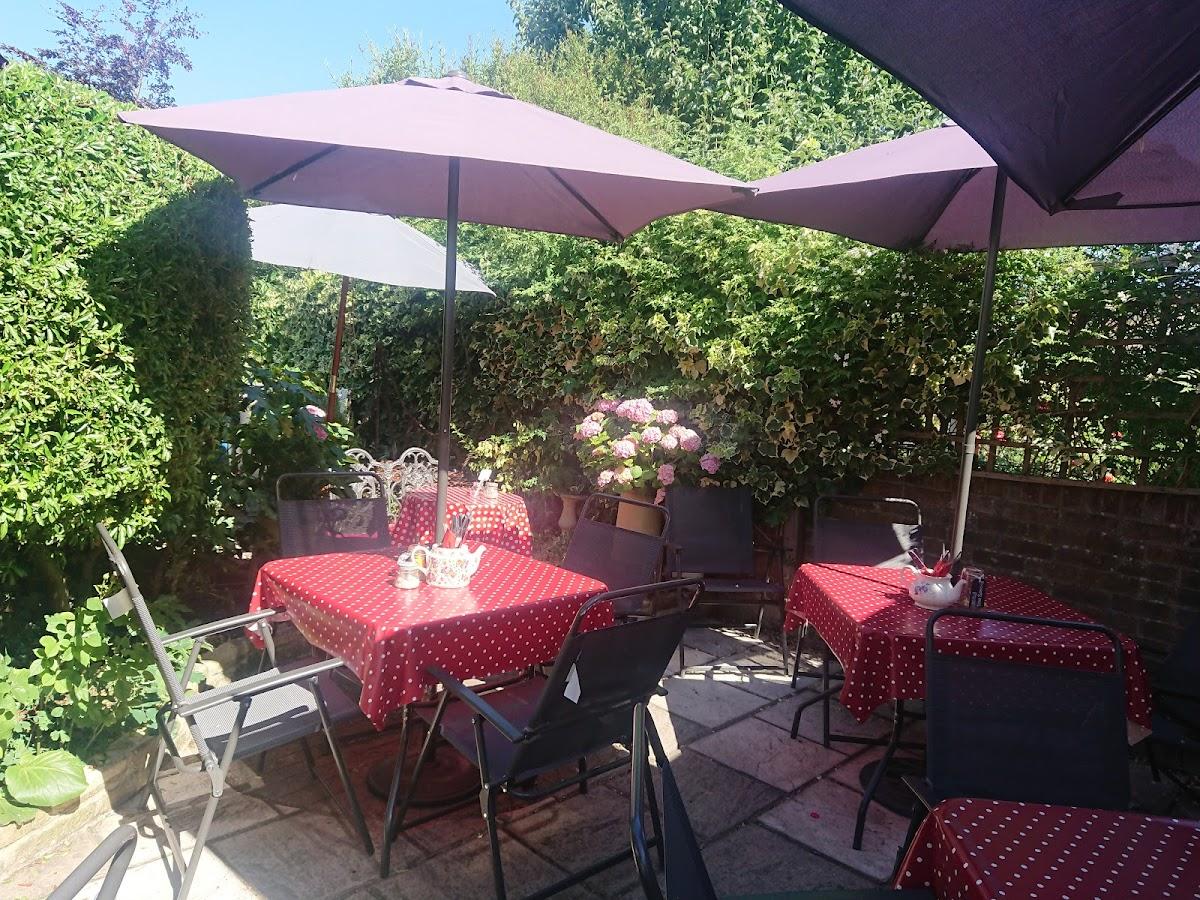
For its size, Lavenham is well served. The Swan at Lavenham on the High Street is the grand option, a fifteenth-century timbered coaching inn that is now a hotel and spa, and it is worth going in for a drink even if you are not eating. Lavenham Blue Vintage Tea Rooms on Market Place is named for the cloth, and Ivy and Bond on Church Street is the other tea stop.
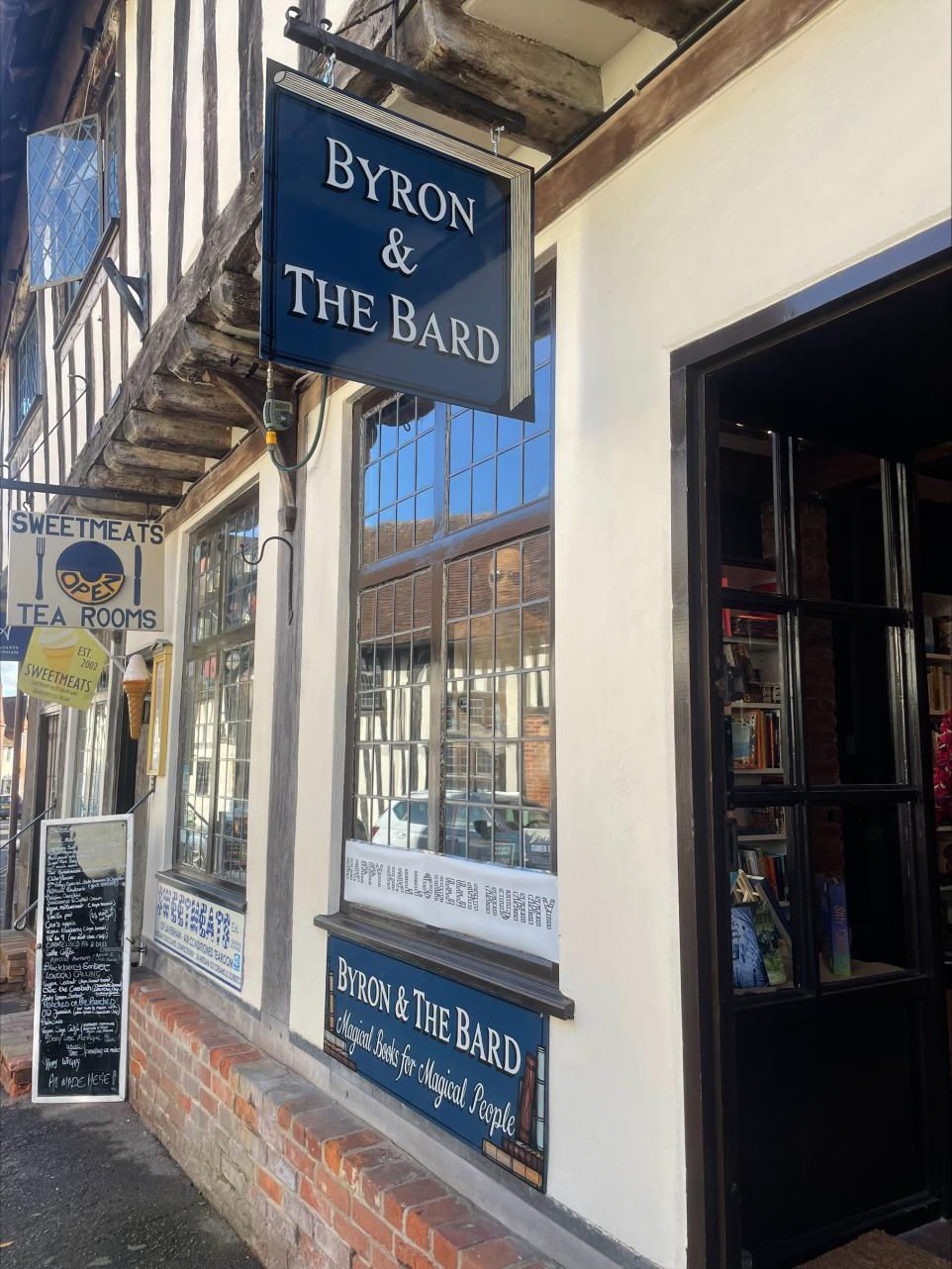
Lavenham Butchers at 1 High Street is the village butcher, Byron and the Bard at 72 Water Street is the bookshop, and Lion House Gallery at 12 High Street covers art. That is roughly the extent of the retail, which is part of the reason this is a half-day rather than a full one.
On pubs, the Greyhound on the High Street now does Mediterranean food rather than standard pub cooking, and the Cock Horse on Church Street reopened recently under the Bella Pub group, dog-friendly with a garden. The Cock Horse is also right beside the main village car park, which makes it the obvious lunch stop if you are following the walk above. The Swan covers the smarter end with its Gallery Restaurant, a brasserie and afternoon tea, and Number Ten on Lady Street is the wine bar and kitchen.
In the village
The Guildhall and the crooked houses
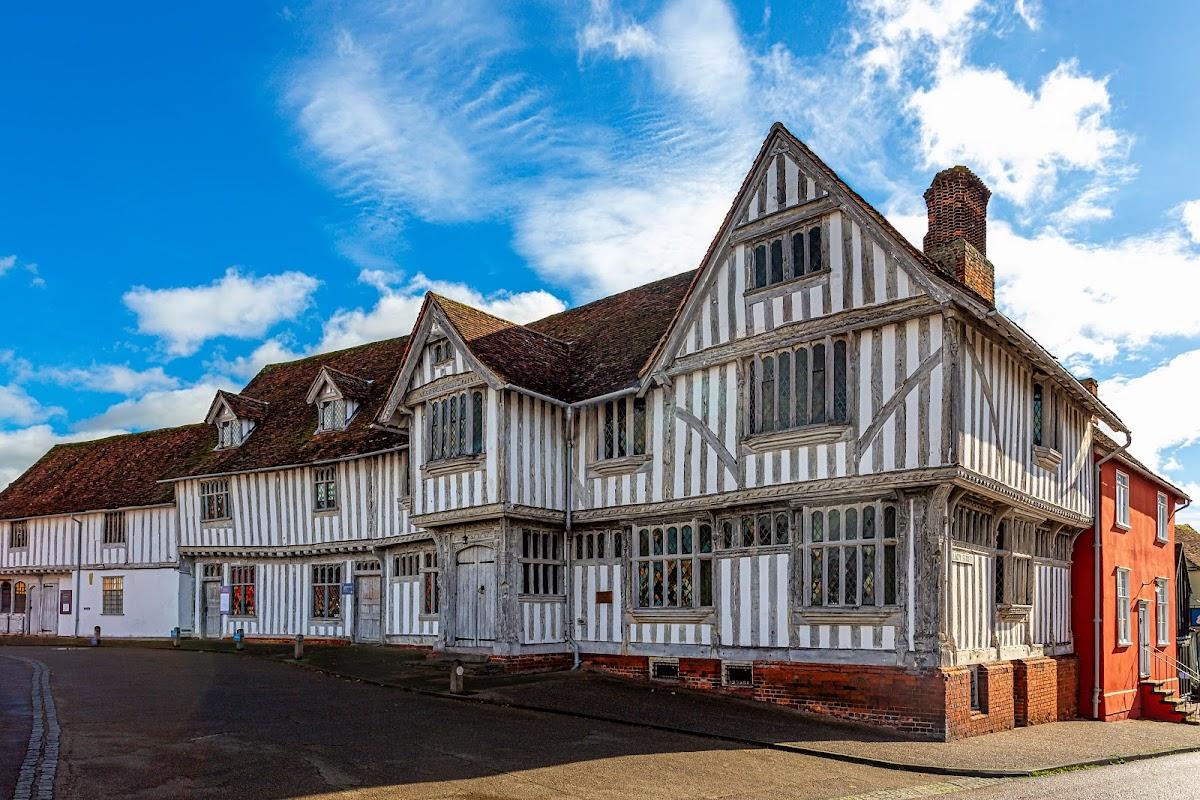
Lavenham Guildhall dominates Market Place and is the building on every photograph of the village. It went up in 1529 as the hall of the Guild of Corpus Christi, one of several religious and trade guilds that ran the town's cloth business and its social life at the same time. When Protestant reformers abolished the guilds by acts of parliament in 1545 and 1547, the building went through a long second career as a prison and then a workhouse, which is the sort of decline that keeps a building standing when prosperity would have replaced it. It passed to the National Trust in 1951.
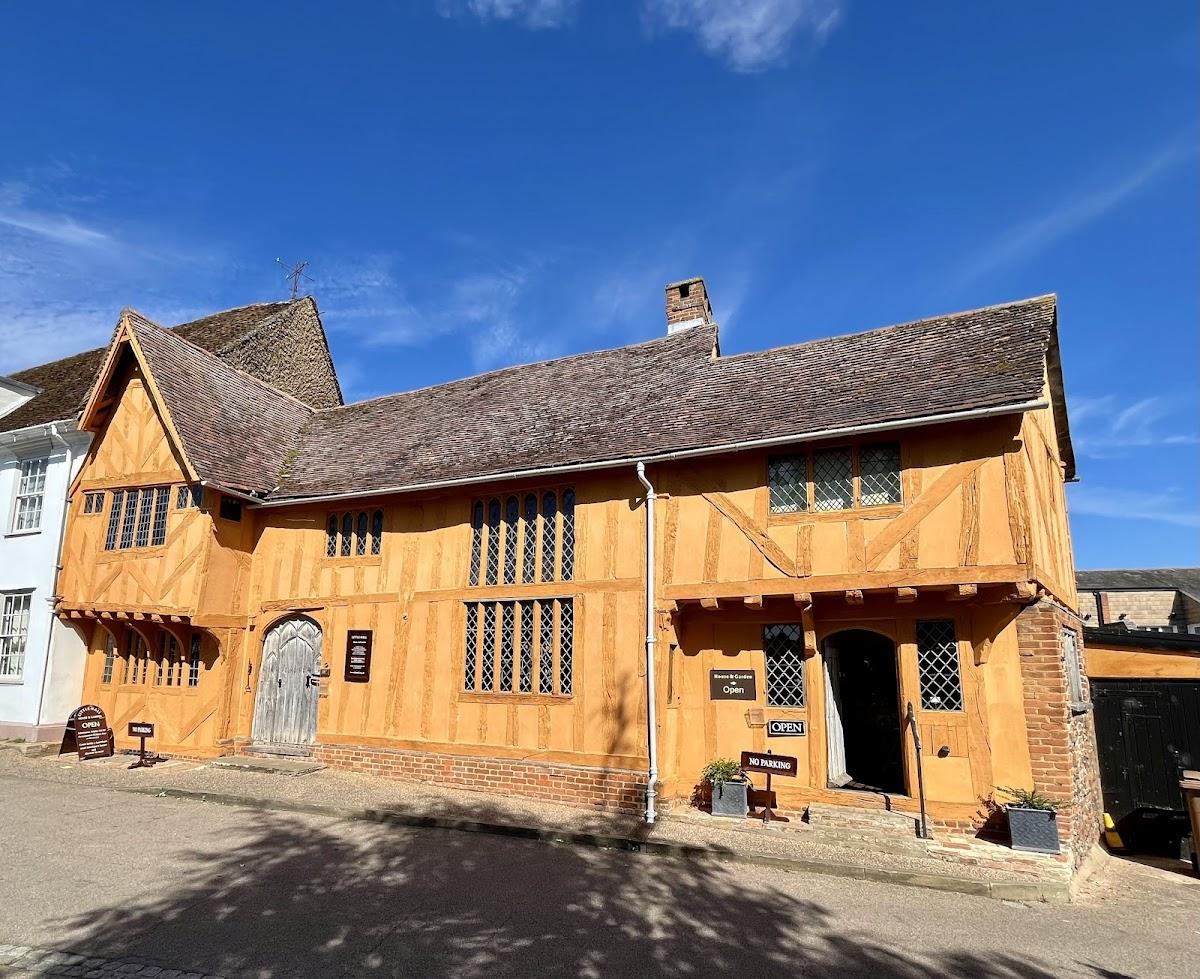
Little Hall, also on Market Place, is the other one to go inside: a fourteenth-century hall house, later a clothier's home, now a small museum with a collection and a garden.
Then there is the leaning, which is the thing everyone actually comes to look at.
The accepted explanation is the same story as the town itself, and it is worth saying that it is an explanation rather than something anyone has measured. Lavenham got rich faster than it could build sensibly, so houses went up using green, unseasoned oak rather than timber left to dry for years first. Green oak is easy to work and extremely strong once set, but it moves as it dries, and it kept drying for decades after the carpenters had gone. Frames twisted, posts bowed, and door frames pulled out of square.
In any other prosperous town the owners would have straightened or rebuilt them. Lavenham could not. By the time the timbers had finished distorting, the cloth trade had collapsed and there was no money to do anything about it. So the houses stayed bent, and four centuries later the bend is the attraction.
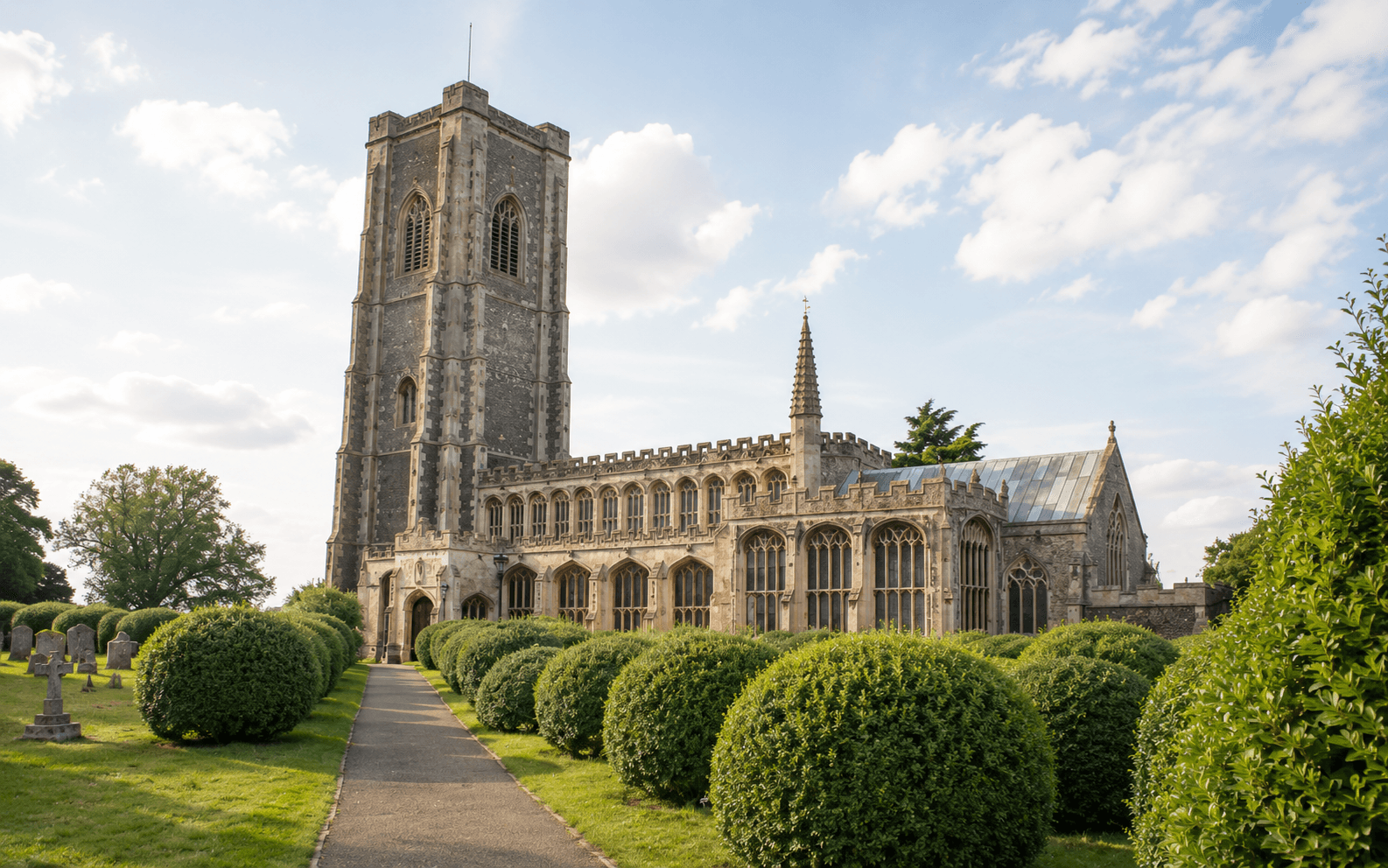
The Church of St Peter and St Paul stands slightly apart, up the hill at the southern end of the village, and it is the clearest single statement of what wool money bought. It is a Grade I late Perpendicular wool church with a four-stage west tower of knapped flint and stone standing 141 feet, completed in 1525 and funded by the Spring family and the de Veres. It is free to go in and a lot of visitors never make the walk up to it, which is their loss.
Insider pick · Lavenham
National Trust - Lavenham Guildhall
National Trust - Lavenham Guildhall is a historic museum in Lavenham, Suffolk, showcasing Tudor heritage and local history in a 15th-century timber-framed building on Market Place.
View listingThe Harry Potter connection, and which house
The house is De Vere House on Water Street, CO10 9RW.
It is a Grade I listed timber-framed house built in the 1300s as a hall house and hunting lodge for the de Vere family, the Earls of Oxford, who were among the wool magnates whose money built the village. Inside there is a stone spiral staircase and rare medieval wall paintings.
The production of Harry Potter and the Deathly Hallows Part 1 filmed here for the exterior of the Potters' cottage in Godric's Hollow. Different sections of the house and the surrounding streets were composited together, so the Godric's Hollow you see on screen is not any single view you can stand in front of. According to the owners the shoot happened in summer, with the winter snow added by the effects team, a Christmas tree pasted into the front bay window and carols laid in behind. The Guildhall exterior appears in the sequence too.
The front door has since become one of the most photographed doors in the country, though the Potter connection is the least interesting reason for it. The emblems carved on it relate to the de Veres and their part in the Wars of the Roses, which is what it was worth looking at for the six hundred years before anyone filmed it.
It is also somebody's front door. De Vere House runs as a two-room bed and breakfast, the John de Vere and Lady Elizabeth Howard rooms, both four-posters and en suite, with a private guest sitting room, a courtyard garden and breakfast included, from around £120 a night. It is not open to day visitors. Photograph it from the street, do not go up the path, and be aware that in summer you will be queueing to do so.
The wool towns: Long Melford, Sudbury, Clare and Bury St Edmunds
Lavenham is the anchor of a completely separate cluster from the Suffolk coast. If you have come here from Southwold or Aldeburgh, you are an hour or more away and in a different landscape entirely. These are the places that go with it.
Worth knowing before you plan: the 753 bus connects Bury St Edmunds, Lavenham, Long Melford and Sudbury on one route, which is four of the five wool towns without a car. Nowhere else in this part of Suffolk is that easy to do on public transport.
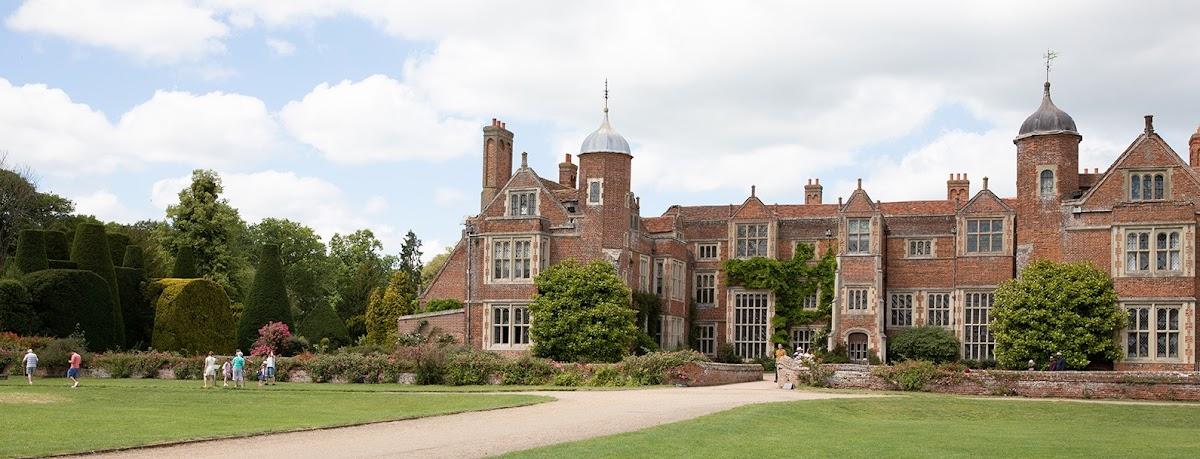
Long Melford is the natural pairing, four miles south west, and the two together make a proper day. It has one of the longest village streets in England lined with antiques shops, plus two great houses: Kentwell Hall, the Tudor mansion known for its living history recreations, and Melford Hall, the National Trust property where Beatrix Potter used to stay. The Bull and the Black Lion are the pubs, Scutchers is the long-standing restaurant, and Blackwell and Co is the deli and bakery on Hall Street. There is also a footpath along the old railway line between Melford Hall and Lavenham if you would rather walk between the two. Browse everything we list in Long Melford.
Sudbury is the working town of the group, seven miles south, and the birthplace of Thomas Gainsborough. Gainsborough's House on Gainsborough Street is his childhood home turned gallery and is much better than most people expect. See everything we list in Sudbury.
Clare is further west up the Stour valley, a small town with Clare Castle Country Park built round a Norman motte and a disused railway station, and Harris and Harris Books, which is a serious bookshop for a place this size. Browse everything we list in Clare.
Bury St Edmunds is the largest of them, north east on the A134, with the abbey ruins, the Abbey Gardens, the cathedral and the Nutshell, which claims to be the smallest pub in Britain. It is a full day on its own. Read our guide to Bury St Edmunds.
It is small, plan it as a half day
This is the part to be realistic about.
Lavenham is roughly one long street, a market place and a handful of side lanes. You can walk the whole village in twenty minutes without hurrying. There are two paid attractions, the Guildhall and Little Hall, and between them they will take you about an hour. The church is another twenty minutes. There are perhaps a dozen shops. Add lunch and you have filled four hours, comfortably and enjoyably, and then you will start walking down streets you have already walked down.
That is not a criticism. It is one of the most remarkable four hours in England. But people book a full day here, arrive at ten, and by two o'clock are wondering what they have missed. The answer is nothing. They have seen it.
So plan it as a half day and pair it. Long Melford is the obvious partner, four miles away with the antiques street and two halls, and the two together are a genuinely full day out. Bury St Edmunds works if you want a town with more going on. Or do Lavenham in the morning, eat here, and spend the afternoon at Kentwell or Melford Hall.
The one thing not to do is treat Lavenham as a base for a week unless walking, eating well and looking at timber frames is precisely your idea of a holiday. For some people it is, and they are right.
The honest summary
Lavenham is the real thing. It is not a reconstruction, not a preserved show village, and not exaggerating when it calls itself the best preserved medieval wool town in England. The buildings are genuinely fifteenth and sixteenth century, they genuinely lean, and the reason for both is a boom and bust that finished five hundred years ago.
Go on a weekday, park free on Church Street, do Water Street before the coaches, go inside the Guildhall, walk up to the church, and then drive four miles to Long Melford for the afternoon. That is the trip. It takes half a day, it costs very little, and there is nowhere else in the country quite like it.
Related listings
Nearby picks to explore
Good to know
Frequently asked questions
Because it went broke. Lavenham was one of the richest towns in England on the wool trade, then lost the industry to cheaper cloth made in Colchester. With no money to rebuild or modernise, its medieval buildings simply stayed up. Poverty preserved it far better than wealth would have.
The accepted explanation is that the town grew so fast that houses were built from green, unseasoned oak. As those timbers dried over the following centuries they twisted and warped, pulling the frames out of true. Normally owners would have rebuilt, but the wool money had gone, so they stayed crooked.
De Vere House on Water Street stood in for Harry Potter's birthplace in Godric's Hollow in Deathly Hallows Part 1, with the Guildhall exterior also appearing. The owners say the shoot happened in summer and the snow was added afterwards. It runs as a two-room B&B and is not open to day visitors.
Half a day is right for most people. The village is small enough to walk end to end in twenty minutes, and the two paid attractions, the Guildhall and Little Hall, take about an hour between them. Pair it with Long Melford or Bury St Edmunds to make a full day.
Yes, and it is free. St Peter and St Paul is one of the finest late Perpendicular wool churches in England, with a 141 foot tower completed in 1525 and paid for by cloth money. It sits slightly apart from the village, up the hill at the southern end.
Be part of it
Three ways to get involved
Keep reading
More from the Journal
27 July 2026
A guide to Framlingham
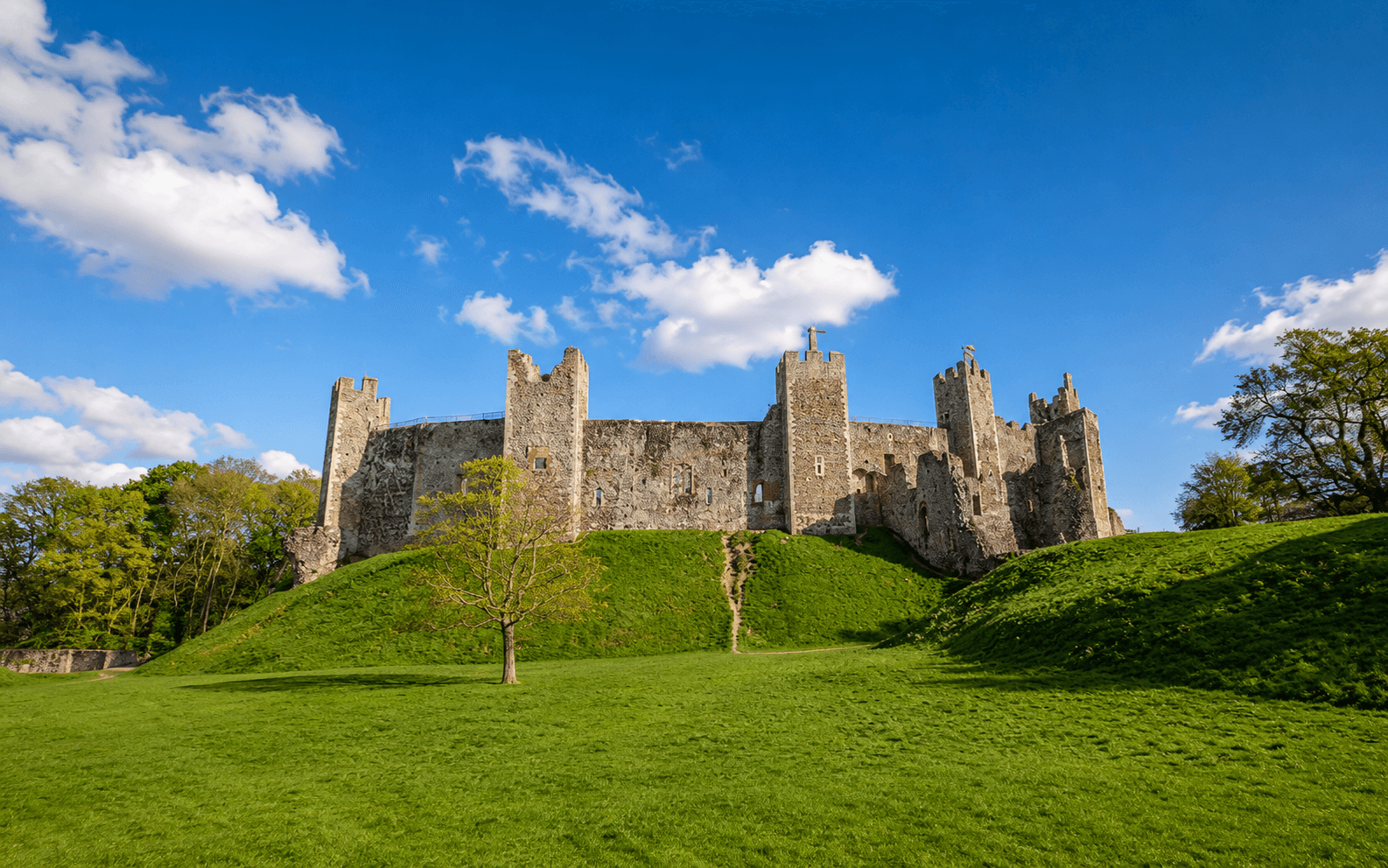
An honest guide to Framlingham, Suffolk: the castle wall walk and what is currently closed, Mary Tudor's proclamation, the mere and the Saturday market.
27 July 2026
A guide to Bury St Edmunds
A visitor guide to Bury St Edmunds, Suffolk: the free Abbey Gardens and ruins, the cathedral, a Regency playhouse and Britain's smallest pub.
27 July 2026
A guide to Woodbridge
An honest guide to Woodbridge, Suffolk: the working Tide Mill and when the wheel turns, Sutton Hoo next door, the Deben boatyards and Thursday market.