27 July 2026
A guide to Framlingham
An honest guide to Framlingham, Suffolk: the castle wall walk and what is currently closed, Mary Tudor's proclamation, the mere and the Saturday market.
Framlingham is a small Suffolk market town built around a triangle of a market square with a genuinely great castle on the edge of it. The castle is one of the best preserved medieval castles in England, you can walk along the top of its curtain wall, and a Queen of England was proclaimed inside it. It is also the town Ed Sheeran grew up in, which for the last few years has been the first thing a lot of visitors know about it. Both things are true. Only one of them is the reason to come.
Key takeaways
- Framlingham Castle has a wall-top walk round thirteen towers, and that walk is the whole point. Part of it is currently closed for maintenance, so check before you travel.
- Mary Tudor was proclaimed Queen of England inside these walls in 1553.
- Market day is Saturday, filling the whole of Market Hill, with a smaller Tuesday market.
- Framlingham Mere below the castle gives you the classic view back up at it, and it is free.
- Market Hill has real independents: Framlingham Bookshop, Leo's Deli and Hall Farm Butchers are all on it.
What Framlingham actually is
Framlingham is an inland Suffolk market town of a few thousand people, roughly equidistant from the coast and from Ipswich, arranged around a sloping triangular market square called Market Hill. The castle sits immediately north of it, and the ground drops away behind the castle to a shallow lake, the mere.
It is a working town rather than a preserved one. There is a secondary school, a proper butcher, a weekly market that sells food people actually buy, and enough independent shops on Market Hill to make an afternoon of it. It is not a wool town like Lavenham and it is not a coastal town like Aldeburgh. It is the thing that used to be normal in England and now is not: a small country town with its own economy.
The castle is what makes it worth a detour rather than just a pleasant stop, and the history in it is far stranger than most people expect.
Getting there and parking
By road. Framlingham sits inland off the A12, reached on the B1116 from the south or the A1120 running across mid Suffolk. It is about twenty minutes from Woodbridge and half an hour from Aldeburgh.
By train. There is no station in Framlingham. The branch closed to passengers in November 1952 and to freight in April 1965. The nearest points on the East Suffolk Line are Wickham Market, seven miles away and confusingly sited two miles outside Wickham Market village at Campsea Ashe, and Saxmundham, also seven miles.
You do not need a car, though, which is the part most guides get wrong. The Katch service, an electric demand-responsive taxi and bus, links Framlingham with Hacheston and Parham, Wickham Market village and Wickham Market station, and carries on to Snape Maltings via Tunstall. Fares are in line with normal bus fares and you book by phone or app. Buses 63, 118 and 119 also run between Framlingham and Ipswich. There is even a walk between the two stations with a Katch ride back, if you want to make a day of the getting here.
Where to park. English Heritage runs the castle car park, which holds about 30 cars and sits roughly 300 metres from the castle entrance, with an overflow across the road on Castle Meadow. It is free to members displaying a valid car sticker and charged for everyone else. There is no coach parking. English Heritage does not publish the charge and the figures quoted elsewhere disagree, so expect to pay something modest and check the sign.
If it is full there are three pay-and-display car parks in the town. On a Saturday the market takes the entire square, so head for the castle car park or the edges of town rather than circling Market Hill.
When to go
Saturday for the market. It runs 8am to 5pm and takes up the whole of Market Hill, with around ten regular stalls and up to eight more casual ones that change week to week. It is a proper produce market: fish, local pork and beef, vegetables, eggs, cheese, artisan bread, pickles and jams, plus antiques and household goods. There is a designated charity pitch and a Young Persons Initiative pitch for young or new traders, which is a nice thing for a town market to bother with.
The smaller Tuesday market runs 8am to 4pm with about six stalls at the top of the hill, and sometimes packs up a little early. Both are run by the town council.
The market and the castle are the same story. Hugh Bigod, third Earl of Norfolk, granted the town its licence to hold weekly markets in the thirteenth century, and there has been a market here since 1285. The family that built the curtain wall started the trade on the square below it, and both are still going.
Outside market days Framlingham is quiet, which is fine, because the castle and the mere are the fixed attractions and they do not care what day it is. Spring is best for the mere, when the water is high and the birds are on it.
Local knowledge
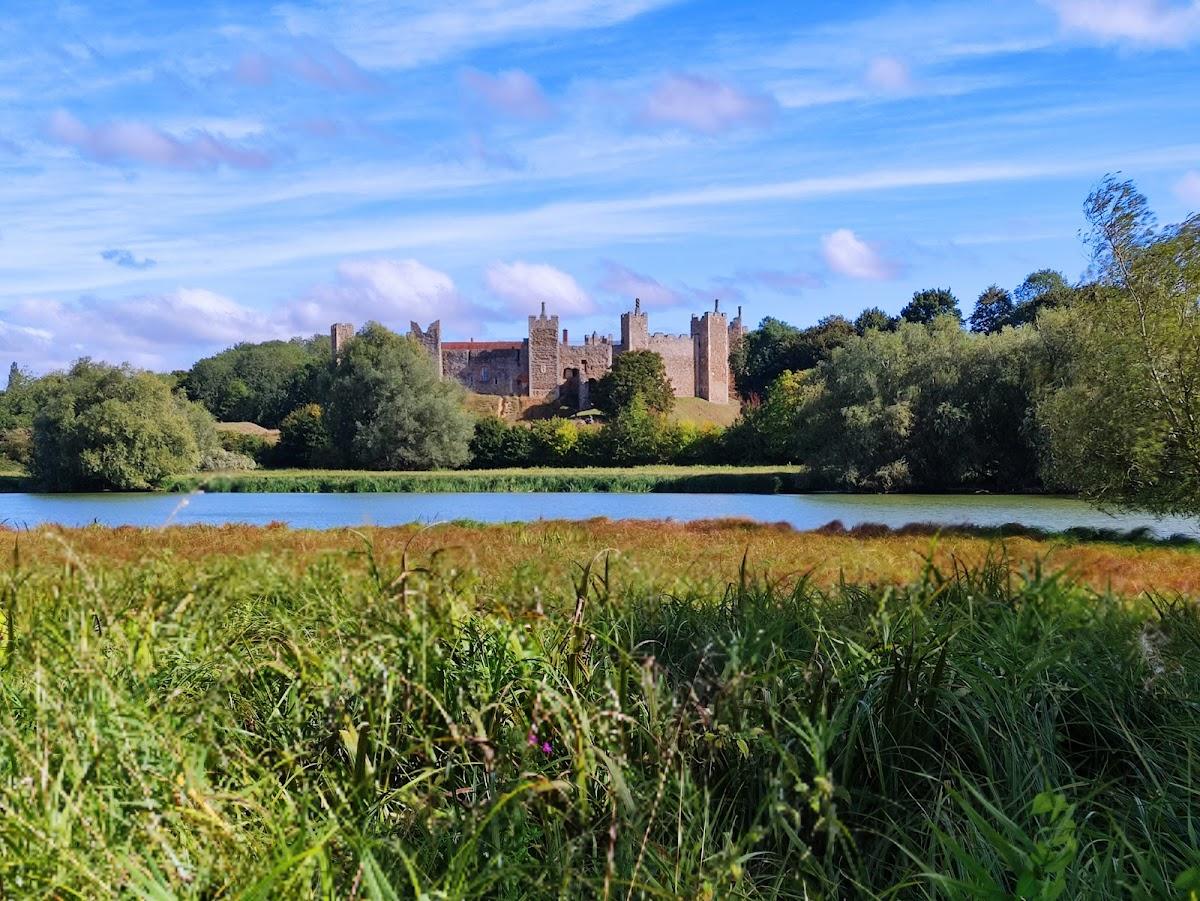
Do the mere before the castle, not after. The path below the castle gives you the view that every photograph of Framlingham is taken from, looking back up at the curtain wall across the water, and it costs nothing. Going that way round means you see the outside properly before you pay to go in, and you will understand what you are standing on when you get up onto the wall walk. Most people do it backwards and then cannot be bothered to walk down afterwards.
Market Hill, and where to eat
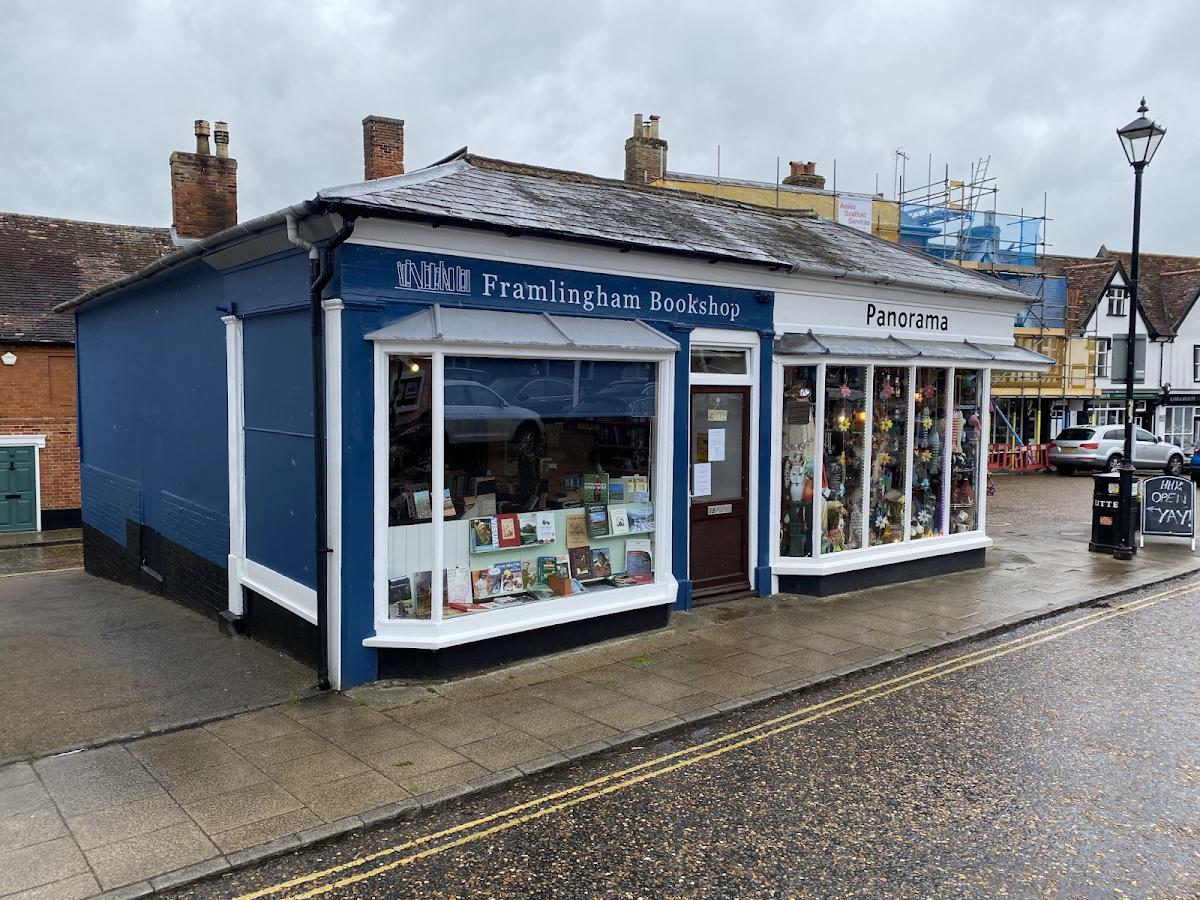
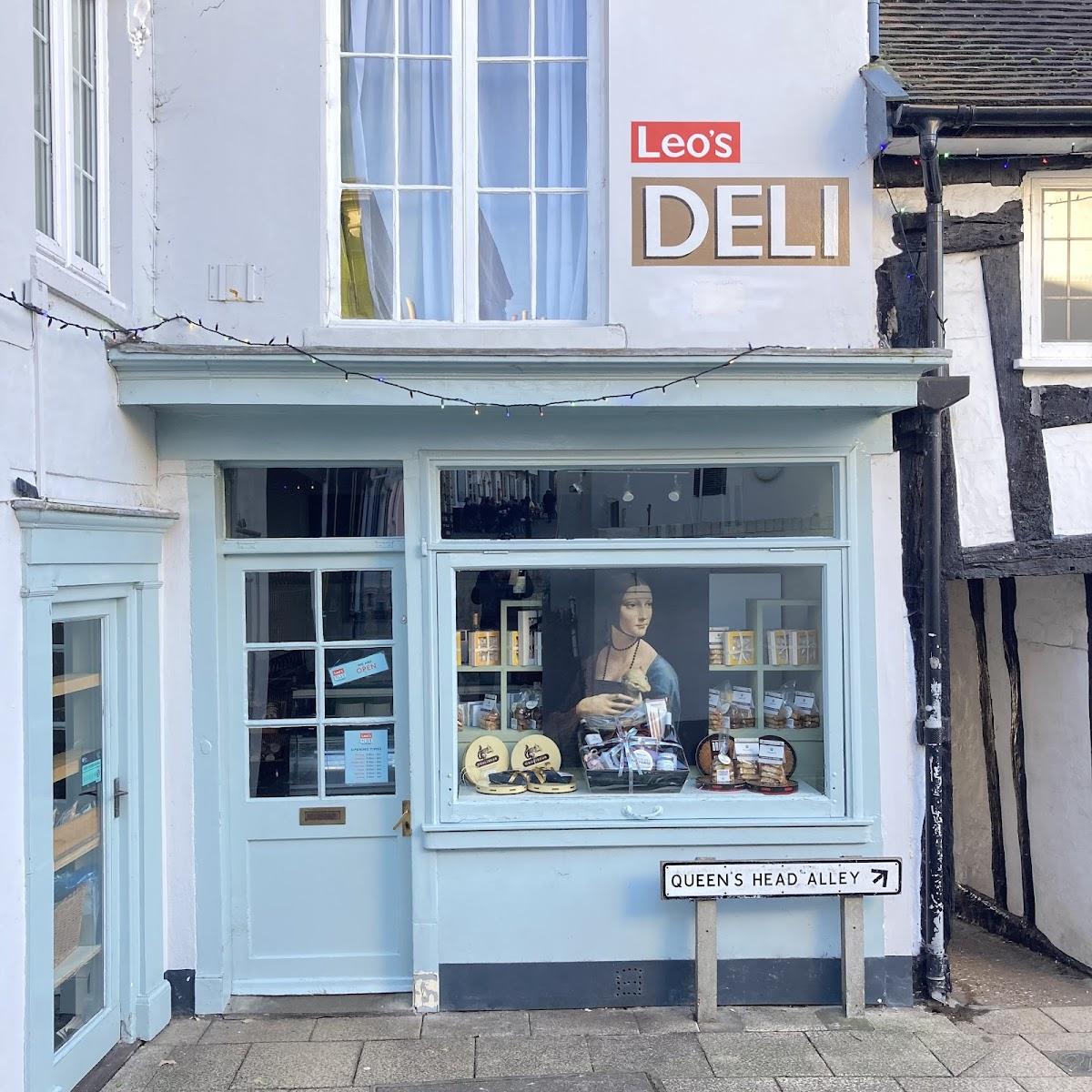
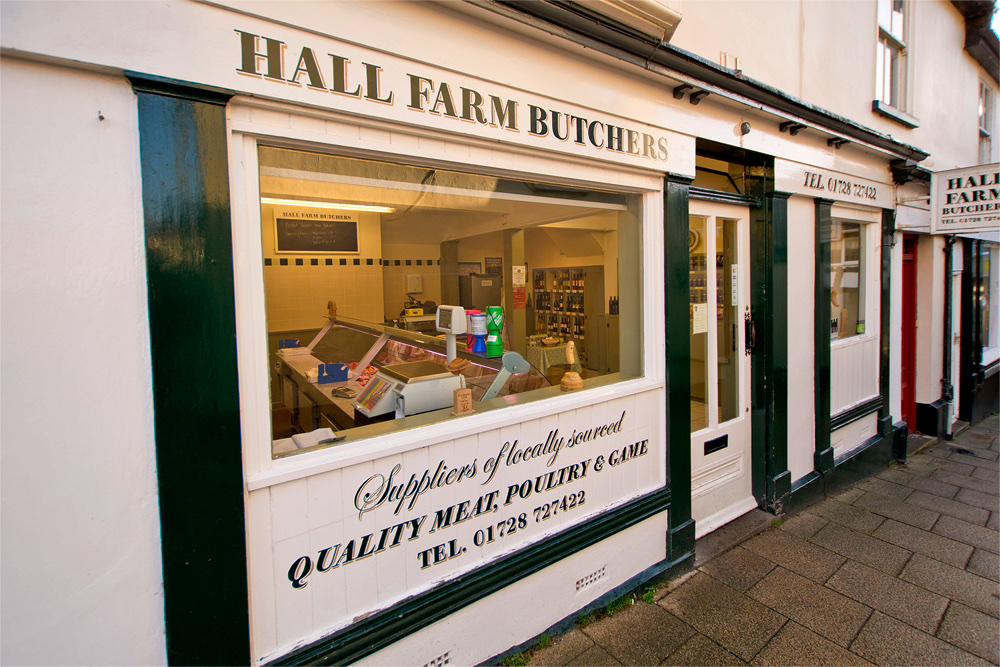
Market Hill is the centre of the town and the independents on it are genuinely good for a place this size. Framlingham Bookshop at number 19 is the independent bookshop, Leo's Deli at 17 handles cheese, charcuterie and picnic things, and Hall Farm Butchers at 25 is the butcher. Three doors on one square, which tells you something about how the town still works.
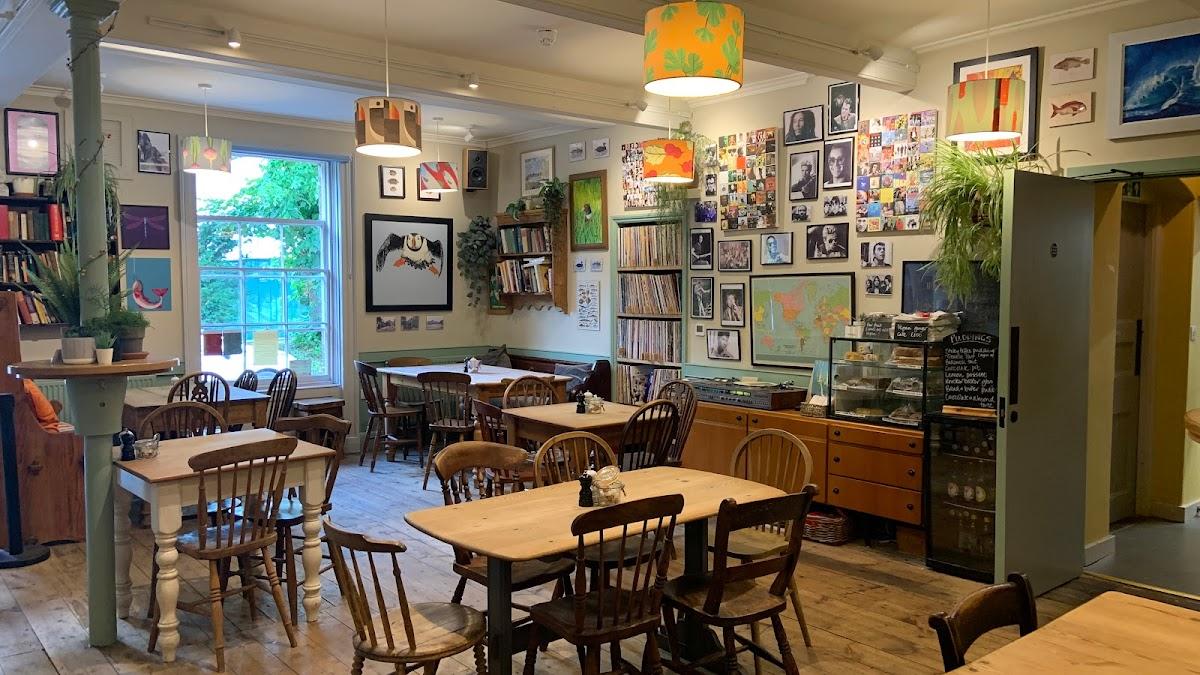
Off the square, Common Room Café on Church Street is the coffee and lunch stop and is consistently the thing this town shows up for in search, and Framlingham Fish Bar on College Road covers the evening.
For pubs, the two to know are the Crown on Market Hill, a thirteenth-century coaching inn with tables out on the cobbles and a garden behind, and the Station Hotel, which has been run as a pub since the 1950s and does wood-fired pizza and local beer. Neither publishes reliable opening days, so ring ahead if you are travelling for one specifically.
Two smaller things worth knowing about while you walk: Jeaffreson's Well on Badingham Road, and a rare vertical-slot Victorian letterbox on Double Street, which is exactly the sort of detail that makes a small town worth walking slowly.
On Market Hill
Framlingham Castle and the mere
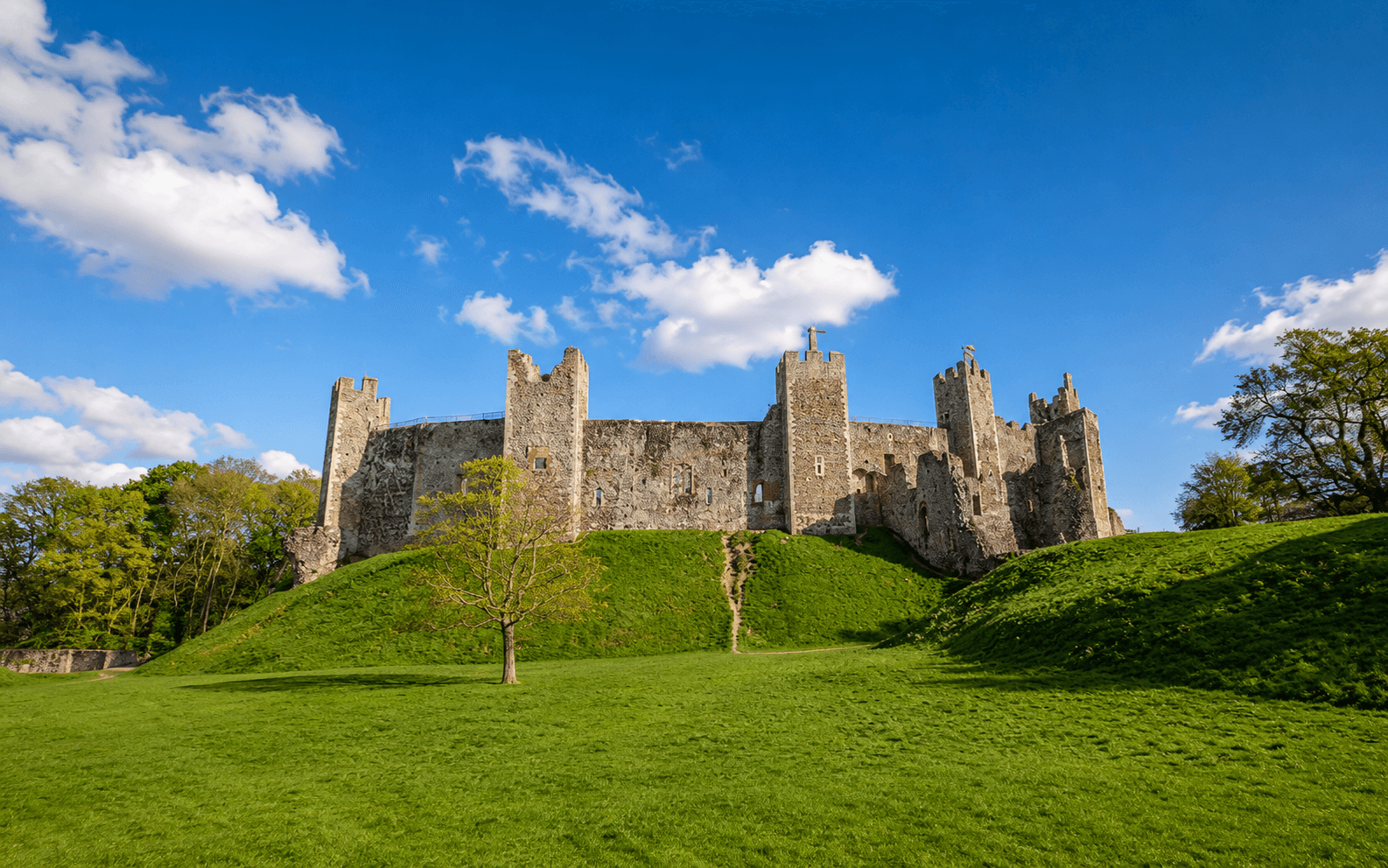
Framlingham Castle on Church Street was built in the late twelfth century by Roger Bigod, Earl of Norfolk, and it is unusual in shape. There is no keep. Instead there is a continuous curtain wall studded with thirteen square towers, standing about 10.5 metres high and 2.3 metres thick, enclosing the interior. That design, defending on the wall line rather than falling back to a central tower, was advanced for its date.
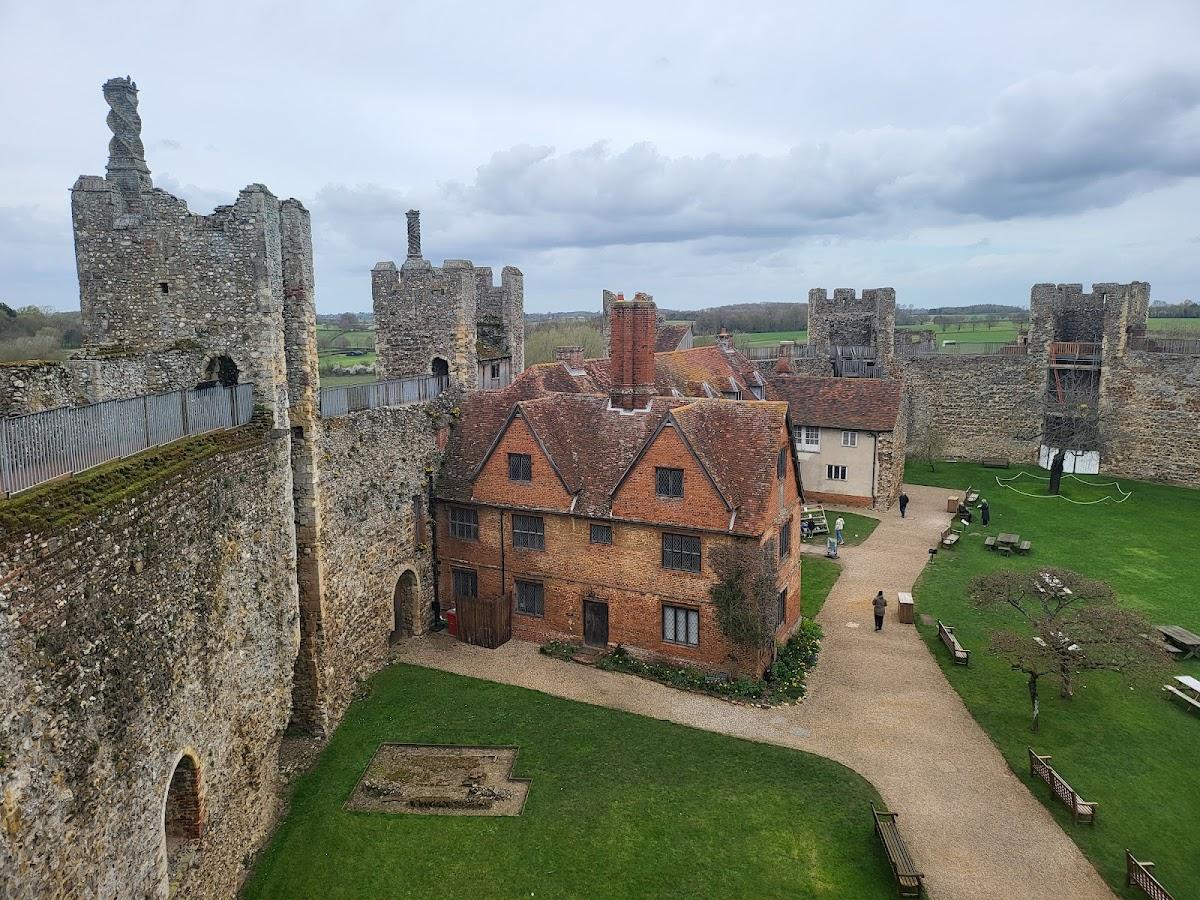
The wall walk is the reason to pay. A path runs along the top of the curtain wall, linking the towers, with the town on one side and the mere and countryside on the other. Very few English castles let you up onto the wall at all, and it is what turns this from a ruin you look at into a building you understand.
Check before you go, though. English Heritage currently has a section of the wall walk closed for essential maintenance, and visitors report being able to do only about half the circuit. That materially changes what you are paying for, so look at the castle's own page on the day you book rather than assuming the full loop is open.
English Heritage runs it, members go free, and the audio guide is included in the price for everyone else. Deliberately no admission figure here: English Heritage varies its prices by season, date and event, offers around 10 per cent off for booking online in advance, and the numbers quoted on third-party sites disagree with each other wildly. Check the English Heritage page for the day you are going.
The castle has form, and this is not even the first one on the site. A motte and bailey stood here by 1148 and Henry II had it destroyed after the revolt of 1173 to 1174, which is the same royal anxiety about Bigod power that produced Orford Castle down the coast. What you walk round today is the replacement.
Then in 1213 Roger Bigod II hosted King John here. Two years later the relationship had collapsed badly enough that Bigod was one of the twenty-five barons who forced John to accept Magna Carta. John took his revenge in 1216, and Framlingham fell to him after a short siege. The castle built to be defended along its wall line rather than from a keep was captured inside a year of Runnymede.
It then passed through the Brothertons, the Mowbrays and the Howards, and was home to the earls and dukes of Norfolk for over four hundred years.
Framlingham Mere lies immediately below the walls, a shallow lake and wetland that is now a reserve. The path around it is short, flat and free, and it gives the view of the castle that ends up on every postcard.
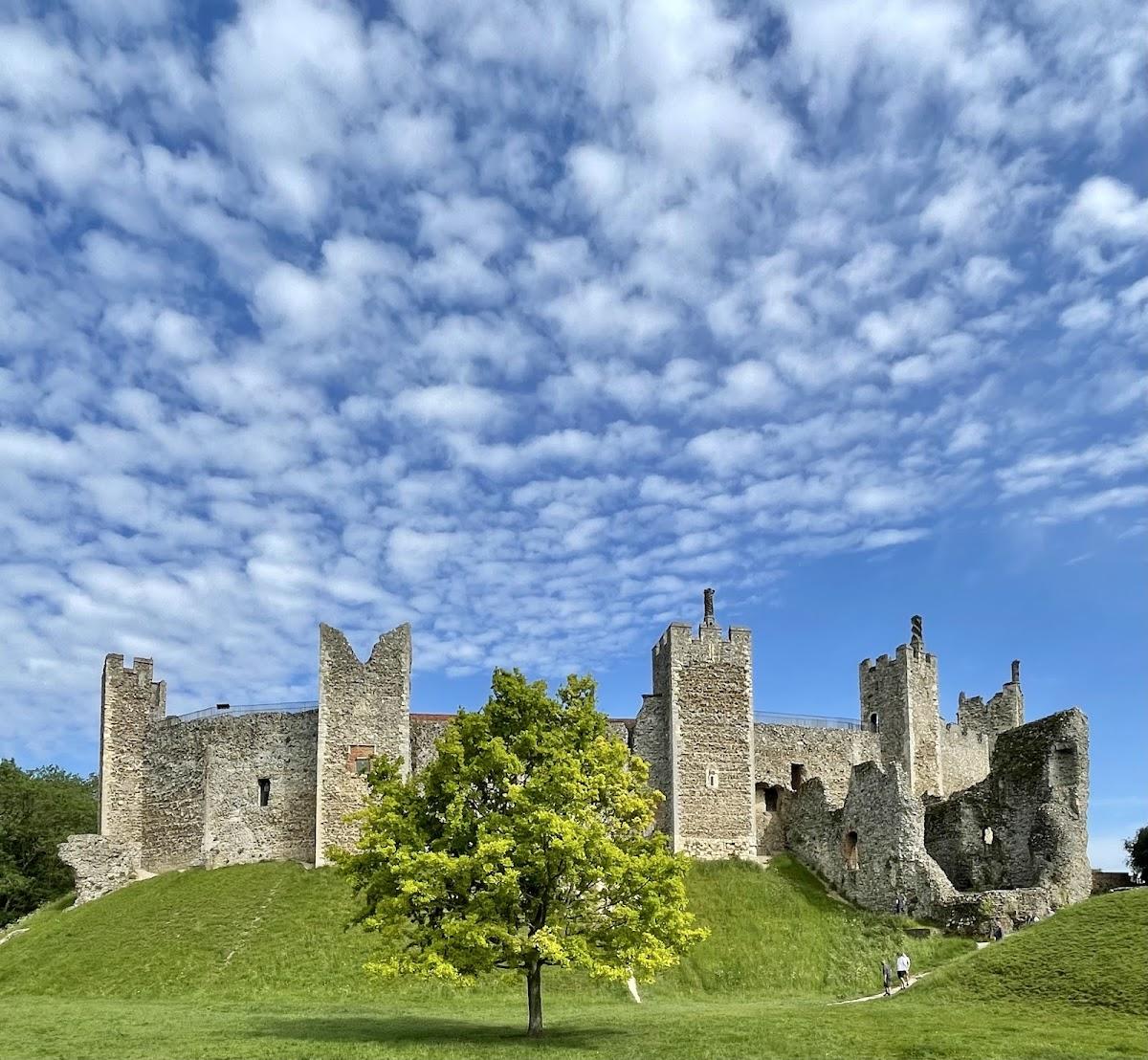
Insider pick · Framlingham
Framlingham Castle
Framlingham Castle is a medieval heritage site in Framlingham, Suffolk featuring a 12th-century fortress with historic earthworks and scenic grounds managed by English Heritage.
View listingMary Tudor, and the castle's strange second life
Two things happened here that are more interesting than anything a pop song could add.
In July 1553, Mary Tudor was proclaimed Queen of England inside these walls. Her half-brother Edward VI had died and his will had passed the crown to Lady Jane Grey. Mary came to Framlingham, which was Howard property and defensible, and gathered support while the succession hung in the balance. The support came, Jane's nine-day reign collapsed, and Mary was proclaimed here before riding to London. The Lanman Museum inside the castle holds a copy of the first document she wrote as queen.
Then the castle became a workhouse. In 1635 it was sold to Sir Robert Hitcham, a wealthy lawyer and philanthropist. He died a year later, leaving instructions that the castle buildings be pulled down and a workhouse built in their place. After years of legal argument the first poor families were put to work in the mid seventeenth century, and a purpose-built block went up in 1729. That building, the workhouse, is still the largest structure standing inside the walls today.
That is the thing to hold in your head as you walk the wall. The same enclosure held a Norman earl who helped force Magna Carta, a queen at the moment she took the throne, and then, for generations, the local poor. Not many buildings in England have that range.
The Lanman Museum is housed in part of the old poorhouse and covers the town and the surrounding countryside. It is small and free of grandeur and worth twenty minutes, though parts of the workhouse building are used as English Heritage offices and are not open, so check what is accessible when you arrive.
While you are on the wall, look up at the tall Tudor chimneys crowning some of the towers. Each one carries a different brick design, and they are decorative rather than functional, added to make a defensive building look like a fashionable Tudor house.
Down in the town, St Michael's Church holds the Howard family tombs, one of the finest collections of Tudor monumental sculpture in England, including the tomb of Thomas Howard, 3rd Duke of Norfolk. It is free to go in and a lot of castle visitors never do.
Orford, Woodbridge and Aldeburgh
Framlingham works well as an inland stop on a coast trip, and everything here is under about forty minutes.
Woodbridge is roughly twenty minutes south, a working river town on the Deben with the Tide Mill, the Thoroughfare and Sutton Hoo just across the water. See our guide to Woodbridge.
Orford is east towards the coast, with Orford Castle and its twelfth-century keep, which pairs neatly with Framlingham because the two were built as rivals: Orford was Henry II's royal answer to Bigod power in Suffolk. Add Pump Street Bakery and the boat to Orford Ness. Read things to do in Orford.
Aldeburgh is about half an hour east, shingle beach, fish off the boats and Snape Maltings inland. See our guide to Aldeburgh.
Closer to hand, Parham Airfield Museum covers the American bomber group stationed here in the war, Easton Farm Park is the family option, and the Old Mill House at Saxtead and the Queen at Dennington are the nearest village pubs.
There is more here than the Ed Sheeran connection
Let us deal with it properly and then move on.
Ed Sheeran grew up in Framlingham and went to Thomas Mills High School in the town. Castle on the Hill, released in 2017, is about that: the castle is Framlingham Castle, and the video was shot in and around the town with pupils from the school, including a red-haired stand-in playing the teenage version of him. Visitor numbers to the castle went up noticeably afterwards. He has since gone back to the school to open a recording studio there.
If that is why you are coming, fine. It is a good song and the castle genuinely is on a hill, which is more than most name-checked landmarks manage.
But it would be a shame to drive here for a photograph and leave. Framlingham has one of the most complete medieval curtain walls in England, and you can walk the whole of it. A woman was proclaimed queen inside it during one of the most contested successions in English history. It spent two centuries as a workhouse. There is a lake below it full of birds, a Tuesday and Saturday market that still sells local meat and vegetables, a Tudor sculpture collection in the parish church that would be a headline attraction anywhere else, and three genuinely good independent shops on one small square.
The town, to its credit, has not built a Sheeran industry. There is no trail, no museum, no gift shop full of merchandise. It has largely carried on as it was and let people work it out for themselves. Do the same.
The honest summary
Framlingham is a half-day, and an excellent one. The castle is the real thing, the wall walk is rare, and the story attached to it runs from Magna Carta to Mary Tudor to the parish poor without a gap.
Come on a Saturday for the market, walk the mere first for the view, pay to go in and get up onto the wall for as much of it as is open, look at the Howard tombs on the way back through town, and buy lunch from three shops on Market Hill. Then drive twenty minutes to Woodbridge or half an hour to the coast. The song is a footnote. The castle is not.
Related listings
Nearby picks to explore
Good to know
Frequently asked questions
Partly, at the moment. A wall-top walk runs round the curtain wall linking the towers, but English Heritage has a section closed for essential maintenance and visitors report only about half being open. Check the castle page before you travel, because this is the main reason to go in.
She took refuge here in 1553 while gathering support after the death of her half-brother Edward VI, whose will had passed the crown to Lady Jane Grey. Mary was proclaimed Queen of England within the castle walls, and the Lanman Museum inside holds a copy of her first document as queen.
Saturday is the main one, running from roughly 8am to 5pm and filling the whole of Market Hill with around ten regular stalls plus casual traders. There is a smaller Tuesday market as well. Both are run by the town council and sell genuine food and produce.
Yes. Sheeran grew up in Framlingham, went to Thomas Mills High School, and the 2017 song refers to the castle. The video was filmed in the town with pupils from the school. Visitor numbers to the castle rose noticeably afterwards, which the town has taken in good humour.
Half a day covers it comfortably. Allow an hour or so for the castle including the wall walk, half an hour for the mere, and the rest for Market Hill and lunch. Come on a Saturday for the market and it stretches to most of a day.
Be part of it
Three ways to get involved
Keep reading
More from the Journal
27 July 2026
A guide to Lavenham
An honest guide to Lavenham, Suffolk: the medieval wool town that got rich, built crooked and stayed that way, plus the Harry Potter house.
27 July 2026
A guide to Bury St Edmunds
A visitor guide to Bury St Edmunds, Suffolk: the free Abbey Gardens and ruins, the cathedral, a Regency playhouse and Britain's smallest pub.
27 July 2026
A guide to Woodbridge
An honest guide to Woodbridge, Suffolk: the working Tide Mill and when the wheel turns, Sutton Hoo next door, the Deben boatyards and Thursday market.